
Mesa Verde National Park:
Arrival at Morefield Campground
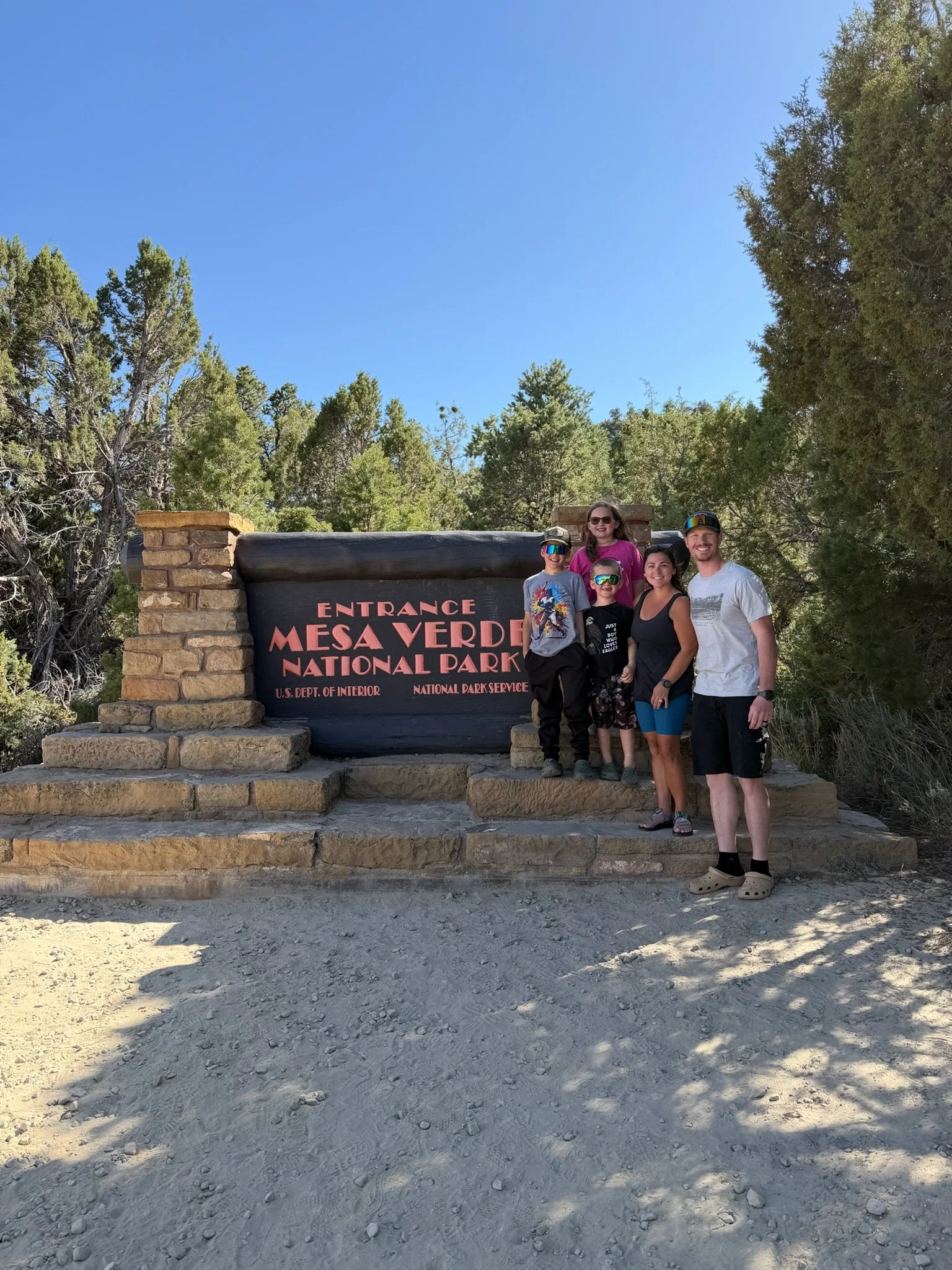
After spending time at Lyman Lake and exploring Petrified Forest National Park, we pointed the RV north toward our next stop: Mesa Verde National Park. By this point we have been on the road for about a month, and it’s starting to feel like this lifestyle is becoming our new normal. We joke that we can’t call it camping anymore.
We arrived at Morefield Campground on Wednesday evening of last week and were fortunate enough to grab one of the first-come, first-serve campsites in the no hook up part of the campground. As soon as we pulled in, we could tell this stop was going to be different from anywhere we had been so far. Instead of desert landscapes and wide-open views, we were surrounded by green hillsides, tall trees, and mountain scenery in every direction.
The campsite itself was beautiful, with views of the surrounding mountains and greenery. After several weeks of traveling through Arizona and seeing mostly desert scenery, it was a welcome change of pace.
Deer and Fort Building
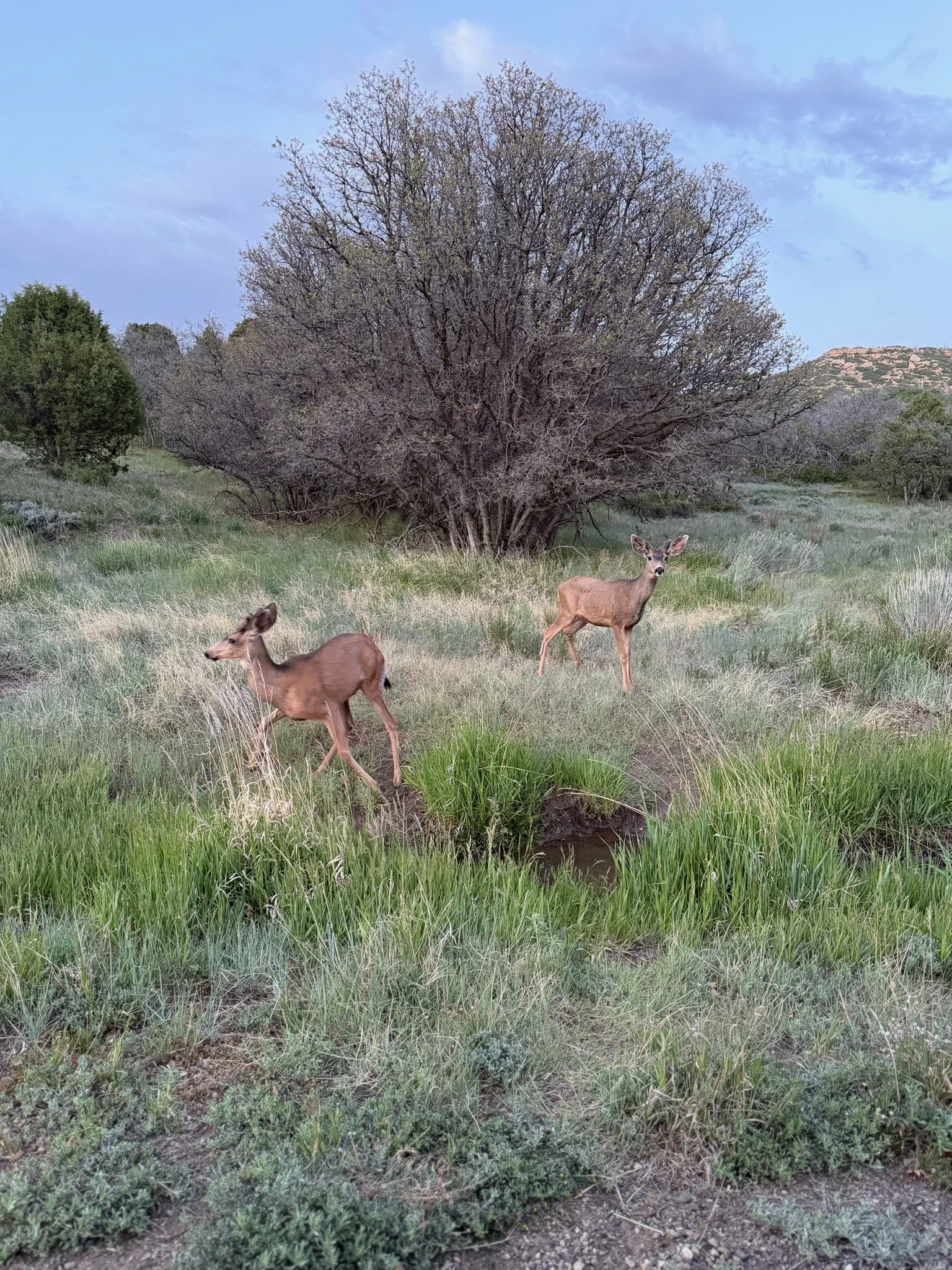
One of the highlights of our stay at the campground was the wildlife. Deer seemed to be everywhere in the evening. It wasn't unusual to look out the window when driving back and forth to the showers and see them wandering through the campground or grazing near the campsites. The kids loved watching them, and it quickly became one of their favorite parts of our stay.
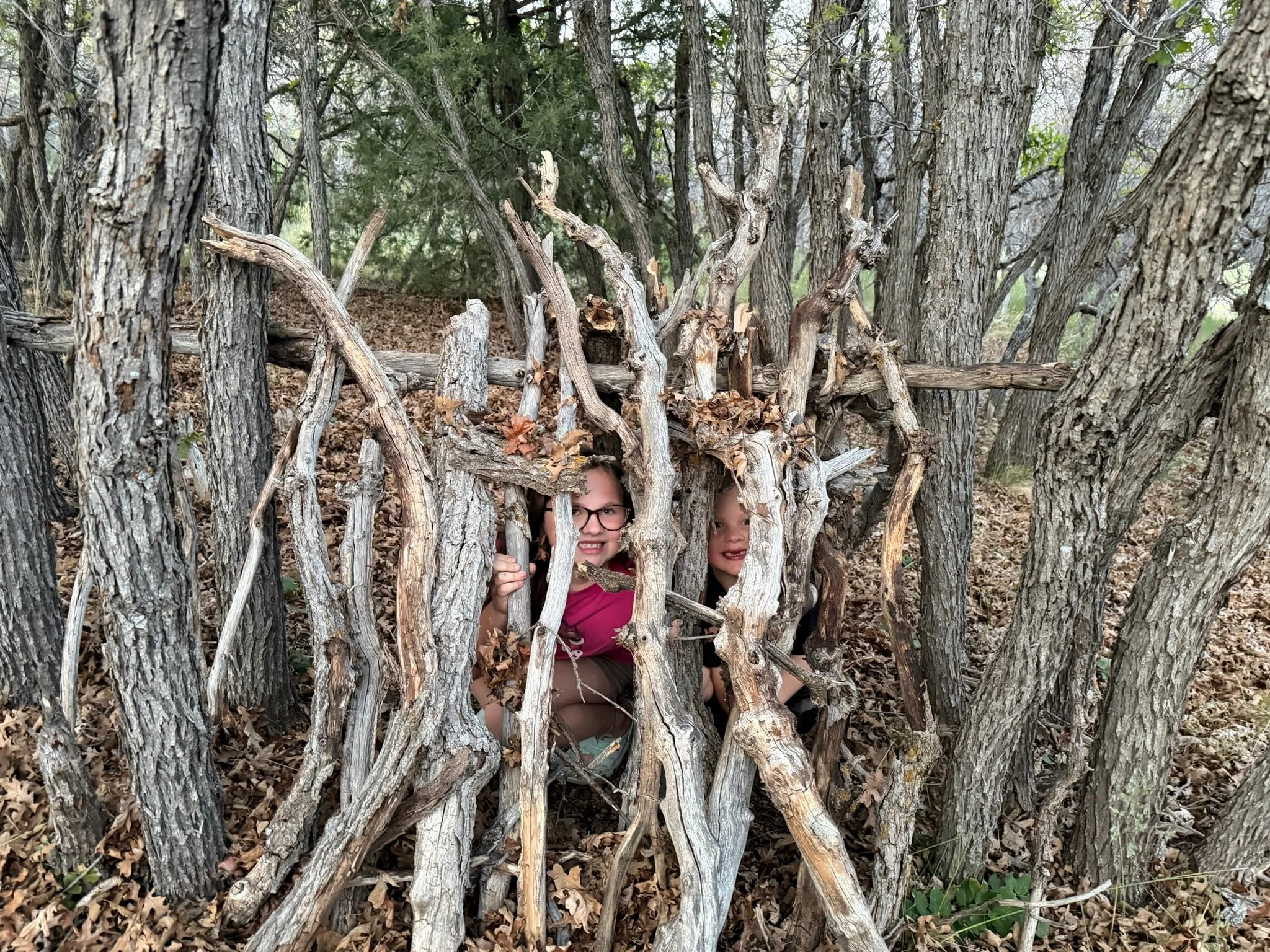
fort building
The campground itself kept the kids entertained for hours. They found plenty of fallen branches and brush nearby and immediately got to work building a fort. Before long they had created their own little hideout tucked away among the trees. It was fun to watch them use their imagination and spend the evening exploring instead of asking for screens.
Mesa Verde Visitor and Research Center
Thursday afternoon we headed into the park and made our first stop at the Mesa Verde Visitor and Research Center. The building itself was absolutely beautiful and extremely well put together. We spent quite a bit of time walking through the exhibits, looking at artifacts, and learning about the people who once lived here.
The center also featured a library (which we couldn’t go in) and study area filled with information about the history, archaeology, and culture of Mesa Verde.
Of course, the kids made a beeline for the Junior Ranger desk to pick up their books. We also added another magnet to our growing collection and picked up a few souvenirs before continuing our afternoon.
Mancos Valley Overlook
From there we drove to Mancos Valley Overlook for a quick look across the canyon. The views stretched for miles and gave us our first glimpse of the rugged landscape that protected these ancient settlements for hundreds of years.
Chapin Mesa Archaeological Museum
Our next stop was the Chapin Mesa Archaeological Museum. We explored the indoor exhibits and then watched a short film that explained the history of the Ancestral Pueblo people who lived here long ago.
The video did a great job of explaining how they used the land, built their homes, and adapted to life in this challenging environment. Having that background information made everything we saw afterward much more meaningful.
Spruce Tree House
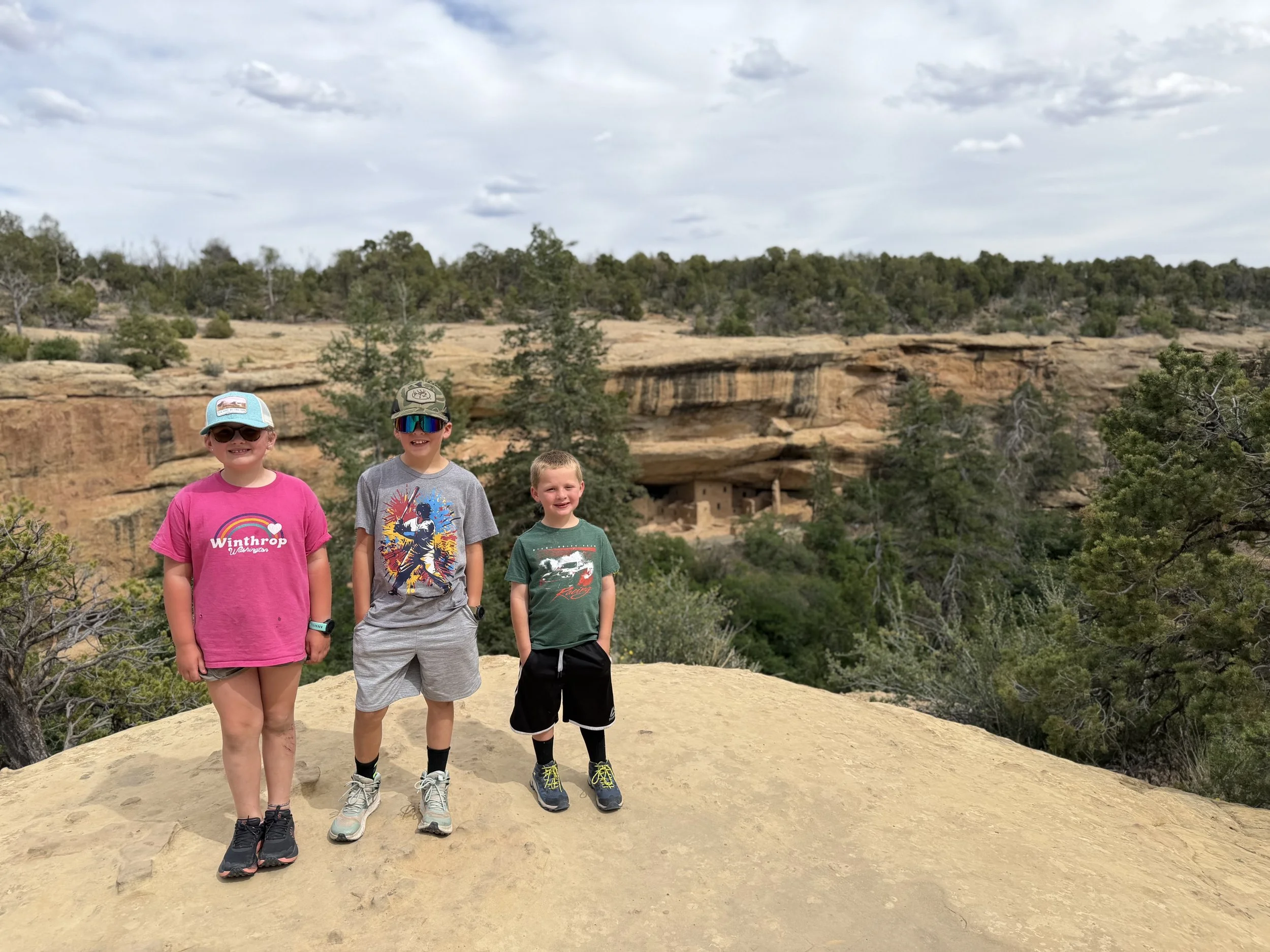
Spruce Tree House
After the museum, we walked outside to the overlook for our first view of Spruce Tree House. Seeing the cliff dwelling built directly into the rock face was incredible. Pictures don't fully capture how impressive it is when you're standing there looking across the canyon.
It was hard to imagine the amount of work, planning, and skill that went into building a community in a place like that hundreds of years ago.
By that point the kids were getting hungry and dinner was becoming the top priority, so we wrapped up our exploring for the day and headed back to the campground.
As we drove back through the park, it was already clear that Mesa Verde was unlike any national park we had visited so far. Instead of being centered around mountains, canyons, or unique geological features, the story here is about people.
Balcony House Tour
Friday morning started with one of the experiences we had been looking forward to the most: our guided tour of Balcony House.
Balcony House is one of the many cliff dwellings built directly into the alcoves of Mesa Verde's canyon walls. The tour itself was a lot of fun and included climbing ladders and navigating narrow passageways. The kids loved the adventure of exploring the dwelling up close rather than simply viewing it from an overlook.
Standing there and looking at the structures in person made it much easier to appreciate what the Ancestral Pueblo people accomplished hundreds of years ago.
BALCONY HOUSE—-PHOTOS DOWN BELOW
How These Cliff Dwellings Were Built
The more we learned about Mesa Verde, the more impressive these dwellings became. The Ancestral Pueblo people built these communities using sandstone blocks, wooden beams, and mortar made from mud and water. Every building material had to be gathered and carried by hand.
The alcoves provided natural protection from rain, snow, wind, and the hot summer sun. Within these sheltered spaces they constructed homes, storage rooms, gathering places, and ceremonial structures. Looking at the multi-story buildings tucked into the cliffs, it is hard to imagine how much planning and labor went into creating entire communities in such challenging locations.
What impressed us most was that these weren't simply shelters. They were thriving villages where families lived, worked, and raised children for generations.
Mesa Top Loop Road
After Balcony House, we continued our day by driving the Mesa Top Loop Road. This scenic drive connects many of the park's most important archaeological sites and overlooks.
There were numerous stops along the route, each adding another piece to the story of Mesa Verde. By this point, Hudson and I found ourselves just as excited about each stop as the previous one. Every overlook seemed to reveal another impressive structure tucked into the cliffs.
Sun Temple
One of the most interesting stops along the route was Sun Temple. Unlike many of the other sites, archaeologists believe this structure was used primarily for ceremonial purposes rather than as a residence.
Standing among the remaining walls and looking across the canyons toward other cliff dwellings helped paint a picture of how connected these communities once were.
Wetherill Mesa Road
After completing the Mesa Top Loop Road, we drove the Wetherill Mesa Road on the opposite side of the park. While Chapin Mesa contains many of the park's most famous sites and viewpoints, Wetherill Mesa offered a completely different perspective.
It felt quieter, less crowded, and more remote. The drive itself was beautiful, and the broader views helped us appreciate just how large Mesa Verde really is. Seeing both sides of the park gave us a much better understanding of the landscape and the people who once called it home.
Back at Camp
By the time we finished exploring, the kids were exhausted from a full day of climbing, hiking, learning, and sightseeing.
We headed back to camp for dinner and what had quickly become our favorite evening activity—deer spotting.
Every night seemed to bring dozens of deer into the campground. We started making a game out of it, guessing how many we would see before dark and seeing who could come closest to the final count. It was a simple tradition, but it became one of those little memories that will stick with us long after the trip is over.
Durango and Four Corners
Saturday and Sunday were a little slower. We ventured outside the park and explored Durango and the Four Corners Monument, both of which deserve posts of their own.
We'll share more about those adventures in separate posts.
Cliff Palace
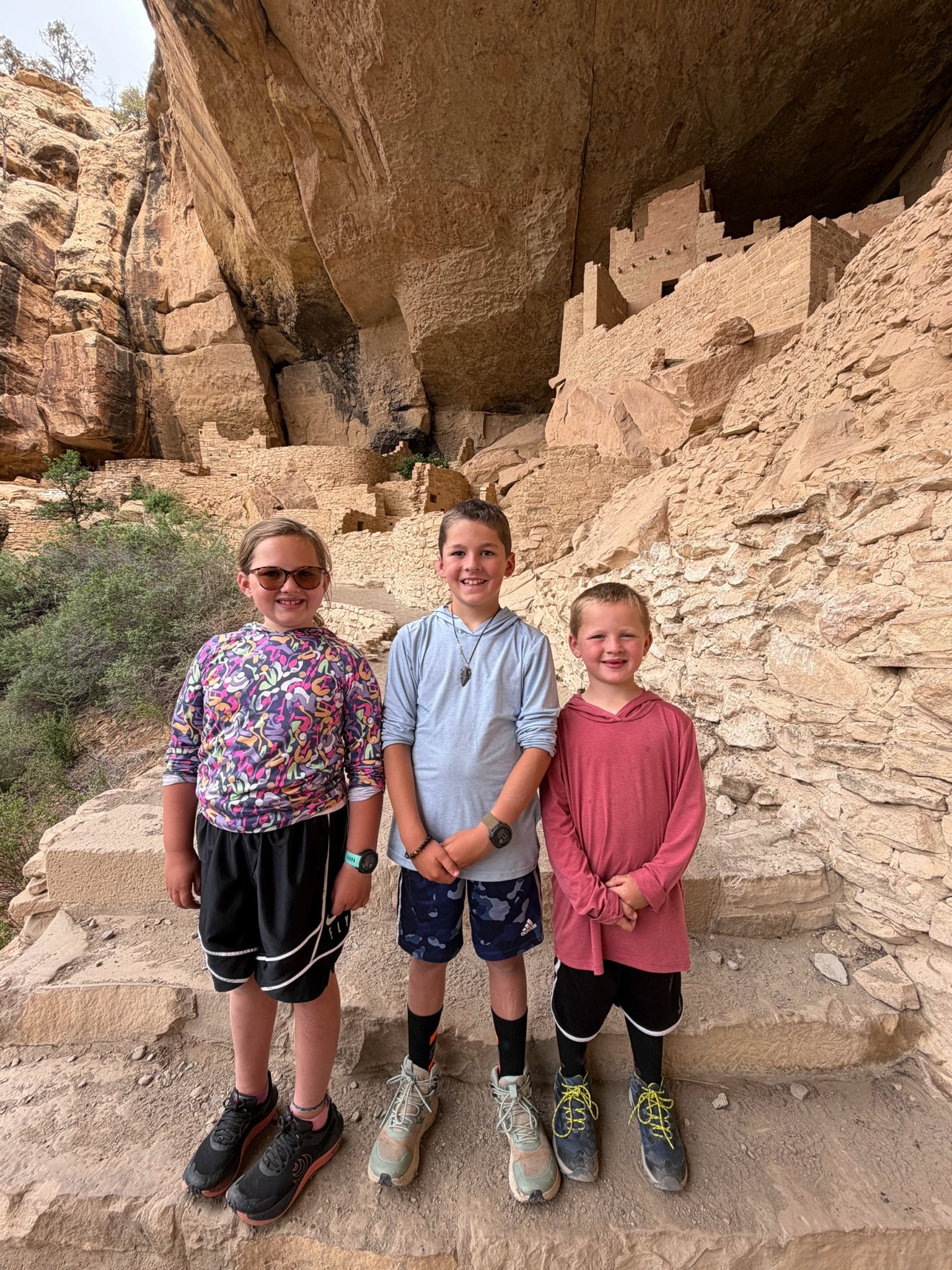
As our stay at Mesa Verde came to an end, Jessie stayed behind to finish up some work while I took the kids on one final tour—Cliff Palace. More pictures added at the end.
If Balcony House impressed us, Cliff Palace somehow managed to take it up another level. As the largest cliff dwelling in North America, it was an incredible sight to see in person and the perfect way to finish our time in the park.
-Kayla
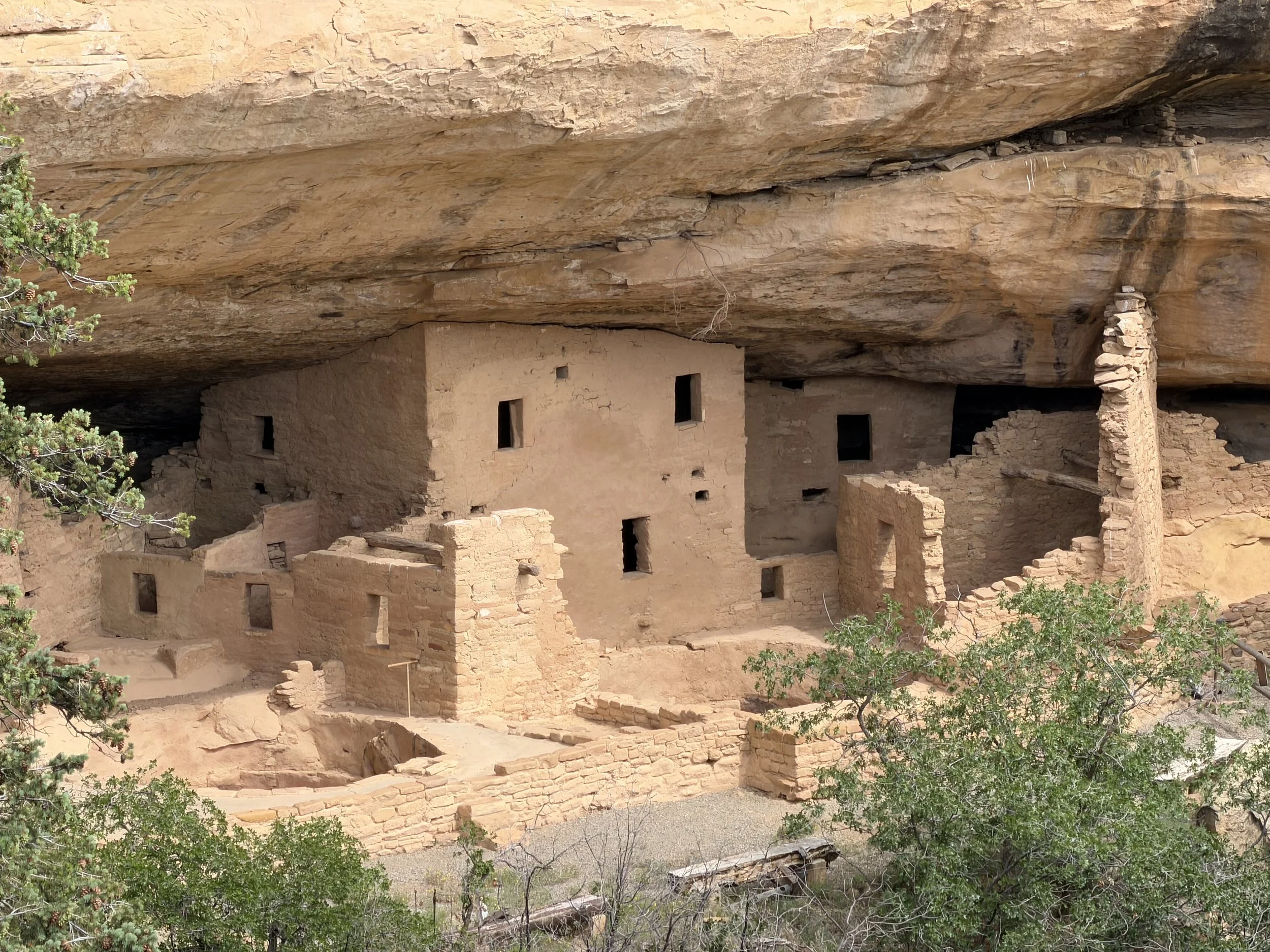
Cliff Palace
Once again, we found ourselves asking the same question: How did people build something this impressive in such a challenging location? It had about 150 rooms and approximately 4 stories tall. It was massive.
Mesa Verde Was a Hit
By the end of our stay, Mesa Verde had become one of our favorite stops of the trip so far.
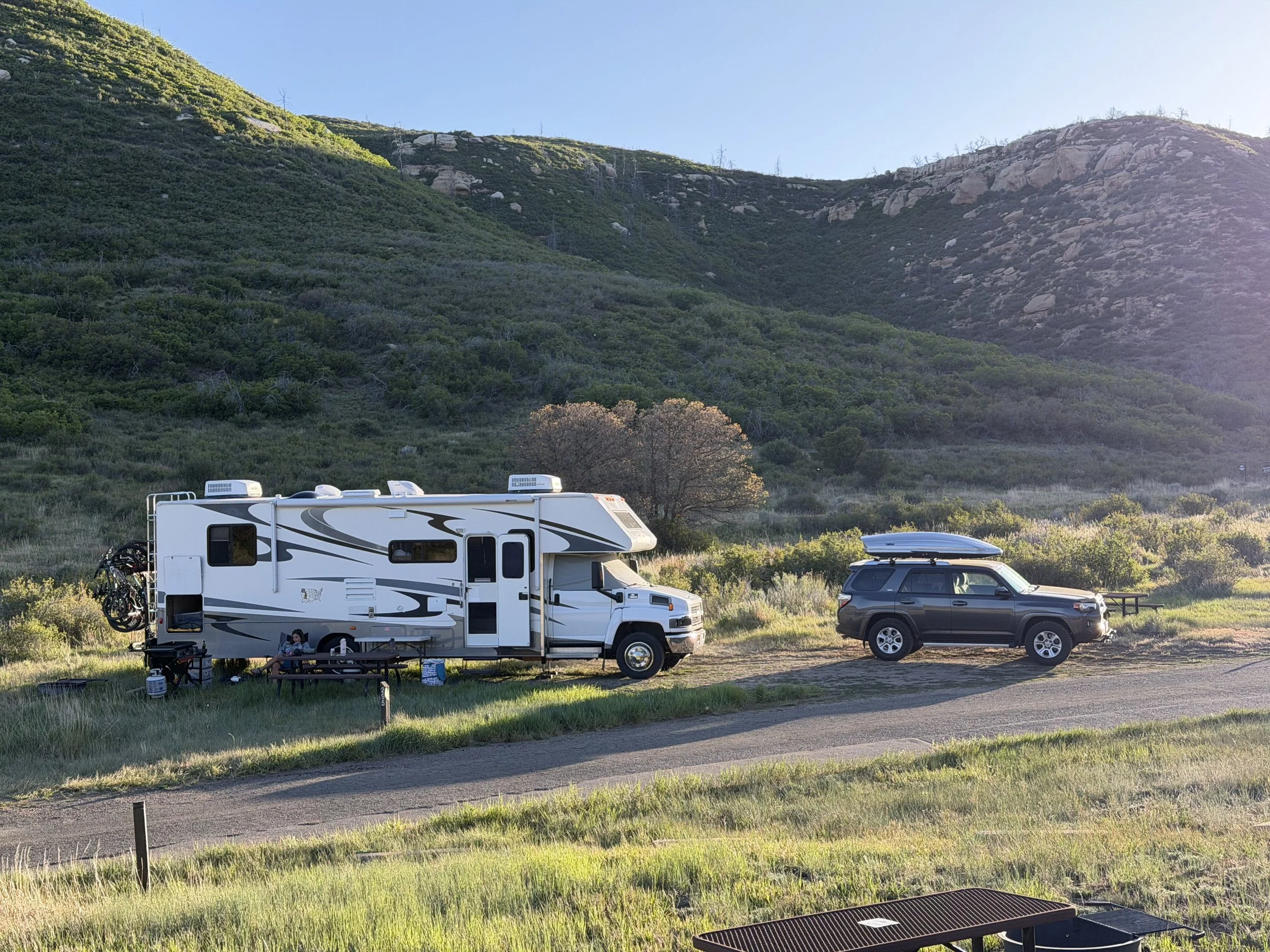
campsite at mesa verde
The kids loved the tours, the ladders, and the adventure of exploring ancient dwellings. We loved learning about the history and gaining a deeper appreciation for the ingenuity and craftsmanship of the Ancestral Pueblo people.
Between the cliff dwellings, the ranger tours, the wildlife, and the beautiful campground, Mesa Verde delivered far more than we expected.
Mesa Verde was an absolute hit with our family and a stop we would highly recommend to anyone traveling through the Southwest.
Balcony House and Cliff Palace Photos Below-
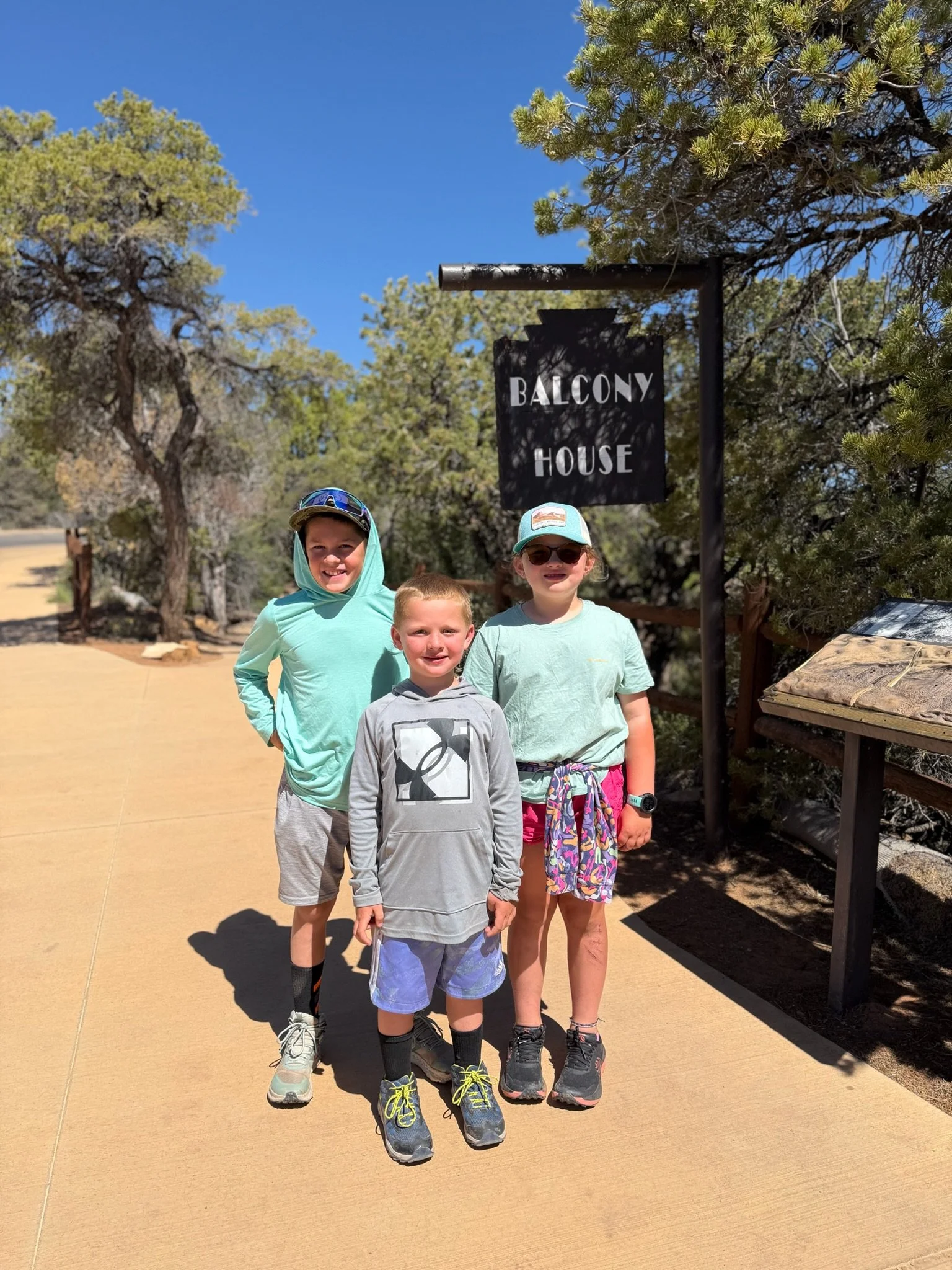
Balcony House
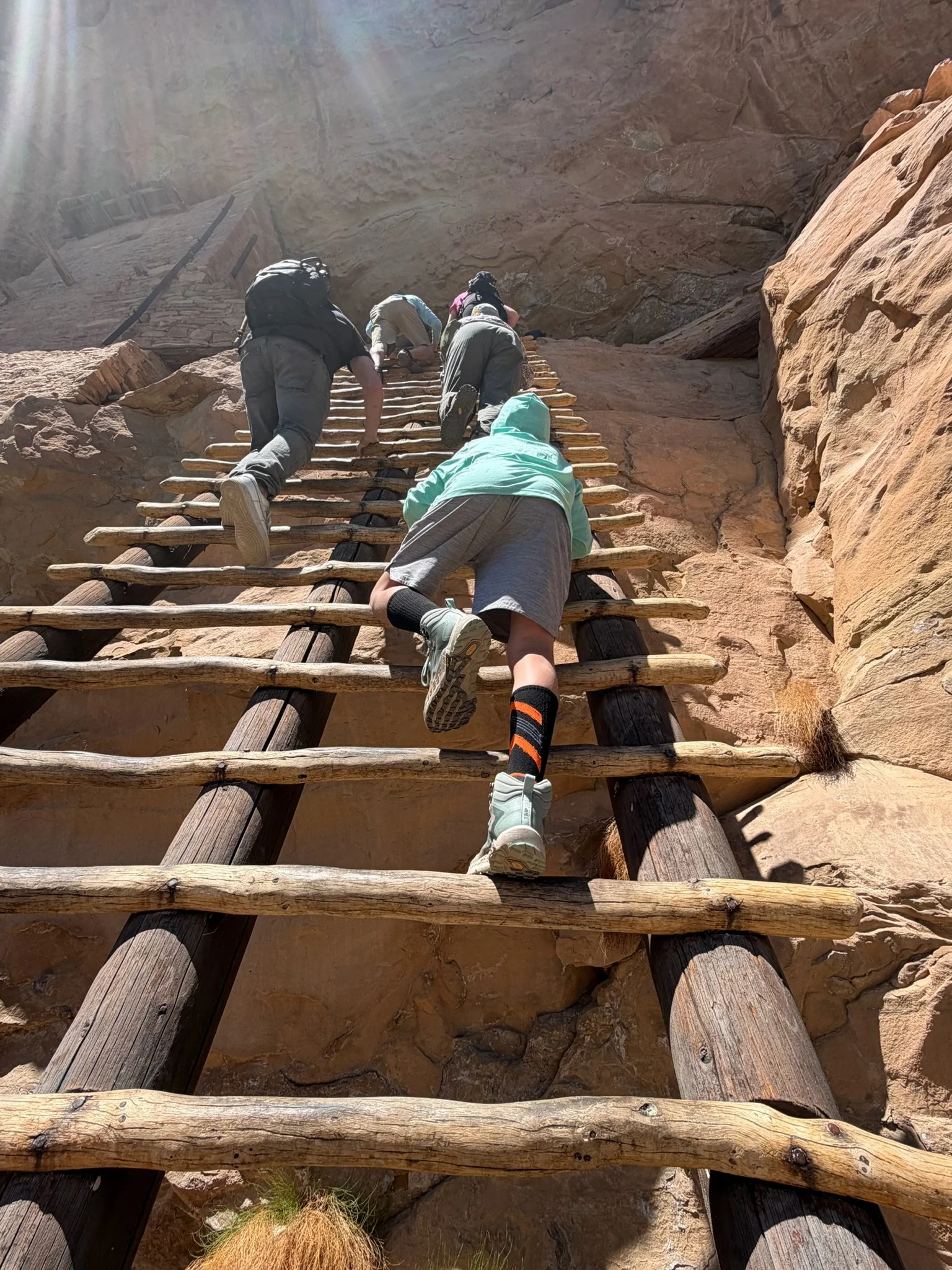
Balcony House- climbing the ladder
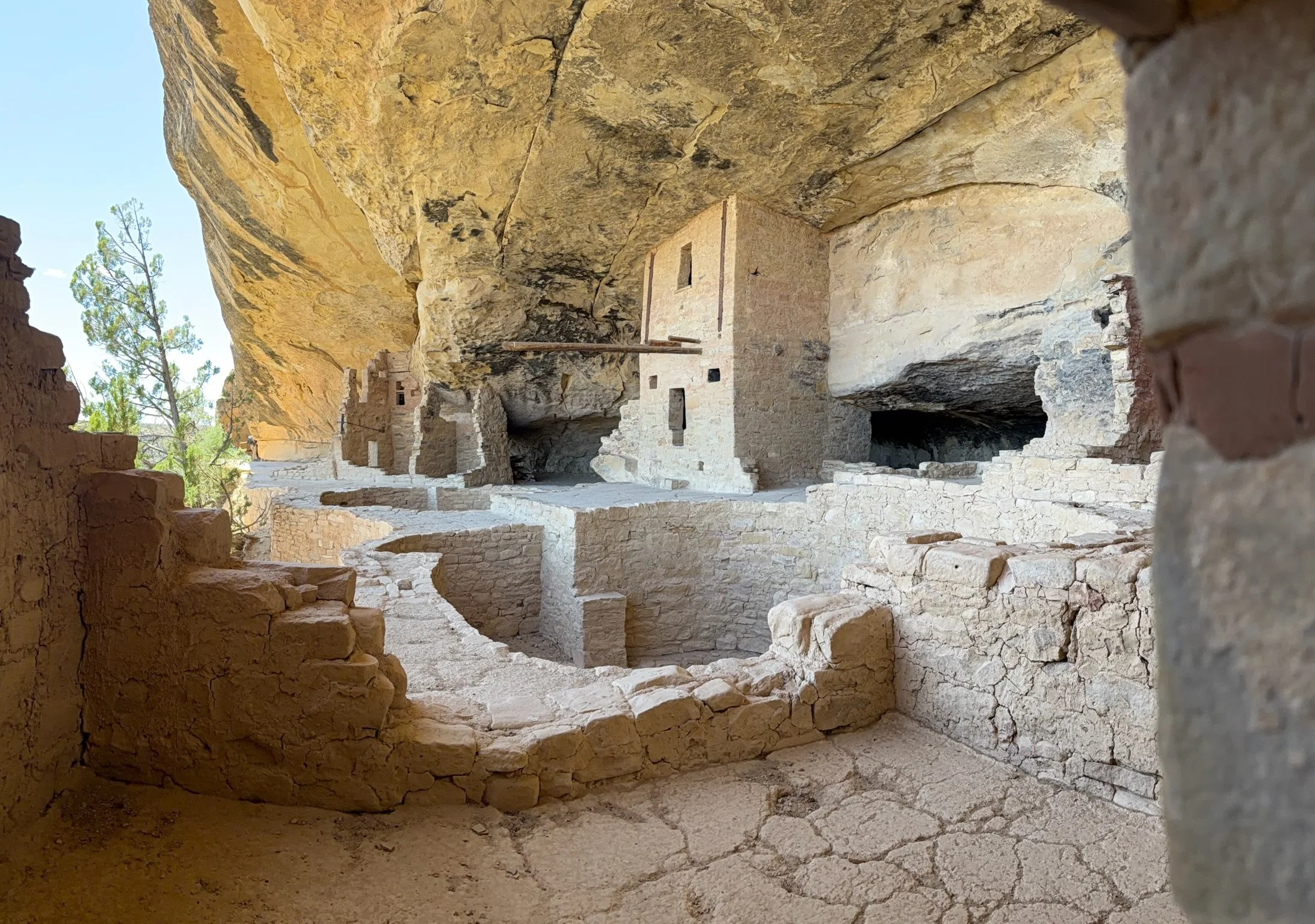
Balcony House
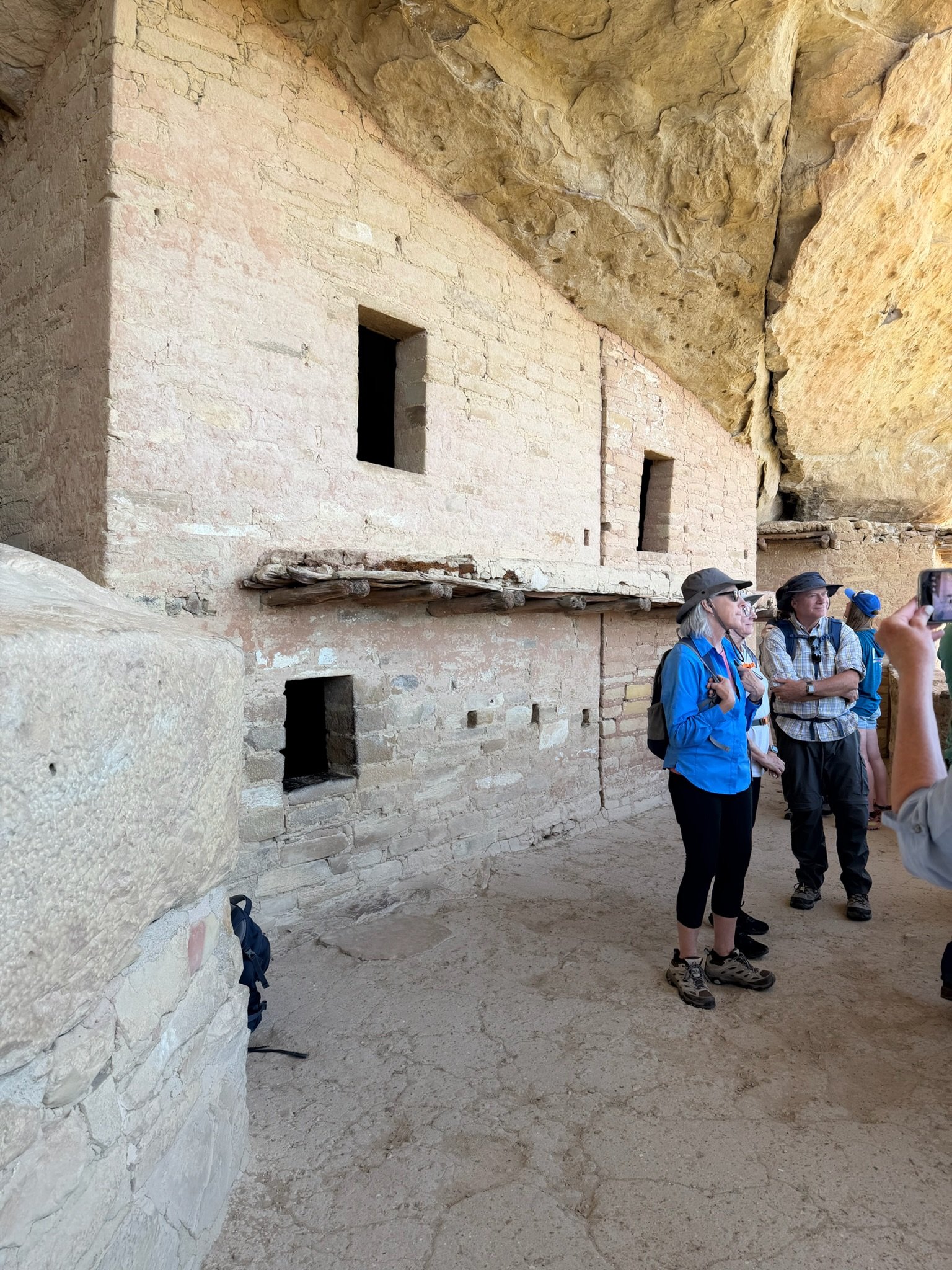
Balcony House
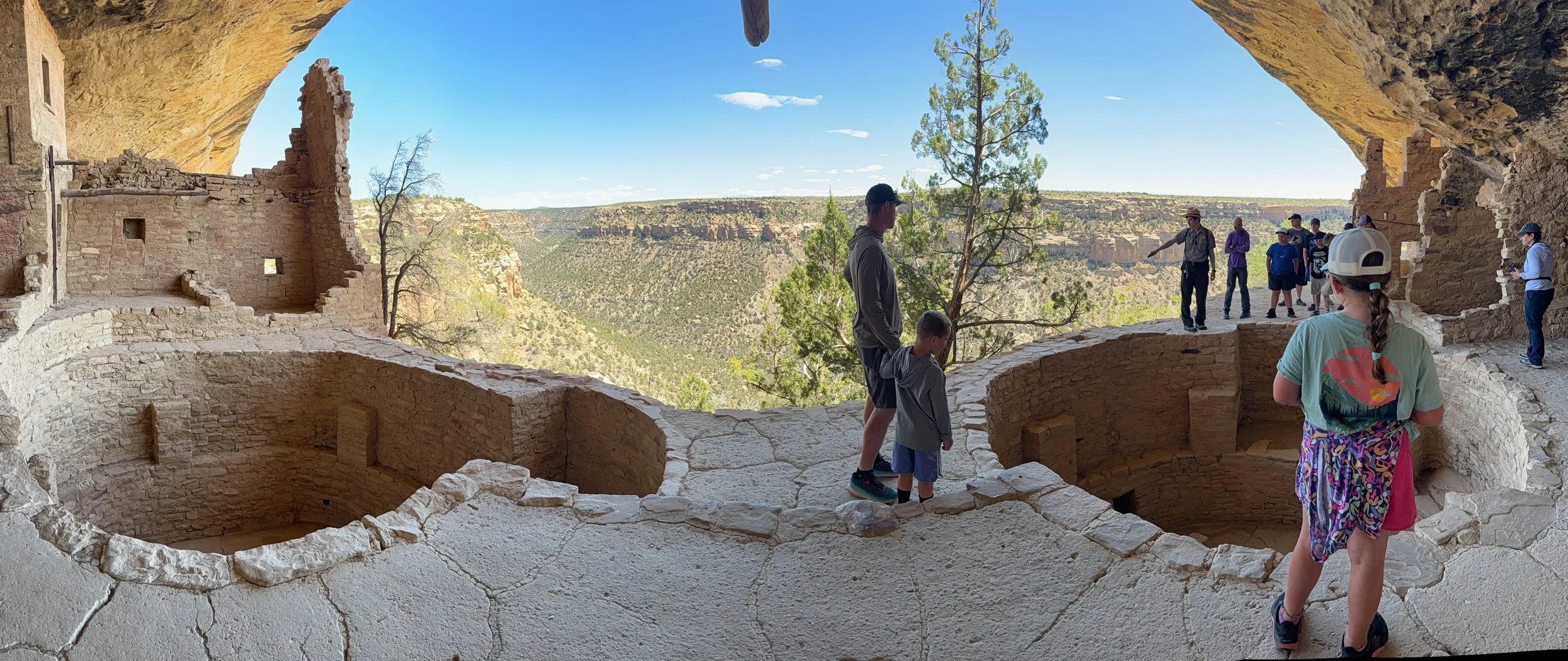
Balcony House
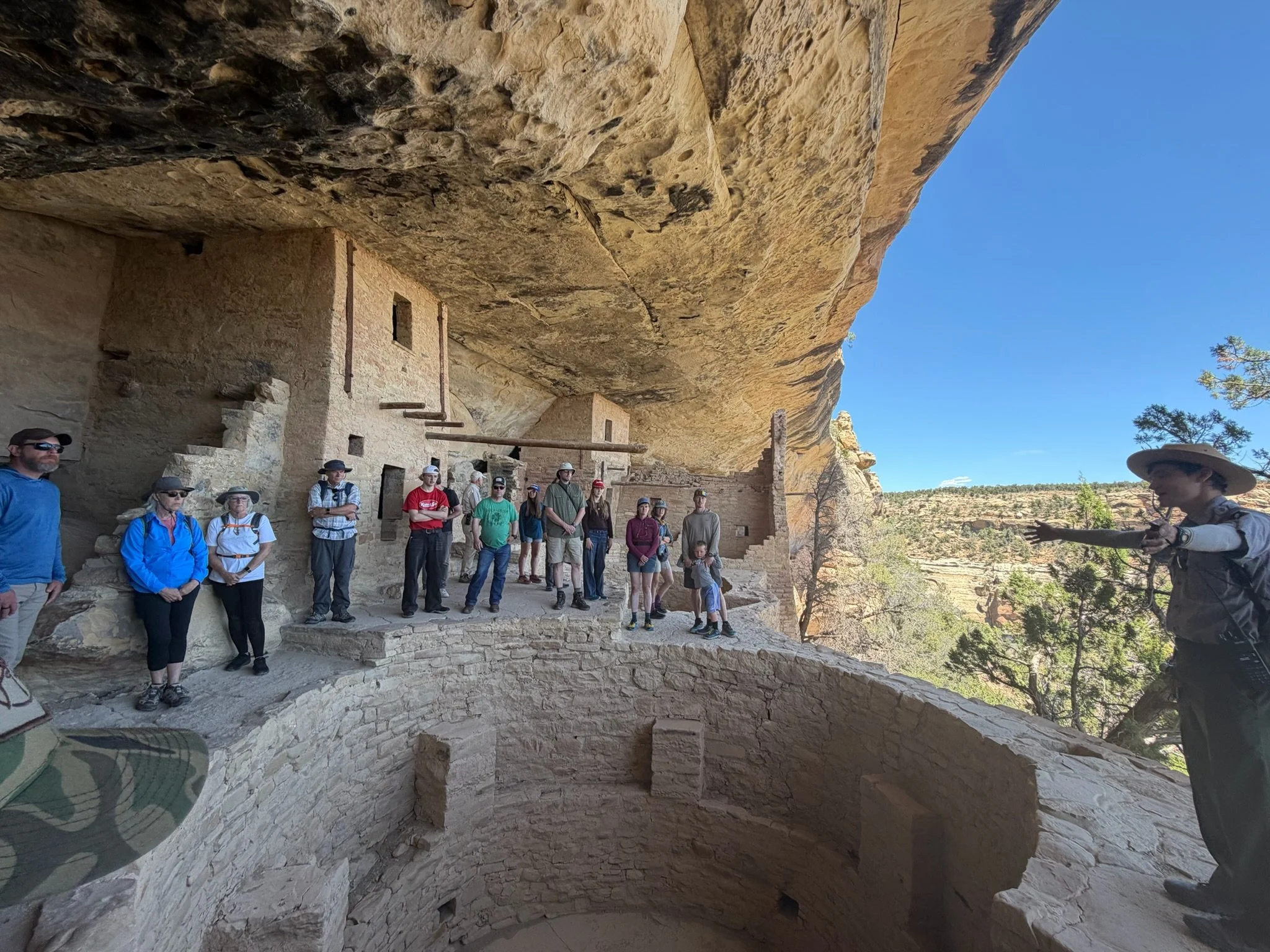
Balcony House
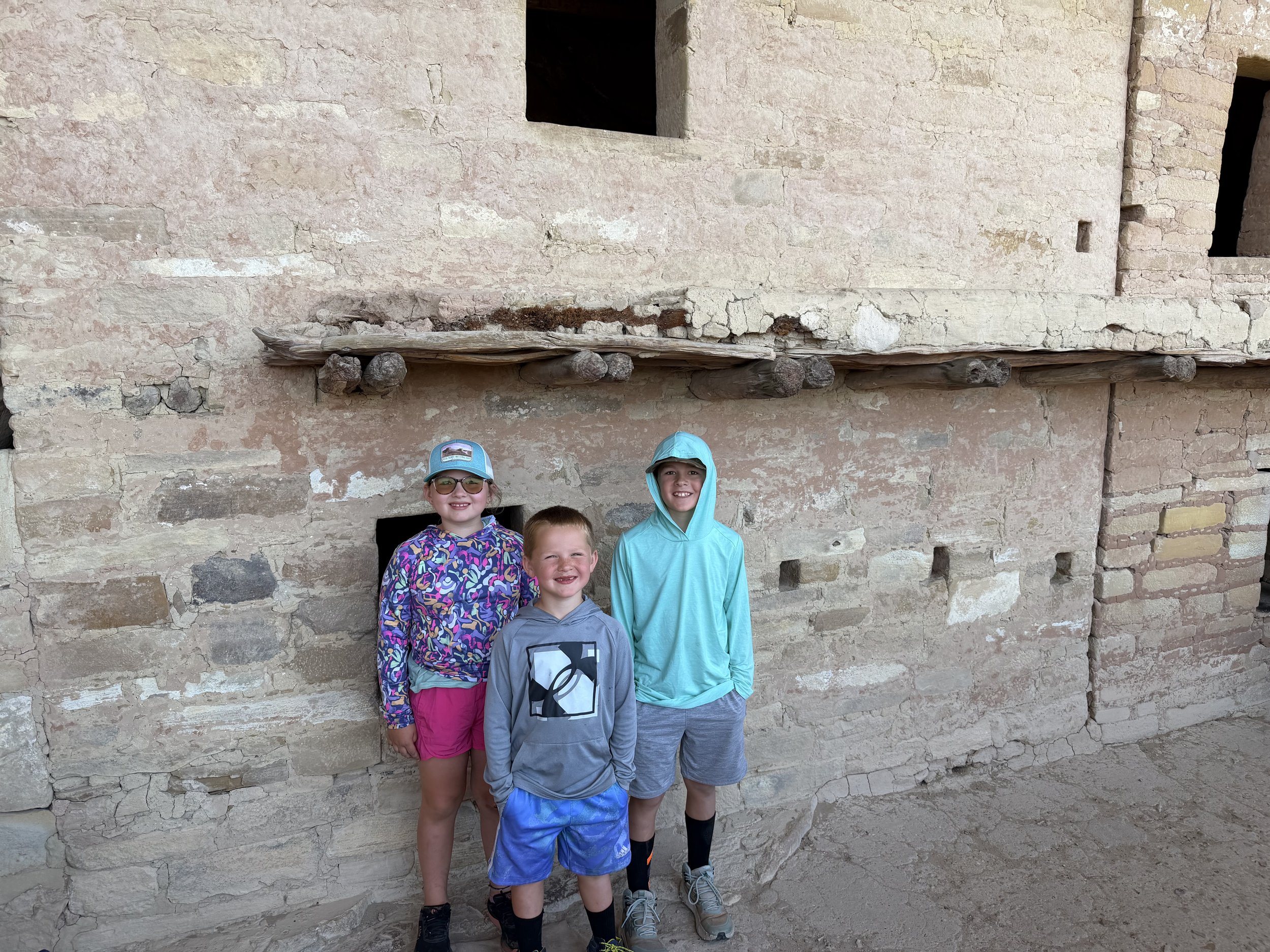
Balcony House
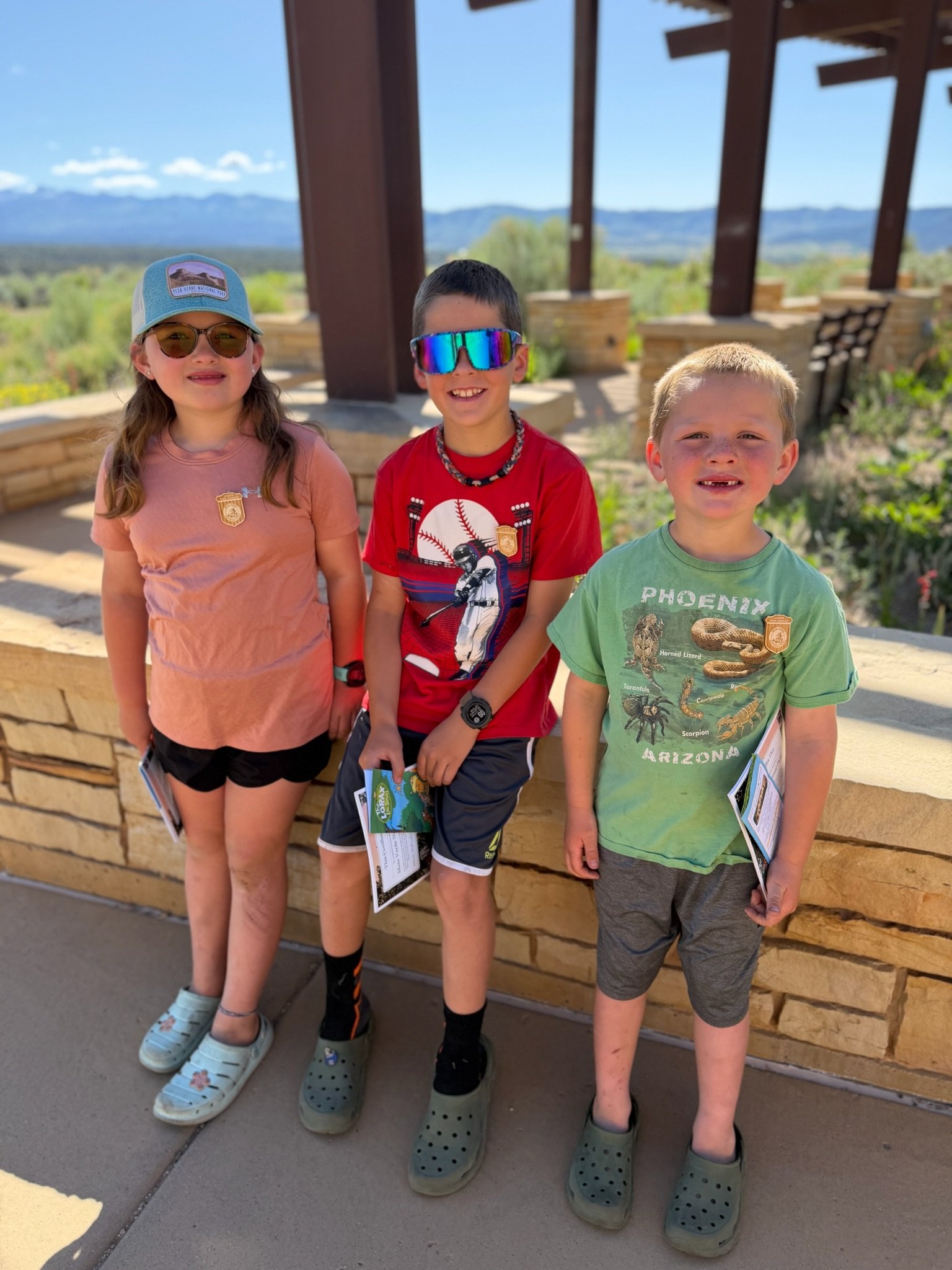
Jr. Rangers Mesa Verde
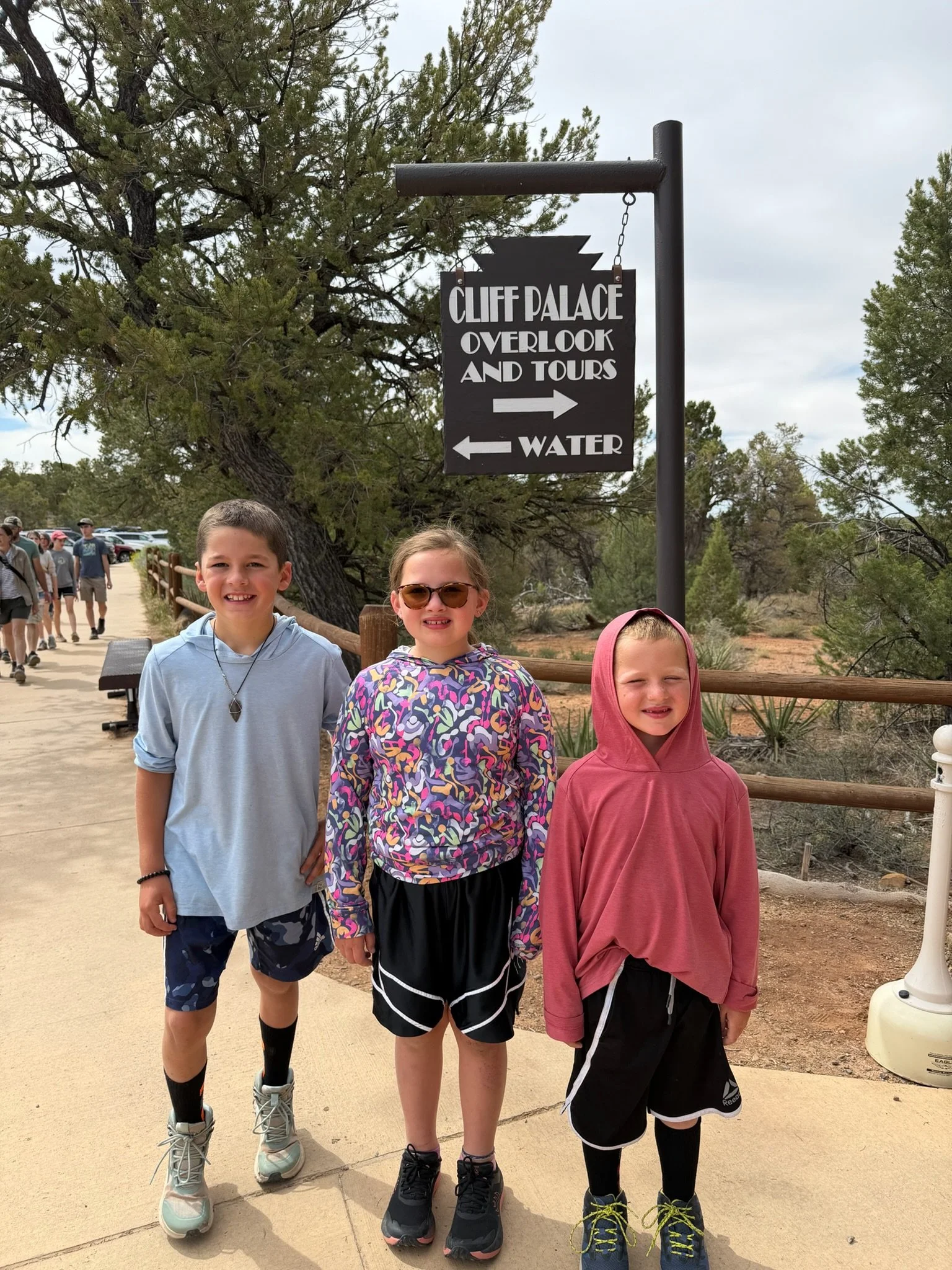
cliff palace
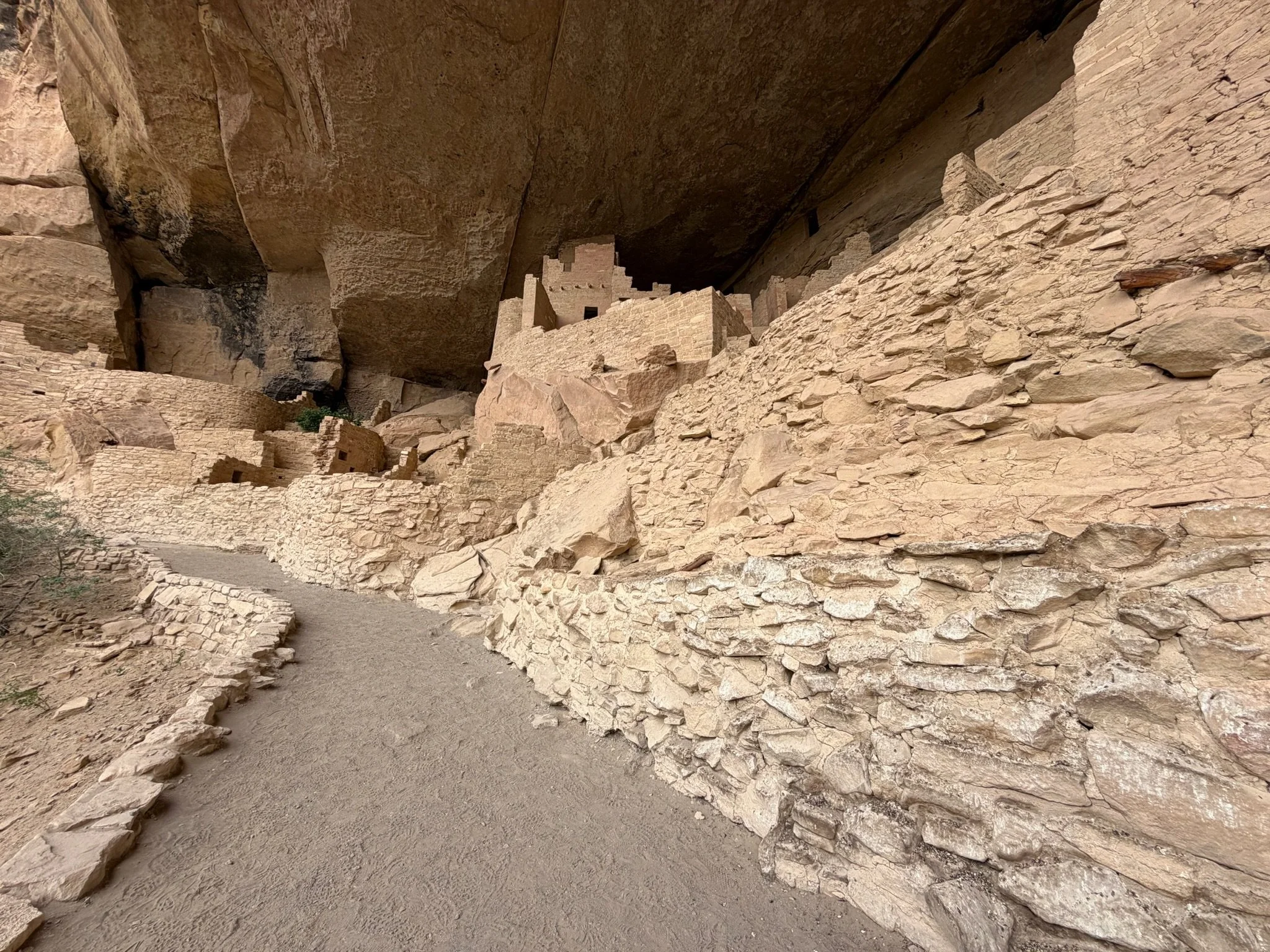
Cliff Palace
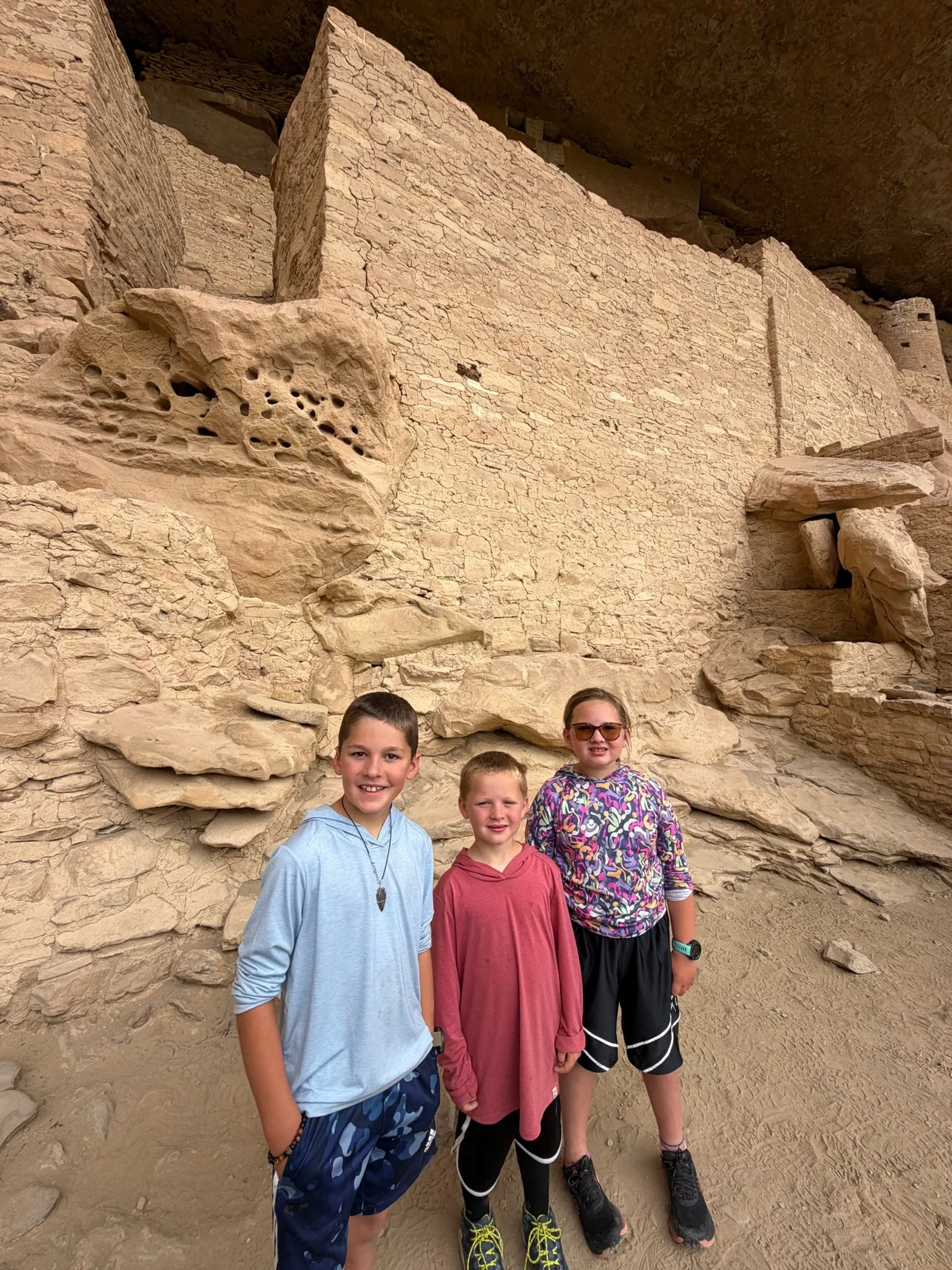
cliff palace- big wall that had been built
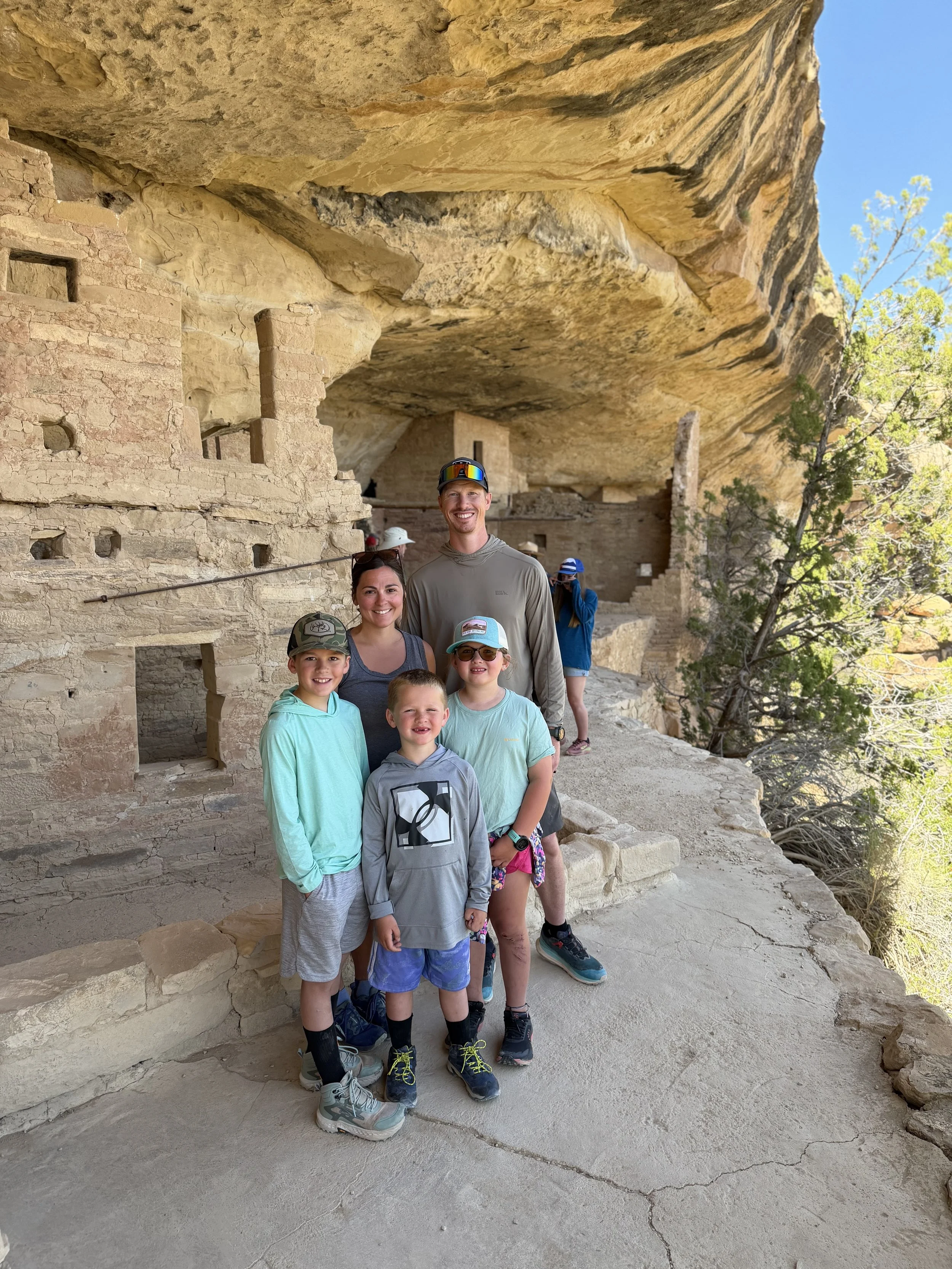
Balcony House
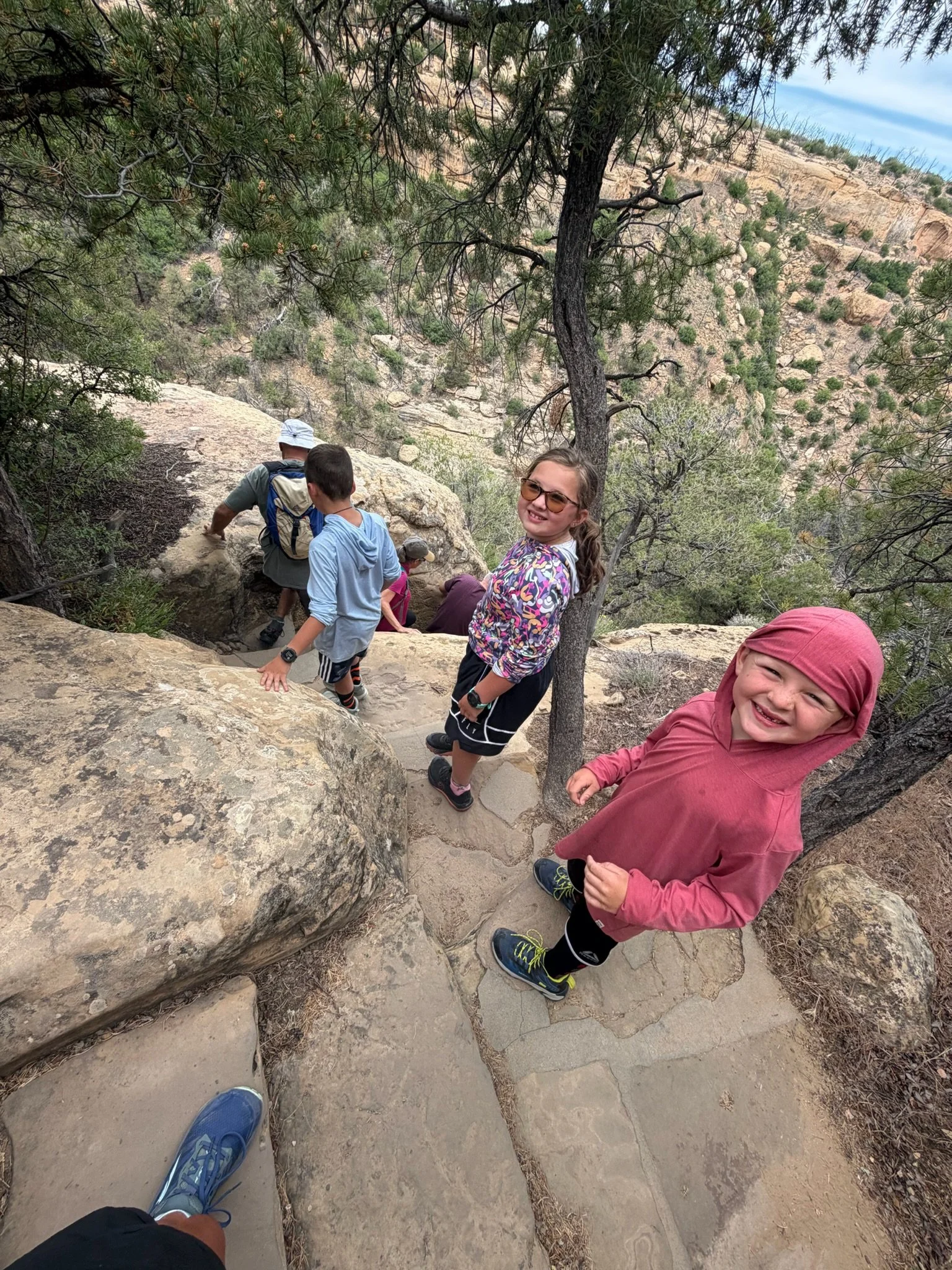
headed down to the tour
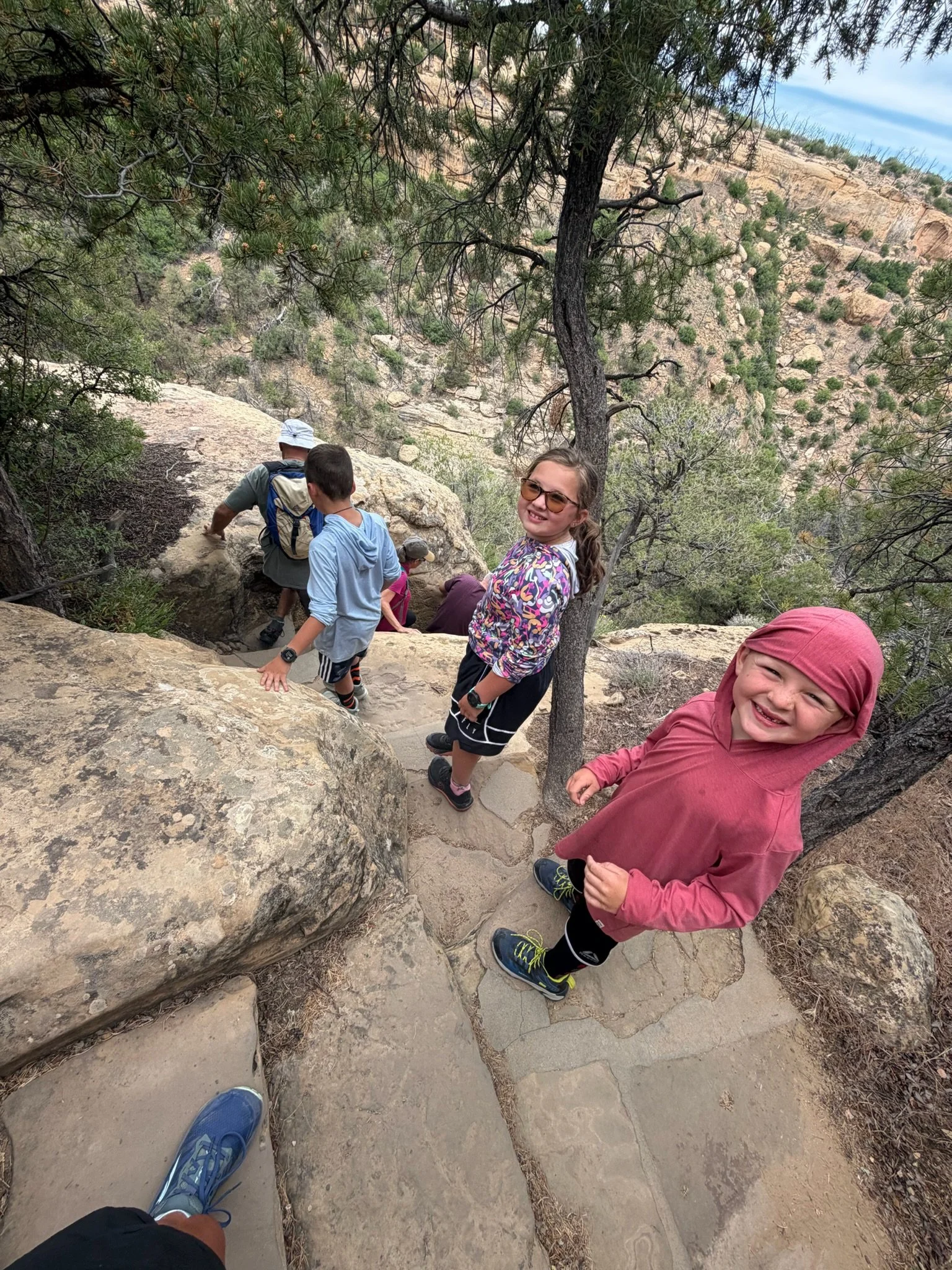
headed down to the tour
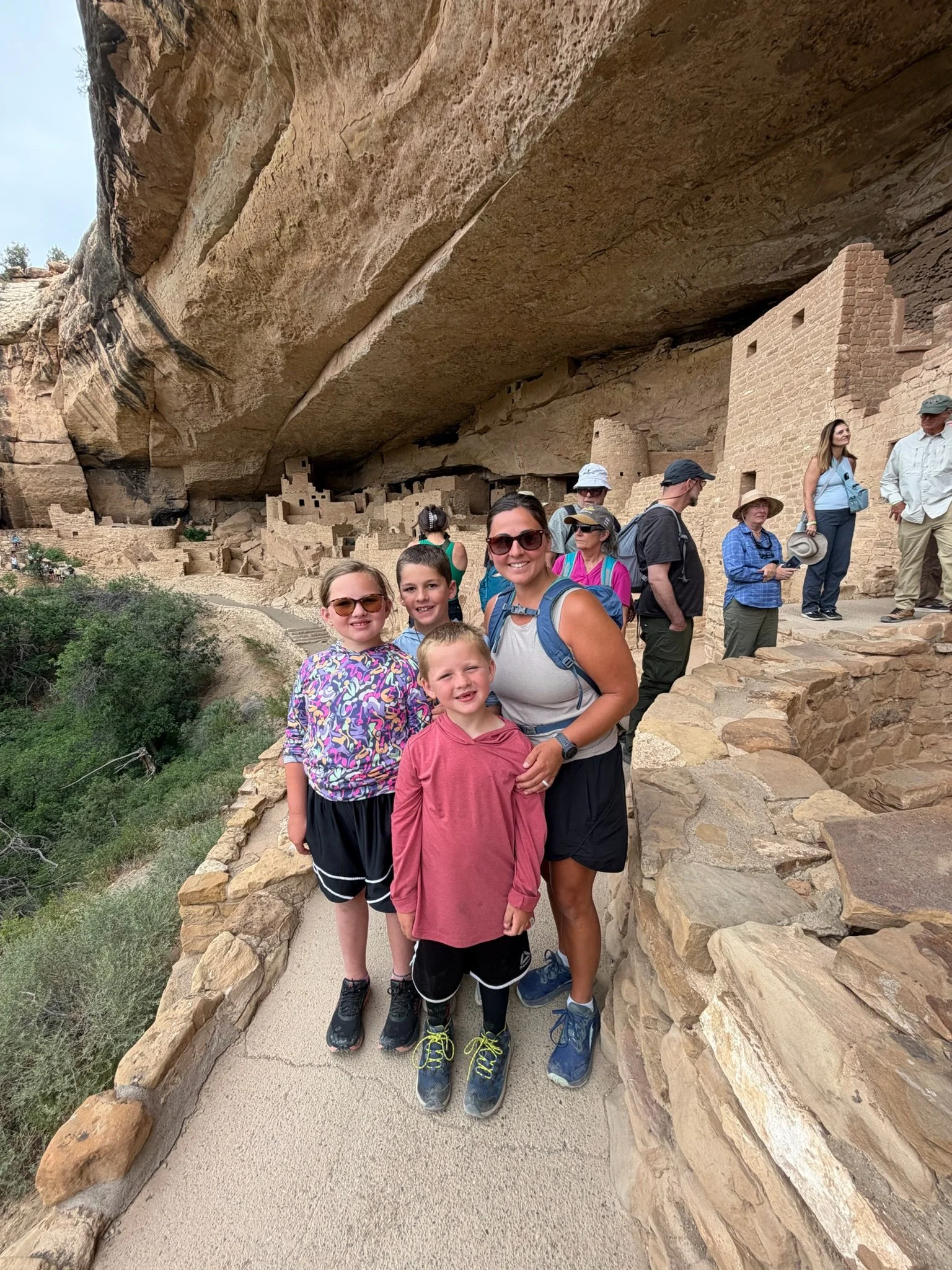
cliff palace