
What Actually Makes a Great Family Campground?
Four months of RV camping has changed what we look for in a campsite
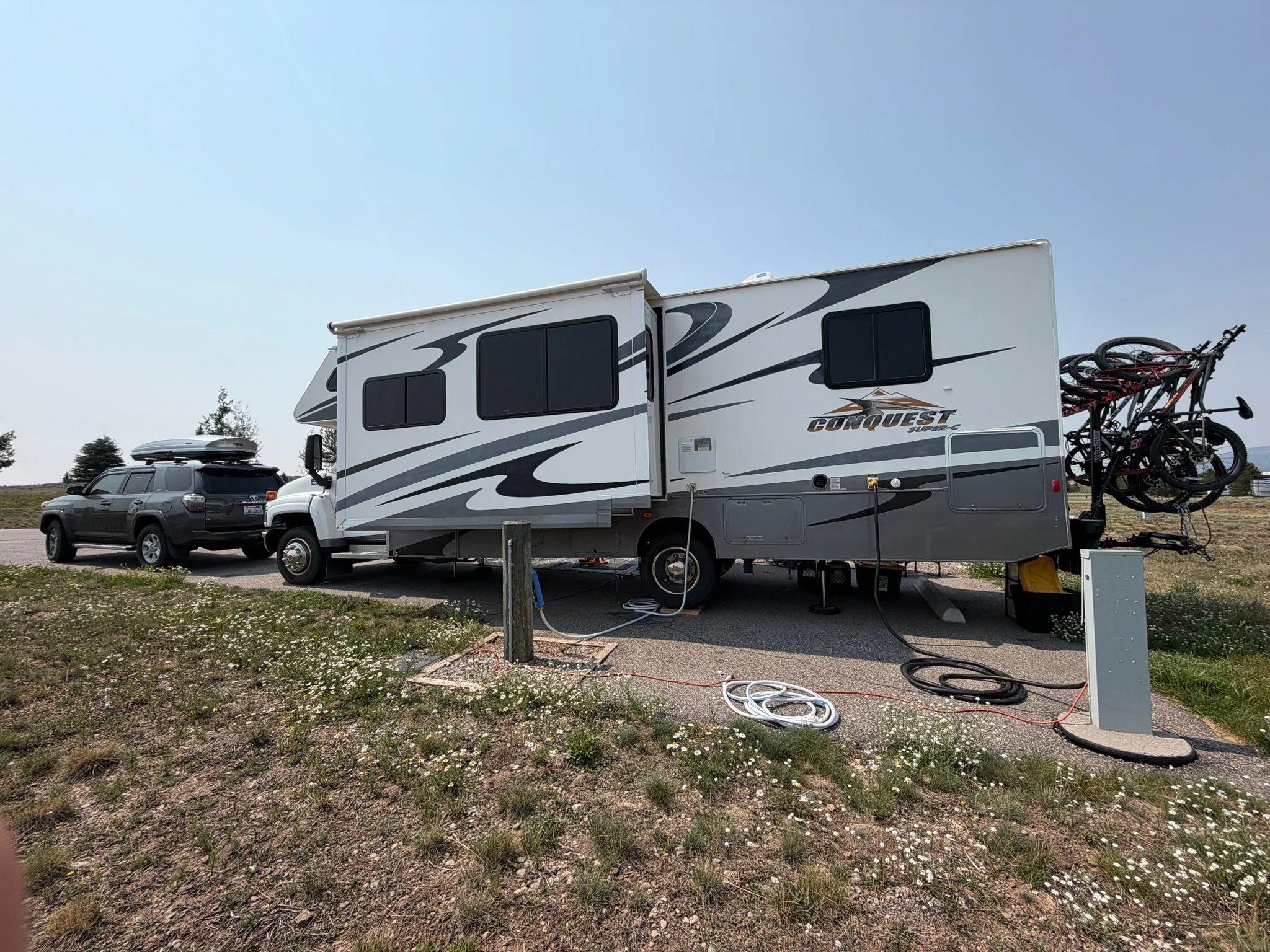
Before we left on our year-long road trip, I thought I had a pretty good idea of what made a campground good.
Full hookups were great.
A nice bathhouse was a bonus.
Maybe a playground.
Good reviews.
Close to wherever we were going.
And, of course, a site big enough for our motorhome.
Four months and a lot of campgrounds later, my list looks pretty different.
We've stayed at expensive RV parks with lots of amenities.
We've stayed at $20 campgrounds with almost nothing.
We've camped inside national parks.
We've had full hookups.
We've had no hookups.
We've stayed on pavement, gravel, and dirt.
And some of the campgrounds we've loved most aren't necessarily the ones that would look the best when you're scrolling through a reservation website.
Traveling with three kids has taught us that the things that make a campground look good aren't always the things that make it good to live in.
Here is what we look for now.
Location Might Be the Most Important Thing
I'll take a basic campground in a great location over a fancy RV resort an hour away from what we came to see.
We've learned this repeatedly.
At Zion, we stayed at Watchman Campground.
At Arches, we stayed at Devils Garden.
At Rocky Mountain, we stayed at Moraine Park.
At Grand Teton, we stayed at Colter Bay.
At Yellowstone, we stayed at Canyon Village.
At Glacier, we stayed at Apgar Campground.
There is something completely different about staying where you're actually exploring.
We can get up and start our day without a huge commute.
We can come back to camp for dinner.
We don't lose hours driving back and forth.
And sometimes the campground itself becomes part of the national park experience.
Devils Garden was a perfect example.
We didn't just visit Arches National Park during the day.
We lived among the red rocks for a few days.
That matters to us much more now than whether a campground has a pool.
Give Our Kids Somewhere to Play
This has moved way up our list.
We have three kids.
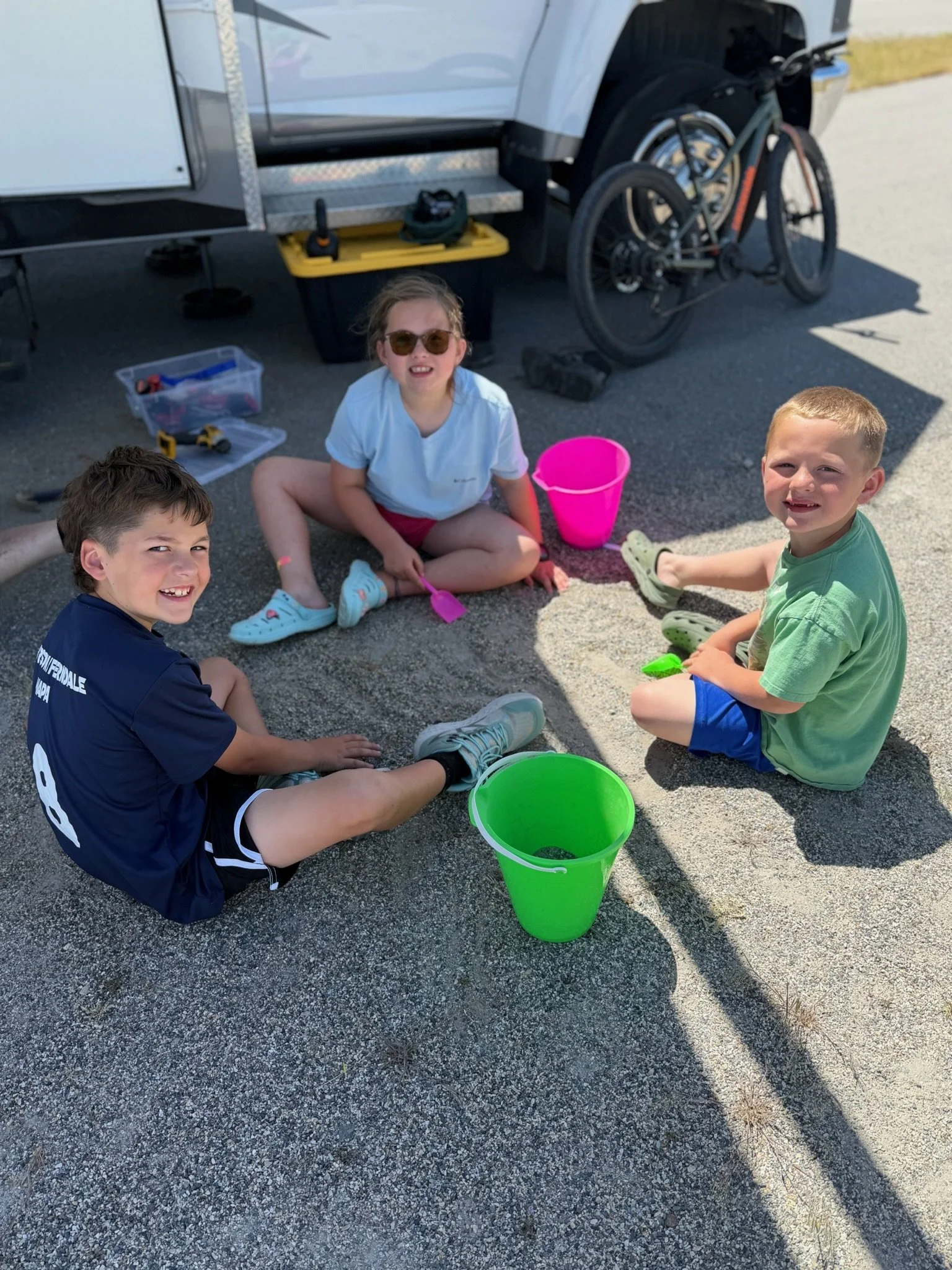
They need somewhere to go.
A campground can have beautiful sites, but if everyone has to stay within five feet of the RV because the sites are packed together, it isn't nearly as enjoyable for us.
We love campgrounds where the kids can:
Ride bikes.
Throw a football.
Explore.
Walk trails.
Play in the trees.
Fish nearby.
Just be kids.
At Henrys Lake, the kids had room to ride bikes and play in the field, and there were walking and biking trails throughout the campground.
Those things matter.
The kids don't care whether the campground has a fancy entrance or perfectly landscaped sites.
They care whether they can get outside and do something.
And when they're happy outside?
Everyone's campground experience gets better.
Trees Matter More Than I Expected
After spending so much time traveling through the Southwest, I didn't realize how much most of the family had missed trees until we got back into them.
When we pulled into Colter Bay in Grand Teton, the campground immediately reminded us of the Pacific Northwest.
The kids noticed it too.
Later, when we arrived at Canyon Campground in Yellowstone, Hudson loved the smell of the trees and Lincoln kept telling us it felt like home.
There's something about having a campsite tucked into the trees.
Shade.
Privacy.
The smell.
Kids exploring.
A campfire under the trees.
It makes a campsite feel more like camping and less like parking an RV.
That's obviously personal preference.
But after four months, we've learned that we're tree people.
Site Surface and Levelness Matter—a Lot
This isn't exciting.
But if you're traveling in an RV, it's important.
Is the site paved, gravel, or dirt?
And:
Is it level?
Those two things now belong near the top of what we want to know before reserving a campground.
A beautiful campsite isn't nearly as appealing when you're fighting an extremely unlevel pad trying to get the motorhome set up.
Dirt can become mud.
Loose gravel can make leveling more difficult.
Pavement is easy to set up on but sometimes comes with more developed, tightly packed campgrounds.
There isn't one surface we automatically require.
We've had great sites on different surfaces.
But I want to know what we're getting into.
That's why it's something we've started including in our Field to Ridge campground reviews.
When you're pulling in with a big RV after a long travel day, setup matters.
Bigger Isn't Always Better
Our rig takes up some space.
So obviously we need a site that physically fits us.
But beyond that, the campground itself doesn't need to be huge.
In fact, some of the smaller, simpler campgrounds have been our favorites.
There's less traffic.
The kids can explore.
It feels quieter.
You get to know the campground quickly.
And sometimes you feel much more connected to wherever you're staying.
A giant RV resort can offer 50 amenities.
That doesn't automatically make it better than a quiet campground beside a lake.
Full Hookups Are Great—Until You Realize You Don't Always Need Them
Before spending months in the RV, full hookups sounded extremely important.
And I'm not going to pretend I don't appreciate them.
Water.
Power.
Sewer.
Easy.
Especially when we're staying somewhere for a while.
But some of our favorite campgrounds have had limited hookups or none at all.
Grand Canyon had no hookups.
Mesa Verde had no hookups.
Arches had no hookups.
Lake Fork had no hookups.
Capital Reef had no hookups.
Yellowstone had no hookups.
Glacier had no hookups.
And we loved them all.
We've learned that we'll gladly give up hookups for the right location and campground.
That's one of the benefits of having an RV that can function without being plugged into everything.
Full hookups are convenient.
They aren't what makes the experience memorable.
A Campfire Still Matters to Our Kids
This one became very obvious in Grand Teton.
When the kids realized we could have a real campfire at Colter Bay, they were immediately excited.
It's such a simple thing.
Build a fire.
Sit around it.
Make s'mores.
Get sticky.
Stay outside until dark.
But those evenings have become part of the trip.
There have also been places where fire restrictions understandably didn't allow it.
That's part of traveling through the West.
So when we arrive somewhere and fires are allowed?
The kids notice.
A campfire doesn't determine whether we'll stay at a campground.
But it absolutely adds to the experience.
Fishing Nearby Is a Huge Bonus for Us
This one probably doesn't apply to every family.
For ours?
It's becoming a big deal.
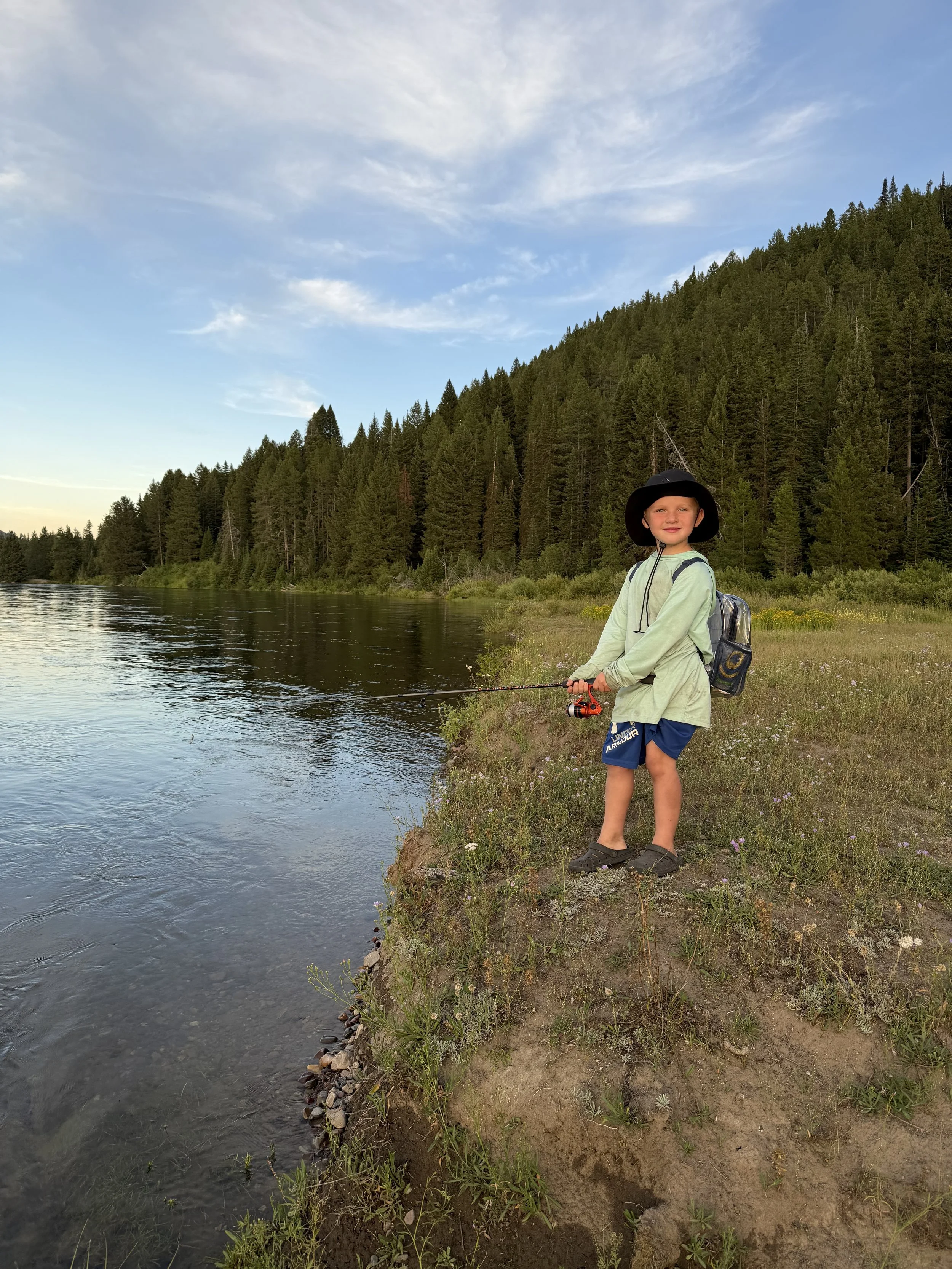
Some of our favorite evenings have involved Jessie and the boys grabbing fishing gear and heading to the water.
Sometimes everyone goes.
Sometimes it's just them.
Sometimes they catch fish.
Sometimes they don't.
It gives us something to do that doesn't require another big plan.
We don't have to drive to an attraction.
We don't need tickets.
We don't need a schedule.
Grab the rods and go.
When we find a campground with good fishing nearby, that gets our attention now.
We Care About the Campground Layout
This wasn't something I thought much about before.
Now I notice it immediately.
Are the roads safe for kids to bike?
How fast are vehicles moving?
Are the sites packed together?
Is there a field or open area?
Are there walking trails?
Are there multiple loops?
Is the campground quiet?
Are there biking trails for the kids?
A campground doesn't need a playground if the entire campground gives kids somewhere to move.
Simple Systems Can Still Be Annoying
Henrys Lake also gave us a good example of something that sounds minor but matters when you're actually living there.
Garbage.
There wasn't a dumpster where we could simply take our trash when we needed to.
Instead, we had to hold onto it until the collection window the next morning, around 7:30–9:30 a.m., and then place it near our site post for pickup.
With multiple kids producing garbage throughout the day, that wasn't particularly convenient.
We had to keep it with us overnight.
Is that enough to ruin a campground?
Of course not.
We still liked Henrys Lake.
But it's exactly the kind of detail I want to know before staying somewhere.
And it's why campground reviews based only on:
Beautiful campground! Five stars!
aren't always very helpful.
I want to know what it's actually like to live there for several days.
Amenities Aren't Worth Much If We Don't Use Them
Pools.
Game rooms.
Dog parks.
Stores.
Laundry rooms.
Playgrounds.
Organized activities.
Some families love all of those things.
And there are definitely times when they're useful.
But we've learned not to automatically assume a longer amenity list means a better campground.
If we're spending our days hiking in a national park, we're probably not spending six hours at the campground pool.
I'd rather have:
A level site.
Room for the kids.
Trees.
Good location.
Trails.
Fishing.
A fire ring.
And a little space between us and the neighbors.
Give us those things and we're pretty happy.
Expensive Doesn't Mean Better
We've stayed at campgrounds costing $20 a night.
We've stayed at campgrounds costing considerably more.
Price and experience don't always line up.
One of our favorite value stays was Sunglow Campground near Torrey, Utah.
It was simple.
But it worked.
Meanwhile, we've paid significantly more for RV parks that were perfectly fine but didn't give us anything memorable.
That's changed the way I think about campground value.
I'm not asking:
“How many amenities do we get for the price?”
I'm asking:
“Does this campground make our trip better?”
Sometimes a $20 site does that better than an $80 one.
Our Ideal Family Campsite Now
After four months, I think I could describe it pretty easily.
Give us a site that's:
Level.
Preferably gravel or paved, although we'll take dirt if it's a good site and conditions are dry.
Large enough that setup isn't stressful.
Surrounded by some trees.
Enough room for the kids to play.
Safe for bikes.
Near trails or water.
A fire ring when conditions allow.
Reasonably close to the things we came to see.
And enough separation that we don't feel like we're camping in our neighbor's living room.
We don't need a resort.
Honestly, we probably don't even want one most of the time.
Give us a good campsite in a great location and let the kids go outside.
The Best Campgrounds Become Part of the Memory
That's probably the biggest thing we've learned.
Before this trip, campgrounds were mostly where we stayed while visiting somewhere.
Now some of them are places we remember just as much as the destination.
We remember sitting around the fire.
The kids riding bikes.
Fishing after dinner.
The trees.
The view outside the RV.
The campground where everyone immediately felt at home.
Those experiences don't show up on an amenities list.
And they aren't always obvious when you're booking online.
That's one of the reasons we're documenting our campgrounds as we travel.
I want another family pulling a big RV with three kids to be able to find the things I actually want to know:
Is the site level?
What's the surface?
Can the kids play?
Can they bike?
How difficult is it to get into?
How far is it from the park?
Is there somewhere to fish?
Would we actually stay here again?
Because after four months of living in campgrounds, we've realized something pretty simple:
A great campground isn't the one with the most stuff.
It's the one where your family actually wants to spend time.
And for us, that's becoming pretty easy to recognize.
-Kayla