
What We Wish We Knew Before Taking a Long Family Road Trip
The things we’ve learned after four months of traveling the country with three kids
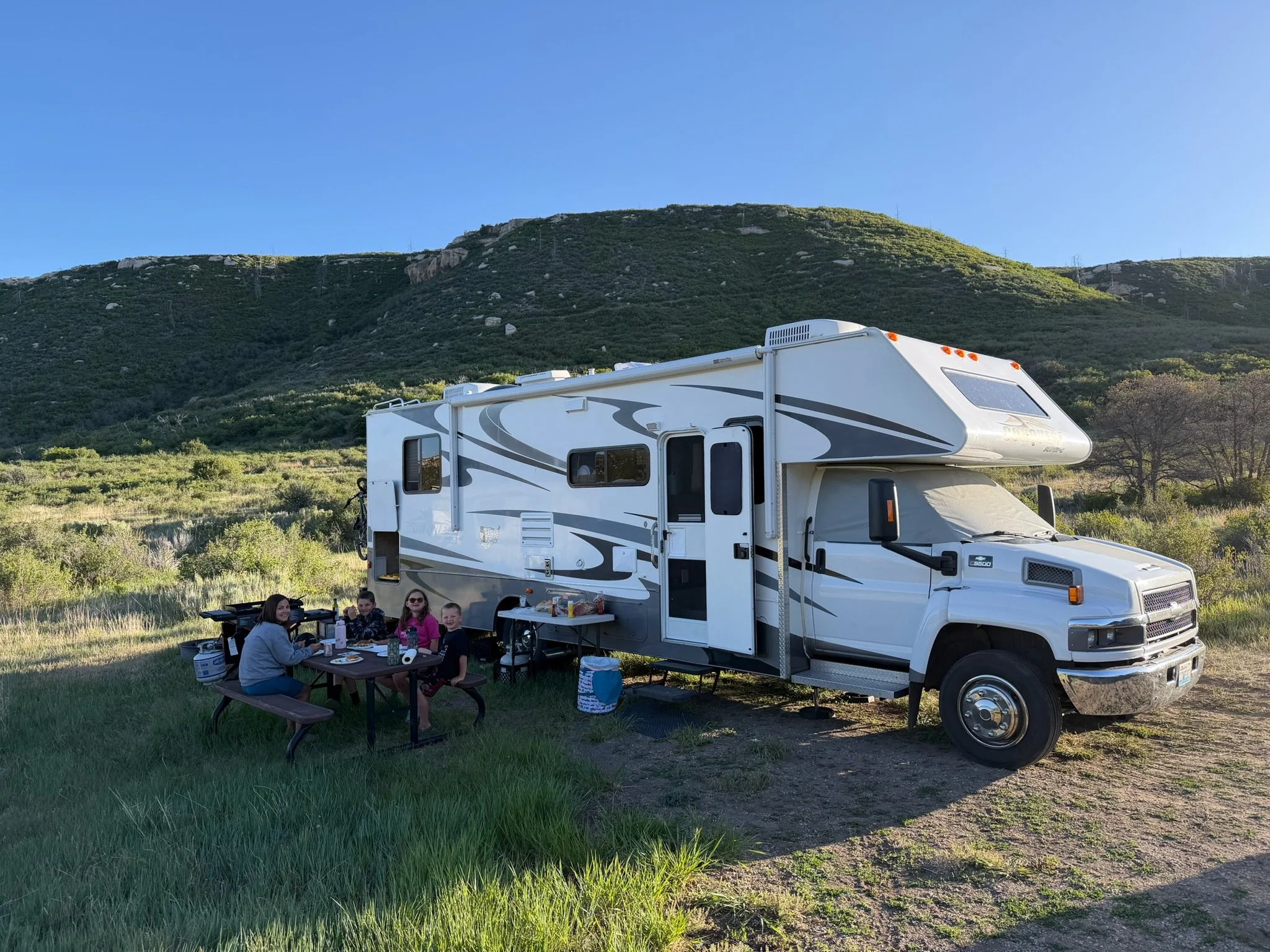
Before we left home, we planned.
A lot.
We planned our route. Campgrounds. National parks. Work days. Driving days. Budgets. What we needed in the RV. What the kids needed. Where we wanted to be and roughly when we needed to get there.
We’re planning to be on the road for about seven months total, but now that we’re roughly five months into the trip, we’ve already learned plenty of things no spreadsheet was going to teach us.
There are things we would do exactly the same.
There are also things we understand completely differently now.
Some are practical.
Some have changed the way we travel.
And some have changed the way we think about taking our kids on adventures at all.
If we were standing in our driveway getting ready to leave again, these are the things I’d want to know.
You Don’t Need to Plan Every Day
I love a plan.
I want to know where we’re going, what there is to see, which hikes we might want to do, and what we absolutely don’t want to miss.
But one of the biggest things we’ve learned is that a good plan needs room to change.
Kids wake up tired.
Weather changes.
Someone gets sick.
A trail takes twice as long as expected.
A parking lot is full.
A boat shuttle has a 90-minute wait.
Or you find somewhere your family loves and decide you don’t want to leave yet.
Jenny Lake was a perfect example.
We planned to take the boat across the lake.
The wait was huge.
So we walked instead.
That unplanned change turned into one of our favorite hikes in Grand Teton.
We’ve learned that planning gives us options.
It doesn’t give us rules.
Moving Slower Is Usually Better
Early in a trip, it’s tempting to think:
We’re already here. We should see everything.
We’ve become much better at letting that go.
Three great things in a day are better than eight rushed things.
Sometimes one great hike is enough.
Sometimes the kids need an afternoon at the campground.
Sometimes Jessie needs to work and the rest of us need a slow day.
And sometimes nobody wants another visitor center, overlook, or scenic drive.
We spent eleven days around Yellowstone and still learned that more time doesn’t mean you need to fill that time with more attractions.
Some of our favorite memories haven’t come from accomplishing everything on an itinerary.
They’ve come from slowing down enough to enjoy where we already were.
Kids Need Campground Days Too
This one surprised me.
We can be surrounded by one of the most beautiful places in America, and sometimes our kids just want to stay at the campground.
They want to ride bikes.
Throw a football.
Explore the trees.
Build a fire.
Play.
Do absolutely nothing important.
At first, it can feel like we’re wasting a day.
We drove all this way to see a national park, and now the kids want to play beside the RV?
But we’re learning that those days matter.
Adults need downtime.
Kids do too.
And when we give everyone a chance to slow down, the next adventure usually goes much better.
The Campground Matters More Than We Expected
Before living on the road, I probably would have looked at a campground mostly as a place to park the RV.
Now?
We know how much it can affect the entire experience.
A good campsite becomes home.
We notice whether the site is paved, gravel, or dirt.
We notice whether it’s level.
Whether the kids have room to play.
Whether there are trees.
Whether we can have a campfire.
Whether we can walk or bike around the campground.
Whether there’s fishing nearby.
Whether we’re 10 minutes or an hour from what we actually came to see.
We’ve stayed at campgrounds where the kids immediately jumped out and started exploring.
We’ve stayed at others that were simply a place to sleep.
There’s a big difference.
When you’re traveling for a week, maybe that doesn’t matter as much.
When the RV is your home for months?
It matters a lot.
Driving Days Take More Out of Everyone Than You Think
Google Maps might say four hours.
That doesn’t mean it’s going to take four hours.
Fuel.
Bathroom stops.
Food.
Kids.
Traffic.
Construction.
Pulling into places that can actually accommodate a motorhome.
Everything takes longer.
We’ve learned not to treat travel days like normal adventure days.
Arriving at a campground and immediately trying to squeeze in a major attraction usually isn’t worth it.
Sometimes the best arrival-day plan is:
Set up camp.
Make dinner.
Let the kids play.
Maybe go fishing.
Build a fire.
Go to bed.
The adventure can start tomorrow.
Having Our Own Kitchen Has Been Huge
Traveling with five people gets expensive quickly.
Eating out with five people gets expensive even faster.
Having the motorhome means we can make breakfast before leaving, pack lunches, bring snacks, and come back to camp for dinner.
That saves money.
But honestly, convenience may be just as important.
We don’t have to find a restaurant every time someone is hungry.
We don’t have to wait for a table after a long hiking day with three tired kids.
And we don’t have to spend a bunch of money every time everyone needs lunch.
Eating out can still be part of the adventure.
We’ve found coffee shops we loved.
We’ve gotten ice cream.
We’ve tried local restaurants.
But those things feel more special when every meal doesn’t have to come from somewhere else.
Always Carry More Snacks Than You Think You Need
I realize I already said this in our hiking post.
It deserves to be said again.
Bring snacks.
In the car.
On the trail.
At the visitor center.
Probably everywhere.
A surprising number of family emergencies can apparently be resolved with food.
Early Mornings Are Worth It
I never thought 4:00 a.m. would become a reasonable vacation alarm.
Then we started visiting national parks in peak season.
Starting early has given us some of our best experiences.
Jessie and Hudson started down the South Kaibab Trail at 4:45 a.m. and were back before the Grand Canyon heat became a major factor.
We entered Yellowstone before sunrise to reach Lamar Valley during prime wildlife hours.
We’ve watched the sun come up while most visitors were still sleeping.
Early mornings mean cooler temperatures.
Better parking.
Fewer people.
More active wildlife.
And sometimes a completely different national park experience.
Getting three kids out the door before sunrise isn’t always fun.
But almost every time we’ve done it, we’ve been glad we did.
Famous Doesn’t Always Mean Best
Yellowstone taught us this.
We expected Yellowstone to be one of the highlights of the entire trip.
It wasn’t.
We expected Grand Teton to be beautiful.
We didn’t expect to fall in love with it.
We’ve had smaller hikes become bigger memories than famous attractions.
We’ve enjoyed evenings fishing more than some places we drove hours to see.
We’ve stayed at inexpensive campgrounds we loved more than expensive ones.
Four months on the road has taught us to stop assuming that the place everyone talks about will automatically be our favorite.
Sometimes it is.
Sometimes it isn’t.
Your family gets to decide what your family loves.
The Kids Don’t Care About Checking Everything Off
Adults love lists.
National parks practically encourage them.
See this.
Hike that.
Visit this overlook.
Get the picture.
Check the box.
The kids don’t care.
They don’t know that something is ranked the number-one attraction on a website.
They care that they saw a fox.
They care that Grandpa brought RC boats.
They care that the ice cream scoop was enormous.
They care that they caught a fish.
They care that their cousin surprised them after four months apart.
They care that we had a campfire.
That has been a good reminder for Jessie and me.
The goal isn’t to complete the park.
The goal is to experience it together.
Some of the Best Memories Aren’t the Big Adventures
I expected our biggest memories to come from the biggest places.
And some have.
The Grand Canyon was incredible.
The Tetons were incredible.
We’ve stood in places that don’t even look real.
But when we talk about the trip, the little stories keep coming up too.
Hudson looking at Jessie after catching a fish and saying:
“I think I’m finally getting it.”
Macie grunting at bison in Yellowstone.
The kids getting completely soaked in a Rocky Mountain thunderstorm and eventually laughing about it.
Playing football at camp.
Fishing until dark.
Campfires.
Ice cream.
Seeing family.
Seeing friends.
Those things weren’t necessarily on the itinerary.
But more and more, we’re realizing:
Those things are the trip.
Living in a Small Space Isn’t as Crazy as It Sounds
Five people in a motorhome sounds like a lot.
Sometimes it is.
There is nowhere to disappear.
Everyone’s stuff has to have a place.
If one person makes a mess, everyone gets to enjoy it.
And there are definitely moments when the RV feels very small.
But we adapted faster than I expected.
Outside becomes part of our living space.
The campground becomes the backyard.
National parks become the places we go during the day.
And we need much less inside the RV than we probably thought we did before leaving.
We’re together a lot.
A lot.
But that was also part of the point.
You Don’t Need Everything Before You Leave
Before a big trip, it’s easy to keep buying things.
What if we need this?
What if that breaks?
Should we have another one of these?
There are obviously things you need to travel safely.
But we’ve learned that you can solve a lot of problems on the road.
There are stores.
Hardware stores.
RV shops.
Laundromats.
Deliveries.
There is almost always a solution.
You don’t have to perfectly prepare for every possible scenario before leaving your driveway.
At some point, you just have to go.
The Biggest Thing We’ve Learned So Far
Before we left, the idea of spending roughly a year of traveling around the country with three kids sounded enormous.
And we’re only about four months into it.
We still have a lot of this trip ahead of us.
But something surprising has already happened.
It became normal.
Packing hiking bags became normal.
Moving the RV became normal.
Finding the next grocery store became normal.
Sleeping in national parks became normal.
Having mountains outside our window became normal.
Our kids adapted.
We adapted.
And many of the things that seemed intimidating before we left have simply become part of our life.
That may be the biggest thing I’d tell another family considering a long road trip.
You don’t have to have everything figured out before you go.
Plan.
Prepare.
Know where you’re going.
Have a budget.
Make sure your equipment is safe.
But eventually, you have to stop planning and start doing.
There will be things you didn’t think about.
Plans will change.
Kids will complain.
Something will break.
You’ll spend more money than you expected somewhere.
You’ll arrive late.
You’ll miss something you wanted to see.
And you’ll figure it out.
We certainly haven’t done this trip perfectly.
And we’re still learning.
But perfection was never the reason we left.
We wanted to see the country with our kids.
We wanted to spend more time outside.
We wanted to show them mountains, rivers, deserts, wildlife, and places they’d previously only seen in pictures.
And we wanted to prove—to them and probably a little bit to ourselves—that you don’t have to wait for the perfect time to have an adventure.
We still have several months ahead of us.
I’m sure there are plenty more lessons waiting for us down the road.
But four months in, one thing already feels pretty clear:
Sometimes you just have to pull out of the driveway.
The rest you learn along the way.
-Kayla