
Why We Don’t Plan Our Family Adventures Around the Youngest Kid
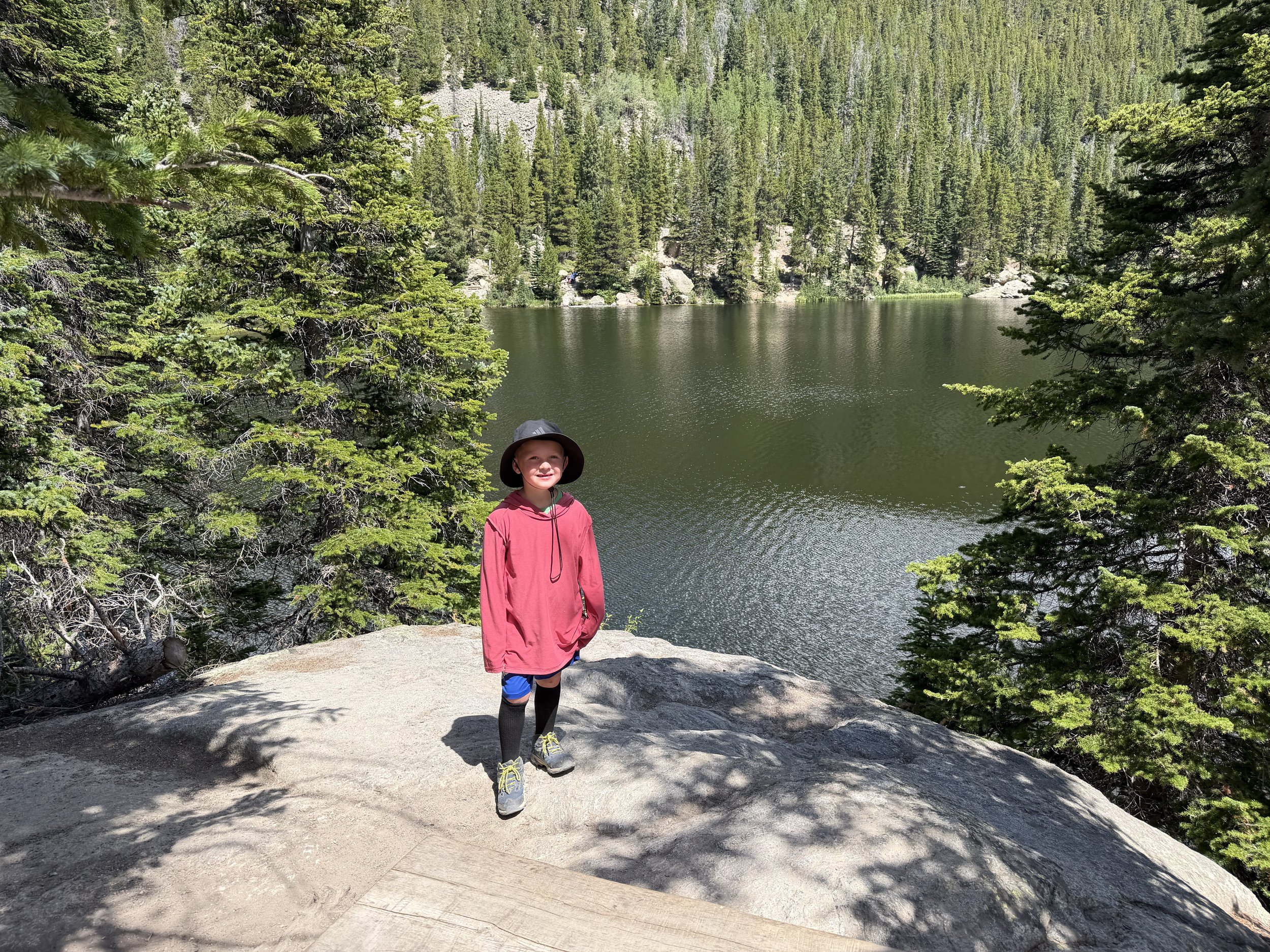
How we challenge three kids with different ages and abilities without leaving anyone behind
One of the hardest parts about planning adventures with three kids is that they’re three completely different kids.
Different ages.
Different abilities.
Different personalities.
Different levels of patience.
And very different opinions about what sounds like fun.
It would be easy to look at our youngest child, figure out what he can comfortably do, and make that the limit for the entire family.
We don’t.
That probably sounds a little harsh at first.
But after years of taking our kids hiking, fishing, camping, and now traveling around the country with them, we’ve learned something important:
Fair doesn’t always mean everyone does the exact same thing.
Sometimes we adventure together.
Sometimes we split up.
Sometimes one kid gets pushed a little harder.
Sometimes another gets an easier day.
And sometimes one child gets an adventure that simply isn't appropriate for everyone else yet.
We aren't trying to make every experience equal.
We're trying to give each of our kids opportunities to grow.
Three Kids Means Three Different Limits
It's tempting to think of us as a family of five and plan everything accordingly.
But when we're looking at a trail, Jessie and I aren't only asking:
“Can our family do this?”
We're thinking about each kid individually.
Can Hudson do it?
Can Macie do it?
Can Lincoln do it?
And those answers aren't always the same.
Our kids aren't only different ages. They also have different strengths.
One might be able to physically hike the distance but struggle mentally when a trail feels long.
Another might complain for half the hike and somehow still have enough energy to run around the campground afterward.
One might be excited because there's fishing at the end.
Another couldn't care less about the fish but will hike for the promise of ice cream.
Learning those differences has become a huge part of how we plan.
We Don't Automatically Say No Because One Child Can't Do It
The Grand Canyon is probably the best example.
Jessie wanted to take Hudson down the South Kaibab Trail to Skeleton Point.
That's not something we automatically needed to turn into a whole-family adventure.
Hudson was nine.
He's fit.
He hikes regularly with Jessie.
And they could start extremely early and move at their own pace.
So they went.
At 4:45 a.m., they started down the trail.
By 7:45 a.m., they were back at the trailhead.
Hudson did great.
The day before, he had looked into the canyon and thought the trail looked steep and scary.
Then he actually got onto it and realized it wasn't nearly as intimidating as it looked from above.
That was an experience he was ready for.
That doesn't mean all three kids needed to do it.
And it doesn't mean we needed to skip it because all three kids weren't ready.
Sometimes splitting up lets us say yes instead of making everyone say no.
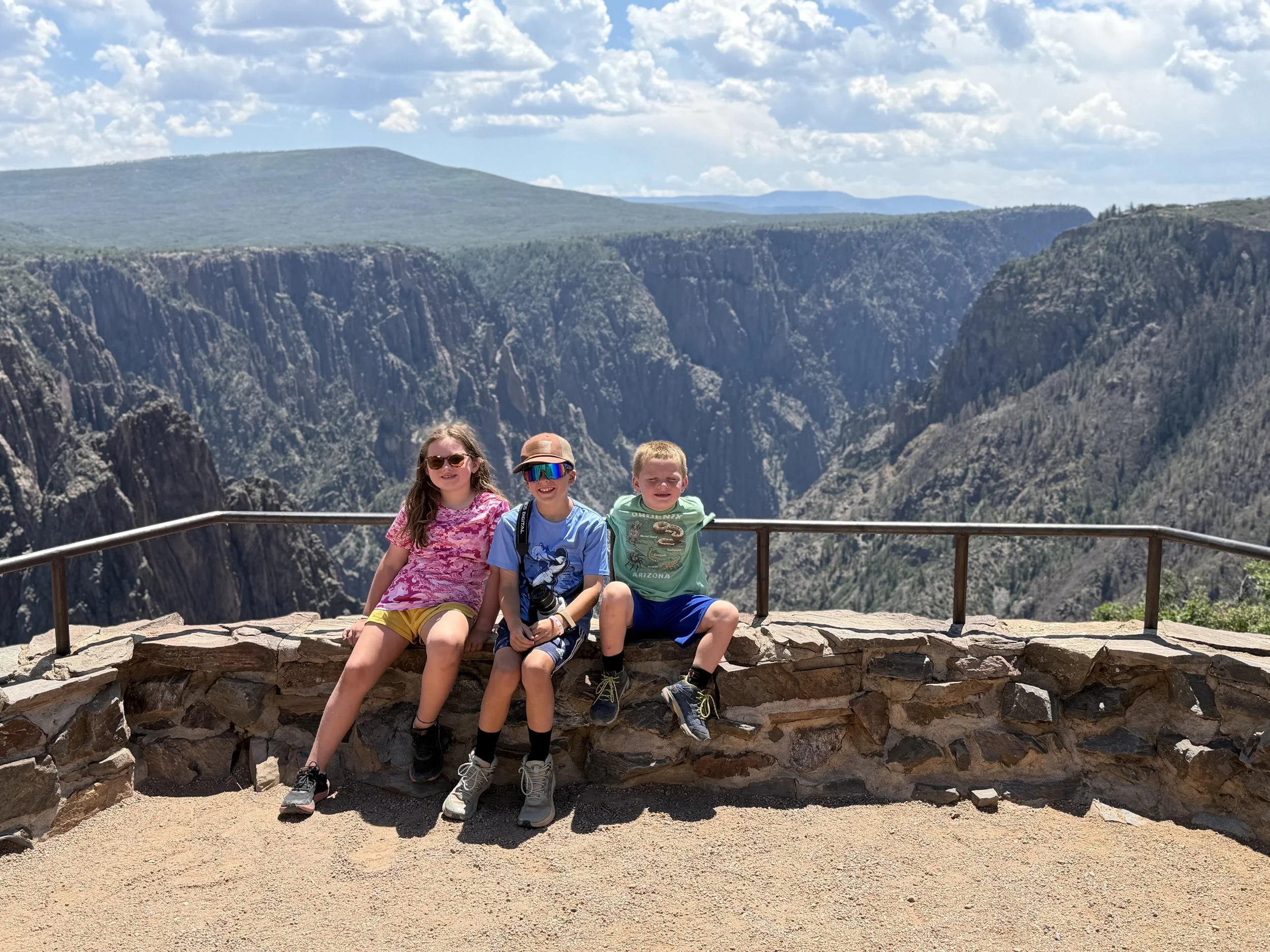
But Most of the Time, We Want to Adventure Together
Splitting up isn't our default.
Most of our adventures involve all five of us.
And that's important to us.
We've hiked around mountain lakes.
Walked among the hoodoos at Bryce.
Explored Arches.
Hiked around Jenny Lake.
Climbed to Inspiration Point.
Hiked to alpine lakes in Rocky Mountain National Park.
Somebody is usually faster.
Somebody is usually slower.
Someone complains.
Someone wants a snack.
But we get there together.
We don't expect the youngest kid to move like the oldest.
And we don't necessarily expect the oldest kid to dictate the pace either.
The goal is finding a pace that lets the family keep moving.
We Are Okay With Our Kids Being Uncomfortable
This might be where our approach differs from some families.
We don't think discomfort automatically means something is wrong.
Being tired is uncomfortable.
Walking uphill is uncomfortable.
Getting up at 4:00 a.m. is uncomfortable.
Being hot is uncomfortable.
Waiting is uncomfortable.
Having to walk farther than you wanted is uncomfortable.
Our kids experience all of those things.
And sometimes they complain about them.
That's okay.
We're not trying to make every adventure comfortable.
There is a difference between uncomfortable and unsafe.
Jessie and I are responsible for knowing that difference.
If a child is overheating, injured, sick, genuinely exhausted, or conditions are becoming unsafe, that's completely different from:
“My legs are tired and I don't want to walk anymore.”
We've learned not to treat those two situations as the same thing.
Complaining Isn't an Automatic Turnaround
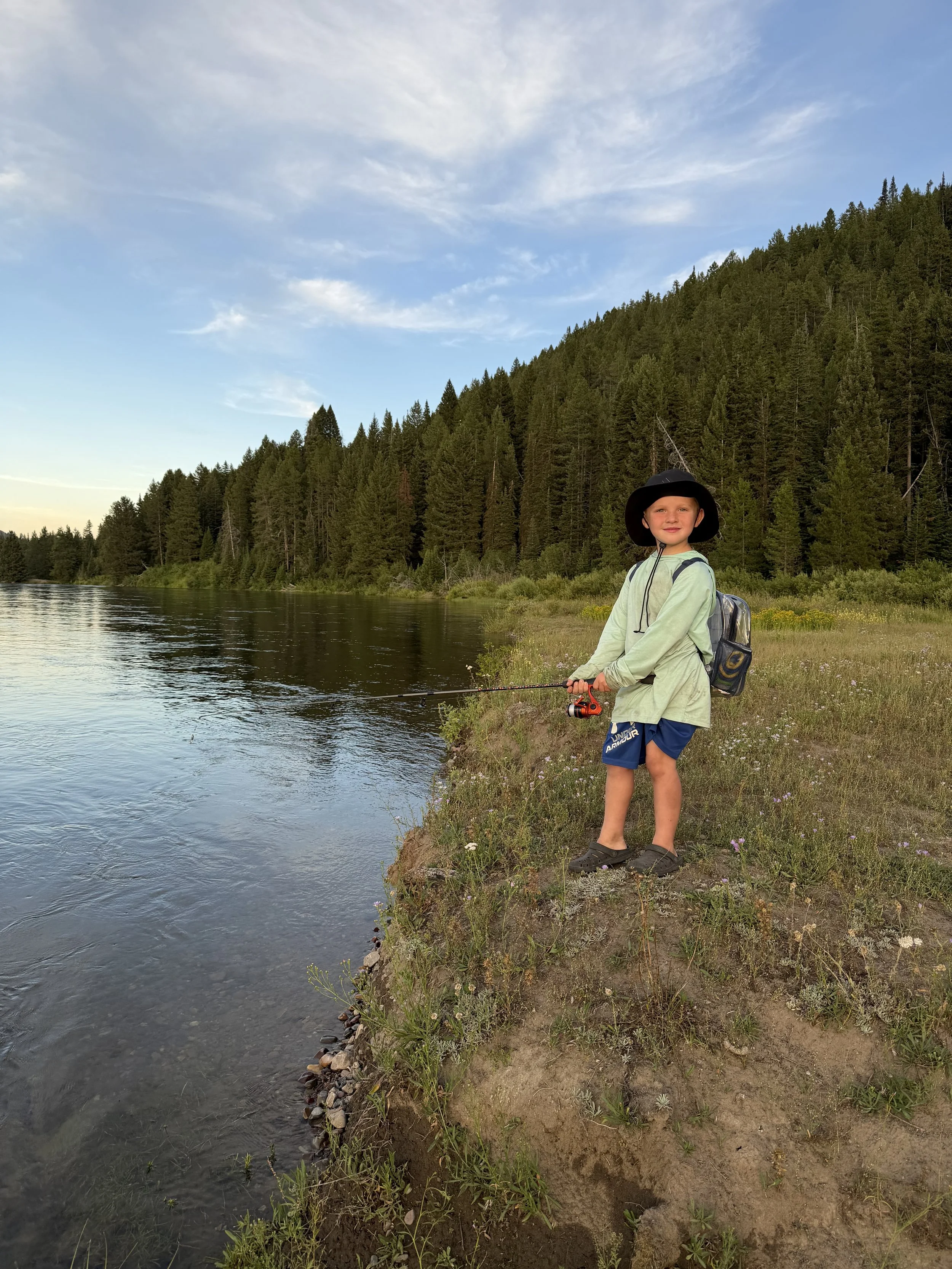
Our kids complain.
There.
I said it.
They don't joyfully skip down every trail thanking us for the wonderful childhood we're providing.
Sometimes they think our ideas are terrible.
At Jenny Lake, our plan was to take the boat shuttle across the lake and hike to Hidden Falls and Inspiration Point.
Then we discovered the shuttle had more than a 90-minute wait.
New plan.
We're walking.
The kids were not impressed.
There were sighs.
There were eye rolls.
We may have mentioned ice cream.
Then we started walking.
And they did it.
We hiked around the lake, reached Hidden Falls, climbed to Inspiration Point, took in the views, and eventually made our way back.
It became one of our favorite days in Grand Teton.
If complaining automatically ended an adventure, we would have missed a lot of great experiences on this trip.
We Also Know When Pushing Isn't Worth It
The opposite matters just as much.
There isn't a prize for making your child finish a trail.
Sometimes the answer really is:
We're done.
Maybe the weather changes.
Maybe someone isn't feeling well.
Maybe the heat is worse than expected.
Maybe a child is genuinely exhausted.
Maybe we're simply having a terrible day.
We're trying to raise capable kids.
We're not trying to prove something through them.
That's an important difference.
Pushing through normal discomfort can teach a kid that they're capable of something difficult.
Pushing through an unsafe situation teaches nothing worth learning.
Different Kids Need Different Motivation
We've also learned that you can't motivate every child the same way.
Sometimes the destination is enough.
A waterfall.
A lake.
A viewpoint.
Wildlife.
Fishing.
Sometimes the motivation is food.
Let's be honest.
Ice cream has carried this family through some miles.
Sometimes we break the trail into pieces.
Let's just get to the next lake.
Let's get to the waterfall.
Let's stop at that rock.
Let's eat something when we reach the top.
Kids don't always need to know that they're doing a seven-mile hike.
Sometimes they just need to know what we're doing for the next mile.
Individual Adventures Have Become Really Special
One thing I didn't necessarily expect is how valuable the smaller adventures have become.
When Jessie takes Hudson on a harder hike, that's time the two of them get together.
When Jessie takes the boys fishing, they get something that's theirs.
When I take one of the kids somewhere individually, the entire dynamic changes.
With three kids, individual time can be hard to find.
Travel has actually created more opportunities for it.
And I think there is something special about a child getting an adventure that feels like their adventure.
Hudson will always have the story of hiking to Skeleton Point with his dad.
His siblings don't need the exact same story.
They'll have their own.
We Don't Want Our Oldest Child to Always Be Held Back
This is another reason we don't automatically plan everything around our youngest.
Being the oldest shouldn't mean you're always limited to what your youngest sibling can do.
Hudson is capable of things his younger siblings aren't ready for yet.
As he gets older, that gap will probably grow.
Eventually there may be hikes, hunting trips, fishing adventures, or other experiences Jessie can take him on that simply aren't appropriate for everyone.
That's okay.
And someday Lincoln will be older too.
He'll get his turn.
The goal isn't making sure every child gets exactly the same experiences at exactly the same age.
The goal is giving each child opportunities when they're ready.
We Don't Want Our Youngest Child to Become the Excuse Either
There's another side to this.
It's really easy to say:
“We can't do that. We have a five-year-old.”
Sometimes that's completely reasonable.
But sometimes I think adults use young kids as the reason not to try something before finding out whether the child could actually do it.
We've been surprised repeatedly by what our kids can handle.
Not because they're superhuman.
Because kids adapt.
They learn.
They get stronger.
They gain confidence.
And each successful adventure gives them something to build on for the next one.
If we always planned around what was easiest for our youngest child, we'd probably never discover what he was actually capable of.
Fair Doesn't Mean Equal
I think this is what our approach really comes down to.
Three kids don't need three identical childhoods.
They don't need to hike the same trail at the same age.
They don't need to catch the same fish.
They don't need to get the same adventure every time.
Sometimes Hudson gets to do something the younger kids can't.
Sometimes Macie gets something special.
Sometimes Lincoln gets an experience that's just his.
And most of the time, all five of us are together trying to figure it out as we go.
We're not keeping score.
We're raising three individual kids.
Challenge Them, But Know Them
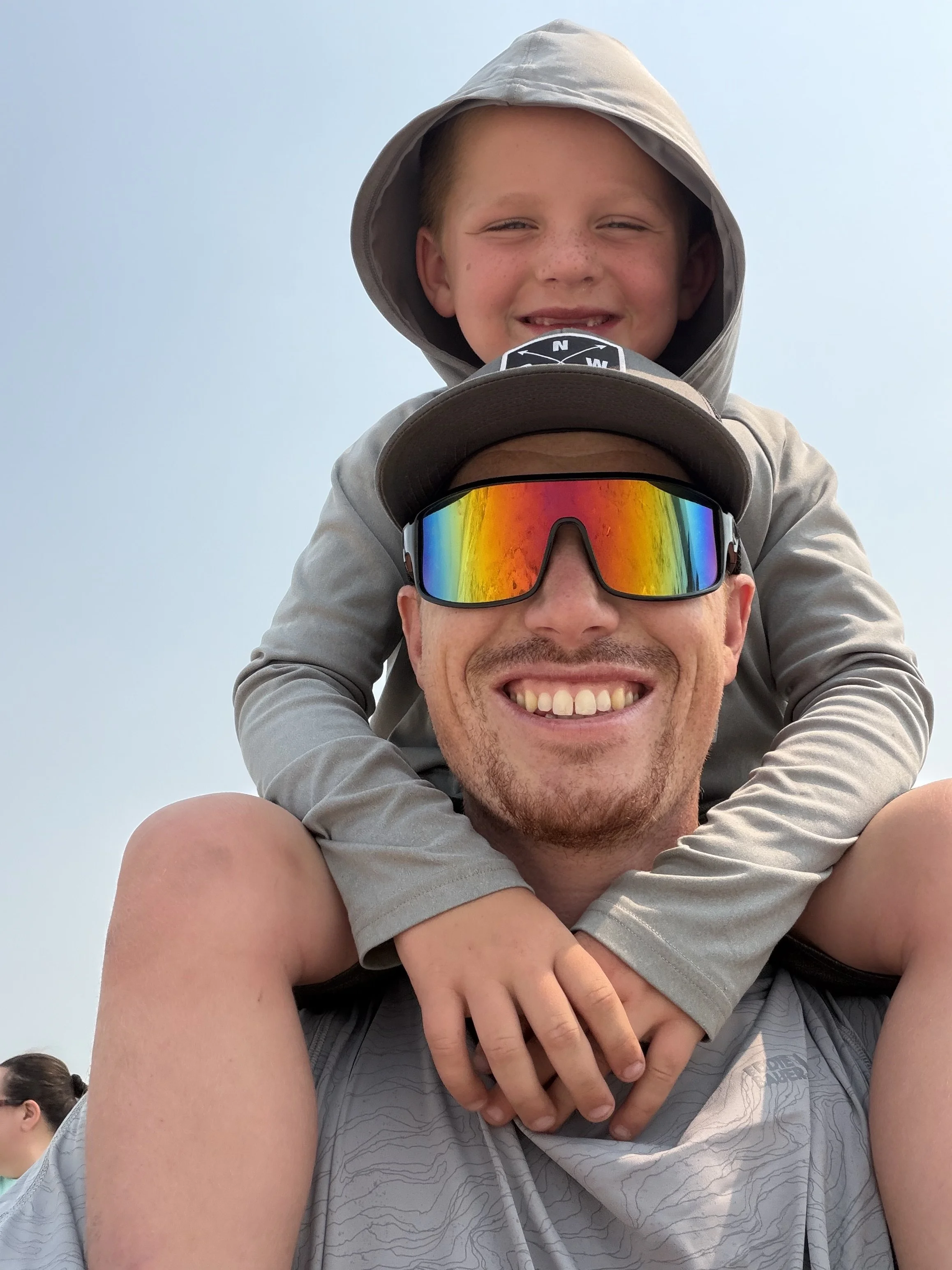
I don't think there's a mileage chart or an age recommendation that can tell another parent exactly what their child can do.
You know your kid.
That's what matters.
Know when they're complaining because something is difficult.
Know when something is actually wrong.
Know what motivates them.
Know what scares them.
Know when they need encouragement.
Know when they need a break.
And know when they need you to say:
“You can do this.”
Our kids have surprised us repeatedly during these first four months on the road.
Not because we've forced them through every adventure we wanted to do.
Because we've tried to give them opportunities to find their own limits instead of deciding those limits for them.
Sometimes that means all five of us are on the trail.
Sometimes it means Jessie and Hudson leave camp before sunrise.
And sometimes it means we turn around.
All three can be the right decision.
We aren't trying to raise kids who never complain or kids who can hike farther than everyone else's.
We want them to learn that hard doesn't automatically mean impossible.
And we want them to know that they don't have to be the same as their brother or sister.
They just have to be willing to try.
-Kayla