
Your Kids Can Do More Than You Think
Why we stopped assuming adventure had to wait until our kids were older
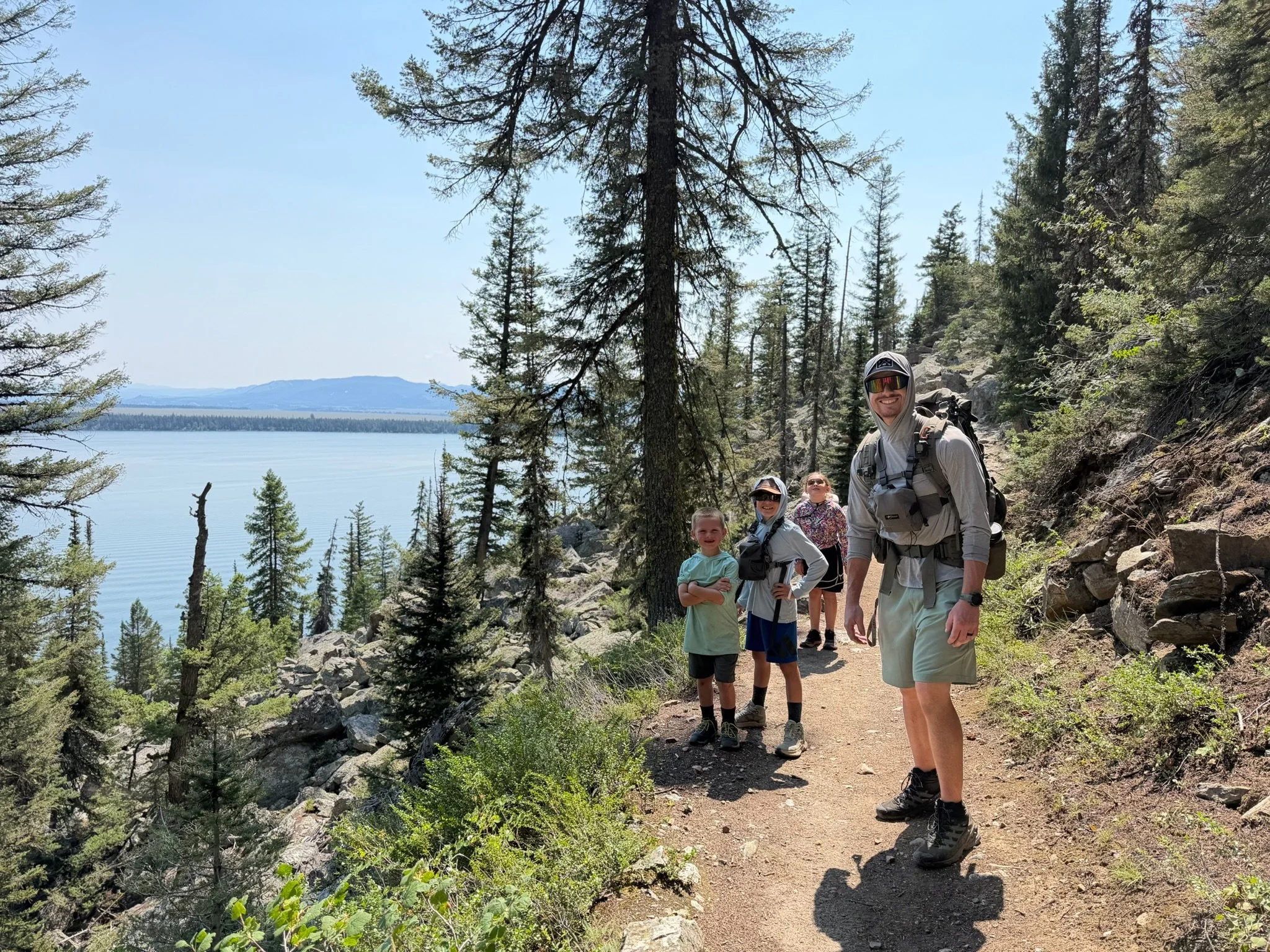
Hiking 6 mile loop in Grand Tetons
There are a lot of things we’ve done with our kids that probably would have been easier without them.
Hiking into the Grand Canyon.
Spending hours on mountain trails.
Fishing until dark.
Getting up before sunrise to look for wildlife.
Living in a motorhome for months at a time.
Changing plans at Jenny Lake when the boat shuttle had a 90-minute wait and deciding to walk instead.
And there have definitely been moments when our kids weren’t thrilled with our decisions.
We’ve heard:
“How much farther?”
“Do we have to?”
“My legs are tired.”
And we’ve seen plenty of eye rolls when Jessie and I announce that the new plan involves several more miles of hiking.
But we’ve also watched something happen over and over again.
They do it.
Not perfectly.
Not always happily.
And certainly not without snacks.
But they do it.
One of the biggest things this trip has taught Jessie and me is that our kids are capable of far more than we sometimes give them credit for.
I think, as parents, we can unintentionally decide something is too difficult for our children before we ever give them the opportunity to try.
We’re learning to stop doing that.
We Don’t Expect It to Be Easy
I want to make an important distinction right from the beginning.
This isn’t about forcing kids to finish something regardless of how they’re doing.
There is a big difference between challenging a child and ignoring their limits.
Sometimes we need to turn around.
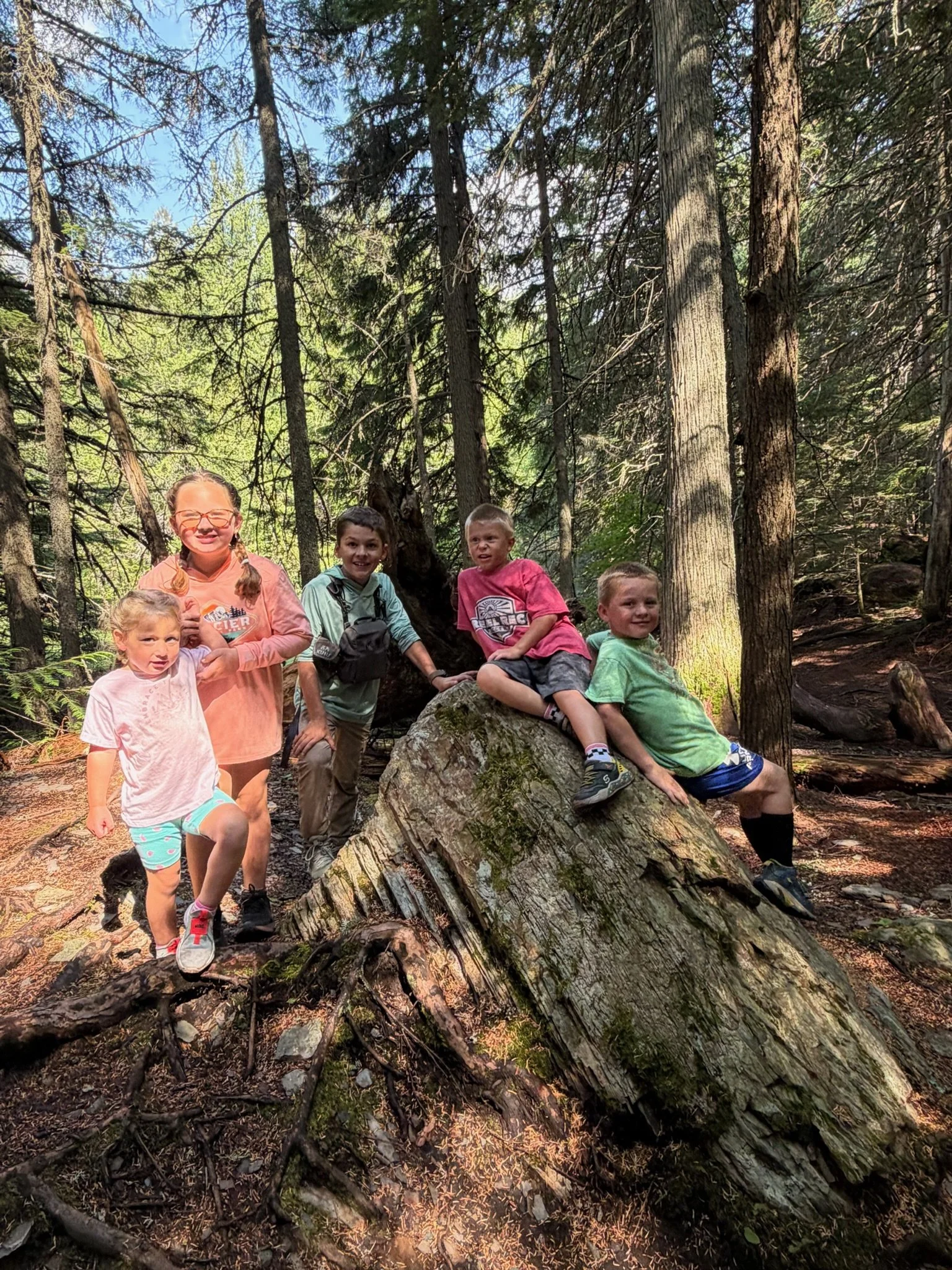
Hiking at Glacier with Cousins
Sometimes someone genuinely needs a break.
Sometimes the weather changes.
Sometimes a kid is simply done for the day.
As parents, it’s our responsibility to know the difference.
But we’ve also learned that discomfort doesn’t automatically mean something is wrong.
Tired legs aren’t an emergency.
Being bored isn’t an emergency.
Not wanting to walk another mile doesn’t necessarily mean they can’t walk another mile.
And sometimes the only way our kids discover what they’re capable of is by continuing when something becomes a little uncomfortable.
The Grand Canyon Changed My Perspective
One of my favorite examples happened at the Grand Canyon.
Jessie had already completed a huge hike from the South Rim down to the Colorado River and back.
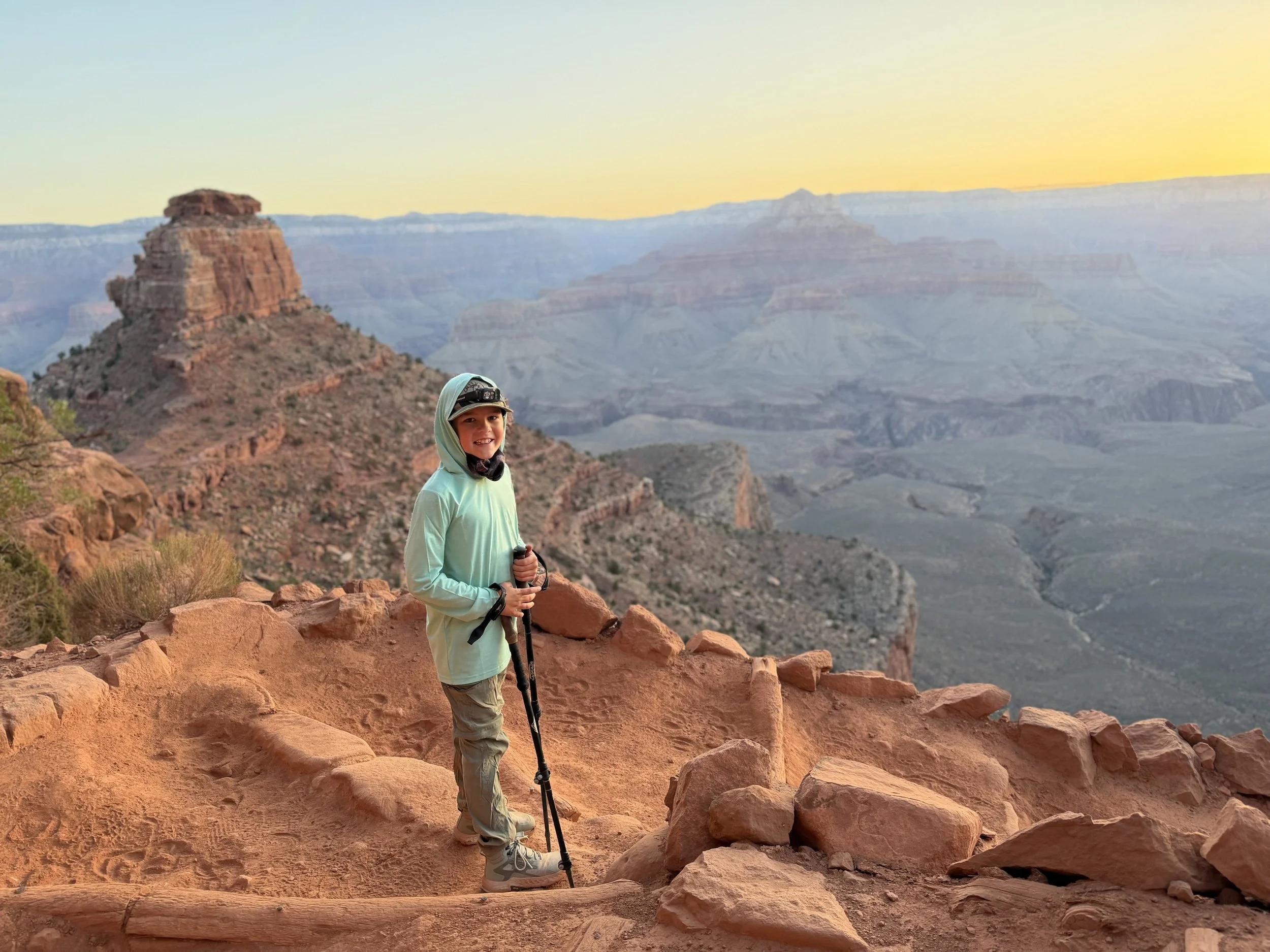
Hudson Hiking at Grand Canyon
But another morning, he took Hudson with him.
Hudson was nine years old.
Their alarm went off early, and by 4:45 a.m., Jessie and Hudson were starting down the South Kaibab Trail toward Skeleton Point.
The day before, Hudson had looked down into the canyon and thought the trail looked steep and scary.
Then he actually got onto it.
And something changed.
The trail wasn’t nearly as scary as it had looked from above.
In most places it was wide and easy to walk. Hudson is a fit kid who has hiked quite a bit with us, and once he started moving, he realized he could do it.
They hiked all the way to Skeleton Point and were back at the trailhead by 7:45 a.m.
Three hours.
Down into the Grand Canyon and back.
I think there’s a lesson in that experience that goes far beyond hiking.
Sometimes something looks a lot harder from the outside than it actually is once you start.
And I’m not sure that lesson was only for Hudson.
Sometimes Jessie and I need the reminder too.
Sometimes the Adventure Isn’t the Plan
Grand Teton gave us another one of those moments.
We arrived at Jenny Lake with a plan.
We would explore the visitor center, take the boat shuttle across Jenny Lake, hike to Hidden Falls and Inspiration Point, and enjoy a relatively straightforward family adventure.
Except the boat shuttle had a wait of more than an hour and a half.
We had a choice.
Wait.
Or walk.
We chose to walk.
When we explained the new plan to the kids, there were some sighs and eye rolls.
The easy version of the day had suddenly turned into several additional miles of hiking.
But we packed up and started walking.
We hiked around beautiful Jenny Lake, passed Moose Ponds, made it to Hidden Falls, and then continued climbing toward Inspiration Point.
And they did it.
When we finally reached Inspiration Point, the kids got to stand there looking across Jenny Lake knowing their own legs had carried them there.
We could have waited for the boat.
There would have been absolutely nothing wrong with that.
But looking back, I’m glad we walked.
The inconvenience created the adventure.
And the adventure gave us a much better story.
Hard Things Build Confidence
We’ve watched this happen outside of hiking too.
Fishing has been one of the best examples.
Hudson didn’t pick up a fishing rod and immediately know what he was doing.
He had to learn.
How to cast.
How to tie knots.
How to choose what to use.
How to recognize what the fish were doing.
And, maybe hardest of all, how to keep fishing when nothing was biting.
There were plenty of casts that caught absolutely nothing.
But he kept going.
During our time around Grand Teton, Hudson finally caught a fish and looked at Jessie with a huge smile.
“I think I’m finally getting it.”
I love that.
Not:
I’m naturally good at this.
Not:
This was easy.
But:
I wasn’t good at this before. I kept trying. Now I’m getting better.
That lesson is much bigger than fishing.
Sometimes Hard Things Aren’t Fun Until They’re Over
Rocky Mountain National Park gave us a very different example.
We spent the day hiking from Bear Lake toward Nymph Lake, Dream Lake, and eventually Emerald Lake.
Once we reached Emerald Lake, we fished, enjoyed the sunshine, and took in the incredible scenery.
Then the weather changed.
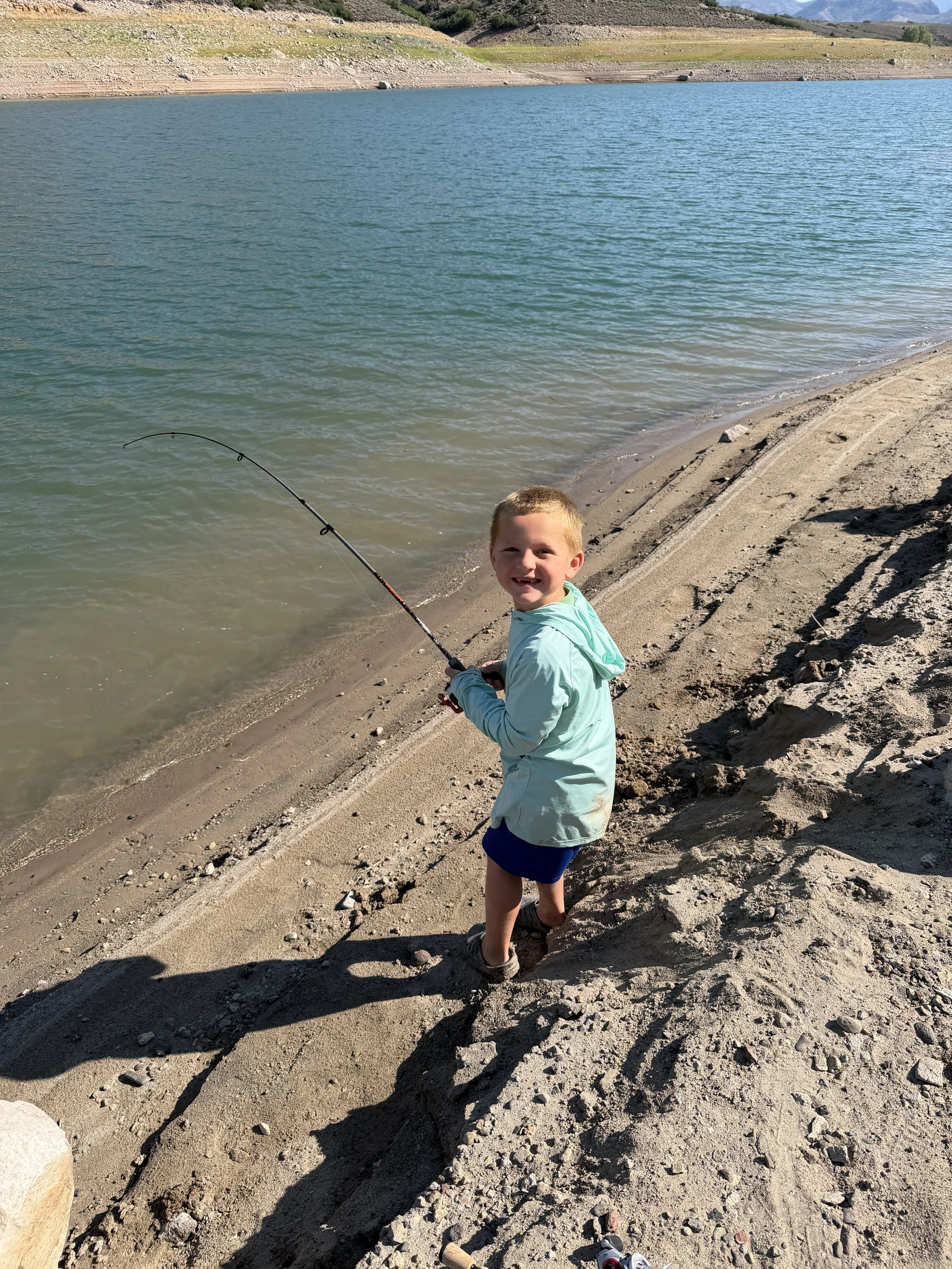
Lincoln Fishing at the Blue Mesa Revisor
Fast.
A huge Rocky Mountain thunderstorm rolled in.
Thunder.
Lightning.
Monsoon-like rain.
And we were more than three miles from where we needed to be.
The rain came down so hard that water began filling the trail. We couldn’t walk fast enough to escape it.
The kids did not think this was funny at first.
Neither did we.
We just had to keep everyone moving and get back.
By the time we finally made it back to camp, though, something had changed.
Everyone was laughing.
We were soaked.
The whole experience had gone from miserable to hilarious.
And now it’s one of those stories we’ll probably tell for years.
That doesn’t mean we want to repeat it.
It also doesn’t mean parents should ignore weather or push children through unsafe conditions. Hiking with kids means paying attention to weather, temperature, elevation, water, distance, and what your children are actually capable of.
Sometimes turning around is absolutely the right decision.
But I also think there’s something valuable about kids discovering that an uncomfortable experience eventually ends.
They got wet.
They were tired.
They didn’t love every second.
And they were okay.
Our Kids Don’t Always Want to Do It
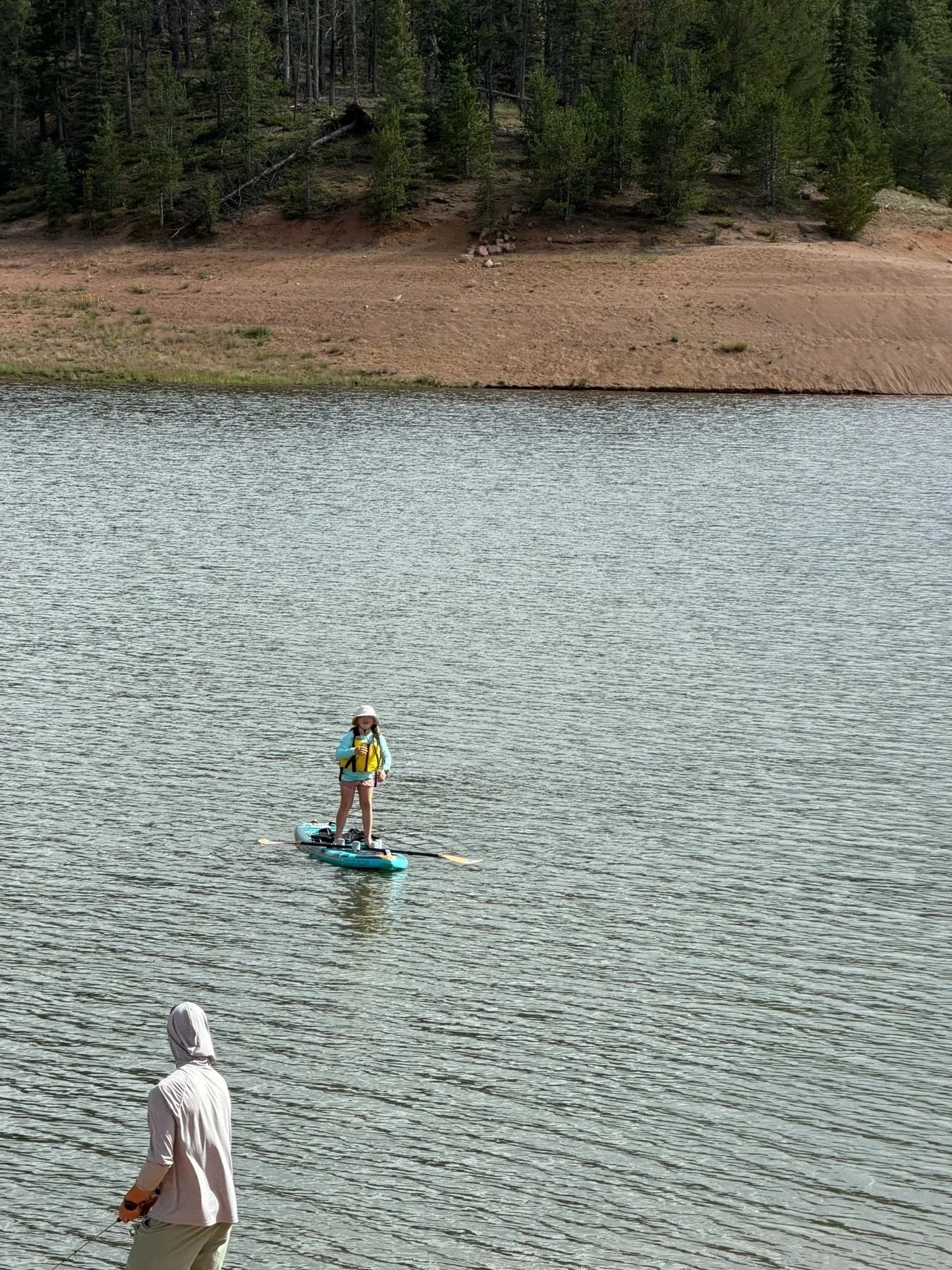
Macie learning how to Paddle Board in Colorado Springs
I think this is important to say because otherwise this article could give a completely unrealistic picture of our family.
Our kids complain.
They get tired.
They ask how much farther.
Sometimes they don’t want to hike.
Sometimes the promise of a snack is doing a significant amount of the parenting.
And sometimes Jessie and I wonder why we thought taking three kids on whatever adventure we planned was a good idea.
We don’t have three children who wake up every morning begging us to hike ten miles.
We have normal kids.
What we’ve learned is that complaining and capability are not the same thing.
A child can complain about walking another mile and still be physically capable of walking another mile.
A child can be nervous about a trail and discover that it isn’t nearly as scary as it looked.
A child can struggle to learn something and eventually look at his dad and say:
“I think I’m finally getting it.”
If we removed every uncomfortable moment, they’d never get to experience the other side of those moments.
We Still Have to Know Their Limits
There’s another side to all of this.
Jessie and I are still the parents.
Our kids shouldn’t have to determine whether a situation is safe.
That’s our responsibility.
We have to consider their ages, fitness, experience, weather conditions, trail difficulty, elevation, heat, water, food, and how everyone is doing that particular day.
What Hudson could comfortably handle at nine might not be appropriate for every nine-year-old.
What one of our kids can do one day might not be what they can handle the next.
There’s no universal mileage where a child suddenly becomes a “good hiker.”
We know our kids.
We hike with them.
We watch them.
We learn what tired looks like compared with done.
And sometimes we change the plan.
The goal isn’t getting our kids to finish every adventure.
The goal is giving them opportunities to discover what they’re capable of.
Kids Remember What They Accomplished
After months of traveling, we’ve visited a lot of places.
There have been visitor centers.
Scenic overlooks.
Restaurants.
Museums.
Gift shops.
And more Junior Ranger books than I can count.
I’m sure our kids will eventually forget many of them.
But I think Hudson will remember starting down into the Grand Canyon with his dad before sunrise.
I think the kids will remember walking around Jenny Lake when the boat wasn't an option.
They’ll remember catching fish in new places.
They’ll remember being completely soaked in Rocky Mountain National Park.
They’ll remember the hikes that made their legs tired.
They’ll remember the first time something looked really hard...
and they did it anyway.
Those are the memories I want them carrying with them.
Maybe We Need to Stop Waiting Until They’re Older
There is always a reason to wait.
We’ll take that trip when they’re older.
We’ll hike that trail when they’re older.
We’ll teach them to fish when they’re older.
We’ll go camping when they’re older.
We’ll do the big road trip when traveling becomes easier.
But Jessie and I are realizing something.
This is their childhood.
We’re already in it.
Five doesn’t last very long.
Neither does seven.
Neither does nine.
Our adventures certainly don't look the same as they would without three kids.
We carry more snacks.
We stop more often.
Everything takes longer.
Somebody eventually complains.
Plans change.
And sometimes Jessie and I have to convince three children that, yes, they really are capable of walking all the way back to the car.
But we’re not waiting for the perfect age anymore.
We’re taking them with us.
We’re letting them try things that are difficult while we’re there to help them.
And little by little, we’re watching them discover something I hope stays with them long after this road trip is over:
I can do hard things.
Maybe that’s one of the greatest lessons the outdoors can give our kids.
And maybe our job as parents isn’t always to make the trail easier.
Sometimes it’s simply to walk beside them while they discover they’re capable of finishing it.
-Kayla