
Bryce Canyon National Park
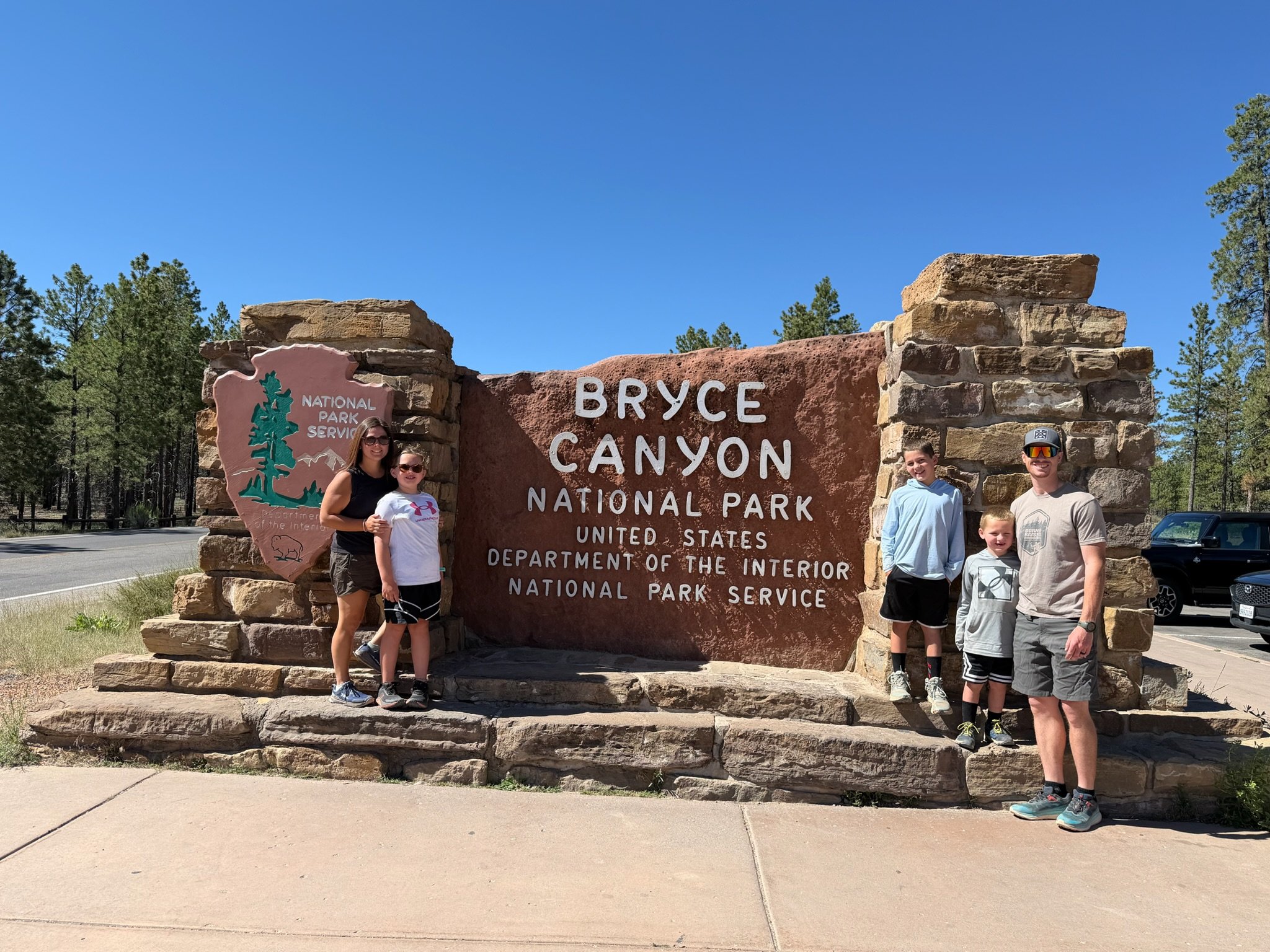
Bryce Canyon Visitor Sign
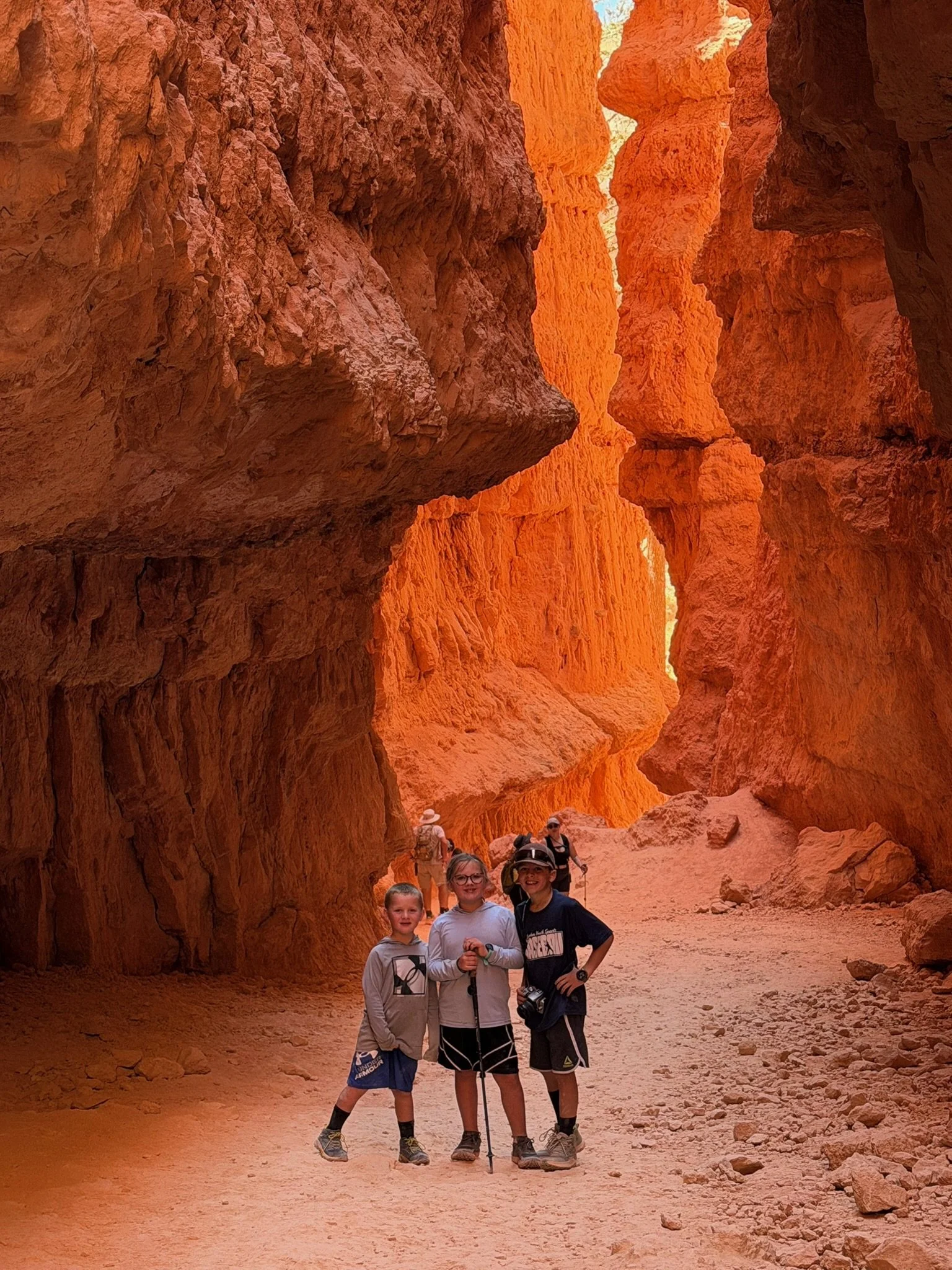
Wall Street- Lincoln Macie and Hudson
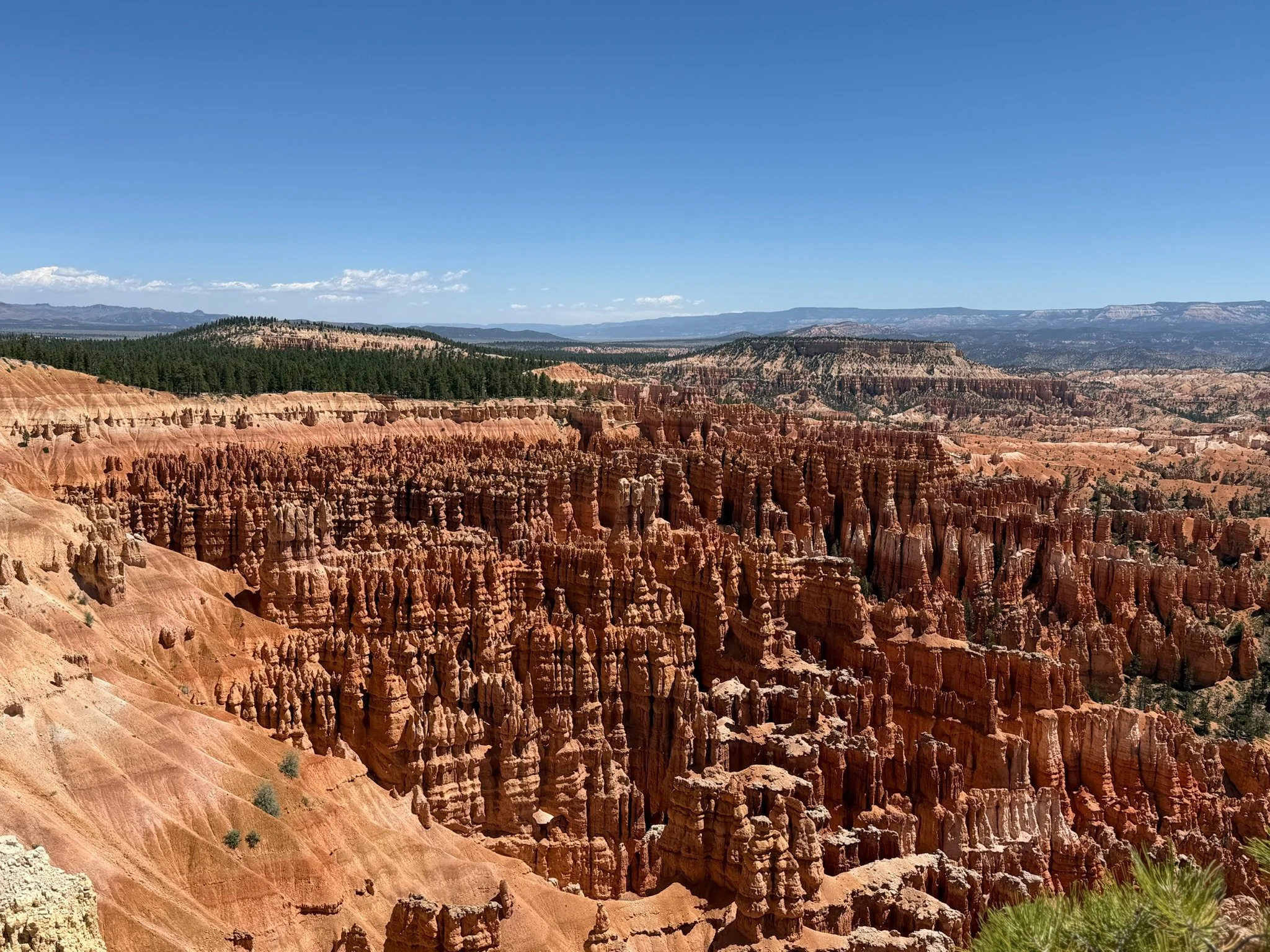
Bryce Canyon
A Weekend Among the Hoodoos
After an unforgettable week in Zion, we made our way to Bryce Canyon feeling tired in the best possible way. We pulled into Kodachrome State Park on Friday afternoon, ready to reset for another adventure at another park.
Everyone was worn out from Zion, so we didn't do much that night. We made an easy dinner, sat outside for a while, and called it an early night. It felt good just to breathe, and reset, knowing that we had two days of adventuring coming up.
Saturday — Scenic Views and a Slower Start
Normally we're up early and moving, but this morning we all needed to sleep in. Around 9:00 the kids finally started stirring, and it was exactly the kind of slow start we needed.
We made breakfast, packed up our day bags, and headed toward Bryce Canyon National Park.
Kodachrome is about a 30-minute drive from the park, and the anticipation builds the closer you get.
The first stop, of course, was the iconic park sign.
We pulled over like everyone does, snapped a few photos, and officially felt like we had arrived.
From there we headed to the Bryce Canyon Visitor Center, which is much bigger than we expected.
Inside, there are full exhibits that explain how the canyon formed, the geology behind the hoodoos, and the wildlife that calls the area home. We also watched a short film that helped tie everything together—it really gives you a deeper appreciation for what you're about to see outside.
While we were there, the kids picked up their Junior Ranger books, along with magnets, stickers, and postcards—always one of their favorite parts of visiting national parks.
Driving the Scenic Rim
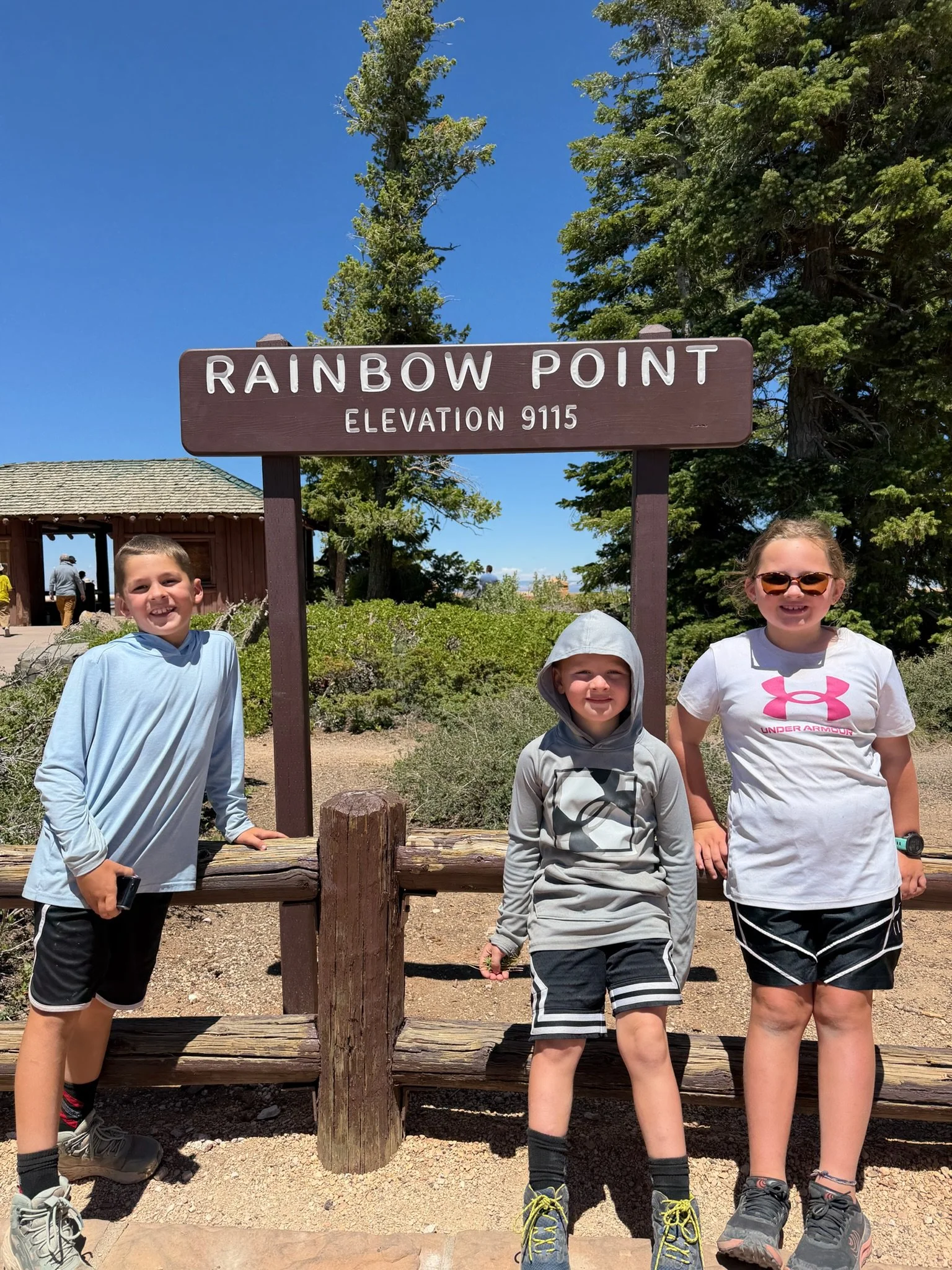
Hudson, Lincoln Macie at Rainbow Point
After leaving the visitor center, we decided to drive the entire 18-mile Bryce Canyon Scenic Drive before doing any more hiking.
Instead of driving it the traditional direction, we went in reverse, saving the highest point—Rainbow Point—for last. It ended up being one of our favorite ways to experience the park because the scenery seemed to build with every stop.
Our first overlooks were Bryce Point (about 8,300 feet) and Inspiration Point (about 8,100 feet). From both viewpoints, the Bryce Amphitheater stretches out in waves of hoodoos—thousands of orange, pink, and cream stone spires rising from the canyon floor. It almost doesn’t look real.
We continued to Sunset Point (around 8,000 feet), where we got our first close look at Thor’s Hammer, one of the park’s most famous formations. From here, we could even spot part of the trail we would hike the next morning, which made Sunday feel even closer.
Farther along the drive, we reached Farview Point (about 8,200 feet), where the canyon opens up and the landscape stretches for what feels like forever. On a clear day, you can see over 100 miles across southern Utah. Nearby, Piracy Point gets its name from hoodoos that resemble the sails of pirate ships once you notice the shapes.
One of the most unique stops was Natural Bridge, sitting at approximately 8,627 feet. Despite the name, it isn’t actually a bridge—it’s a massive natural arch carved by frost and erosion over thousands of years. The opening is about 85 feet high, framed by bright orange rock and green forest below.
As we continued climbing in elevation, we stopped at Ponderosa Canyon (around 8,700 feet) and Black Birch Canyon Overlook (about 8,800 feet). These stops felt quieter and more forested, with sweeping views of pine-filled canyons instead of hoodoos.
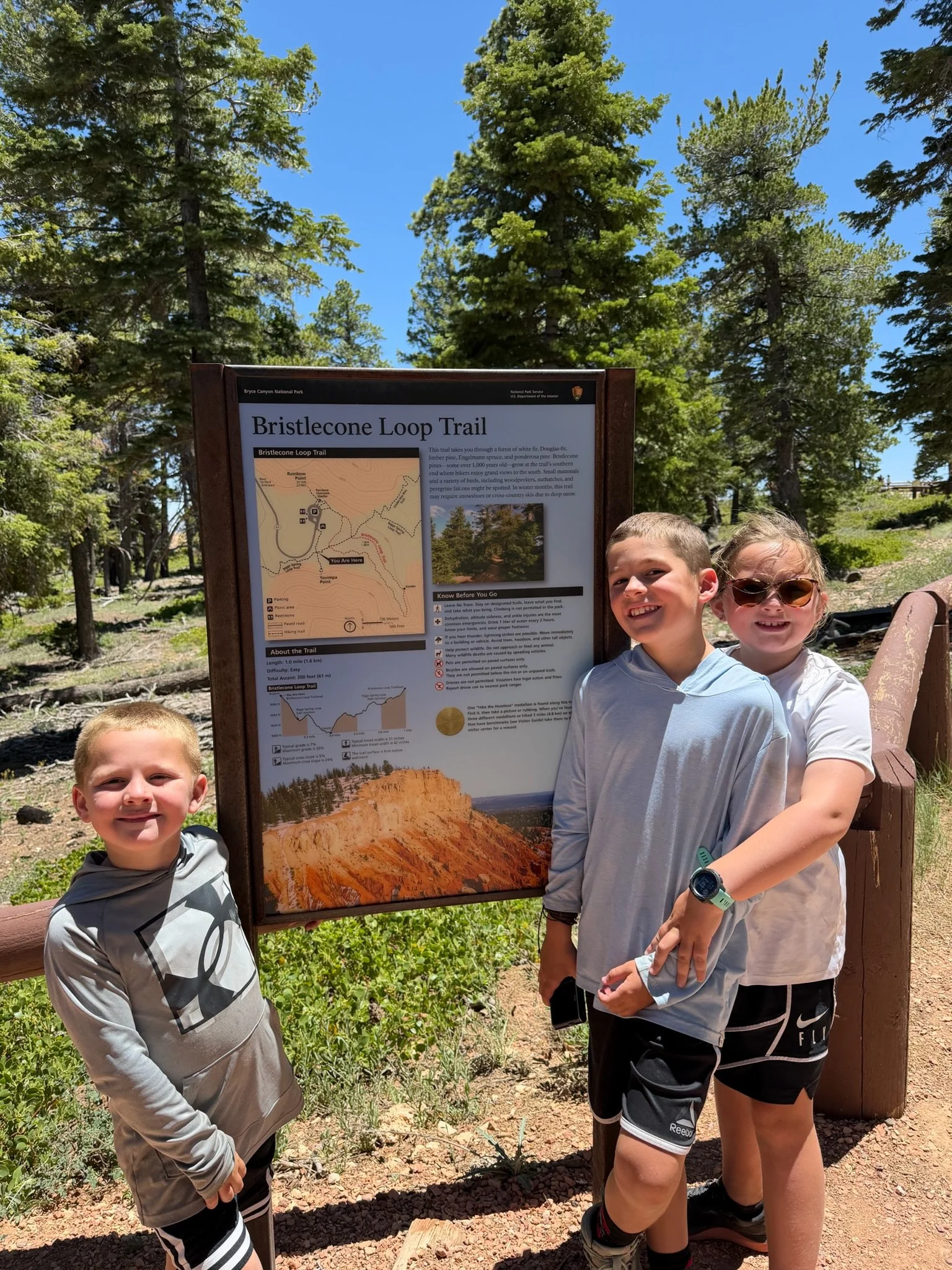
Lincoln, Hudson and Macie at Bristlecone Loop
Finally, we reached Rainbow Point, the highest overlook in the park at 9,115 feet. The air was noticeably cooler, and the views stretched nearly 100 miles across southern Utah. Just steps away is Yovimpa Point (about 8,910 feet), where you can see the Grand Staircase layers fading into the distance.
Bristlecone Loop
Since we were already at the highest point in the park, we decided to hike the Bristlecone Loop Trail, a one-mile loop that sits quietly along the rim near Rainbow Point and Yovimpa Point.
Right away, the feel of this hike was completely different from everything else we had done in Bryce Canyon. After spending the morning looking out over endless hoodoos, this trail pulled us into something much quieter and more intimate—cool air, dense forest, and the smell of high-elevation pine.
The trail winds through a forest of ancient bristlecone pines, some of the oldest living trees on earth. Many of them are over 1,000 to 1,600 years old, shaped slowly over time by extreme wind, snow, and harsh mountain weather. Their trunks are twisted and weathered in a way that almost makes them look like sculptures instead of trees—bent, exposed, and still somehow alive after centuries.
As we walked, the kids kept noticing how different everything felt compared to the canyon overlooks. Instead of open views and towering rock spires, we were surrounded by stillness—soft forest floor, scattered wildflowers, and quiet patches of shade where the sun filtered through the trees.
The loop also offers a few small openings where the forest breaks and you catch sweeping views back out across southern Utah. From those quiet forest clearings, you can suddenly see the vastness again—layers of mesas and distant ridgelines fading into the horizon. It was a really striking contrast: standing among ancient trees while still being able to see the scale of the desert far below.
It’s an easy, family-friendly trail, but it doesn’t feel like just a “quick walk.” There’s something about the age of the trees and the quietness of the forest that slows everything down. We found ourselves stopping often, not because the trail was hard, but because it felt like a place you just didn’t want to rush through.
For the kids, it became a bit of a discovery walk—looking at the twisted trunks, checking out the pinecones, and imagining how long these trees had been here compared to everything else we had seen on the trip.
Looking back, Bristlecone Loop ended up being one of those unexpectedly meaningful stops. It wasn’t dramatic like the hoodoos or exciting like the slot canyons, but it gave us a completely different perspective on Bryce Canyon—one that felt calm, ancient, and almost grounding after all the big views.
It was the perfect pause before continuing down the mountain and into the rest of our day.
Ruby’s Inn “Ruby Town” Stop
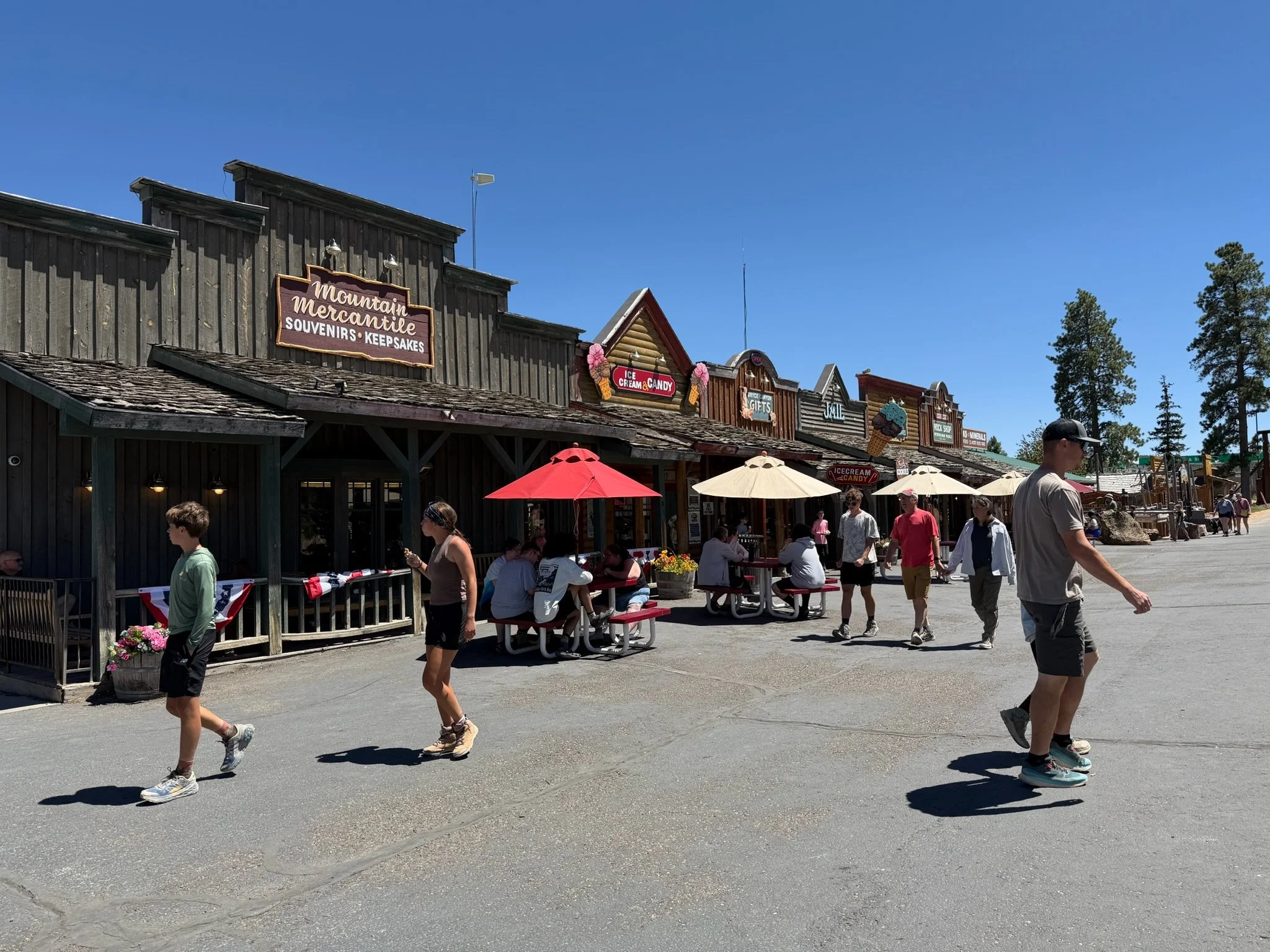
Ruby Town
After finishing the scenic drive and leaving the high country of Rainbow Point, we made our way down toward Bryce Canyon City—often called “Ruby Town” because of Ruby’s Inn and the small cluster of shops around it. It has this fun, old-west, tourist-town feel, like a little basecamp for everyone exploring the canyon.
We wandered into the general store first, and it had that classic mix of souvenirs, snacks, and road trip essentials.
Next we spent time just browsing through the little shops around town, taking in the atmosphere and stretching our legs after a full morning at high elevation. It’s one of those places where you don’t really rush—you just wander, look around, and enjoy the break between adventures.
One of our favorite stops was the rock shop, and the kids could have stayed there forever. The store was packed wall-to-wall with every kind of rock you can imagine—polished stones, geodes cracked open to reveal sparkling crystals, slabs of colorful minerals, fossils, and jars of tiny stones sorted by color and type. There were amethysts glowing deep purple, desert jasper in warm reds and oranges, and stacks of polished stones that felt like they had been collected from every corner of the Southwest.
Before heading out, I stopped at the small coffee shop near Ruby’s Inn, and it ended up being better than expected. After a long morning at high elevation, that coffee hit perfectly—simple, strong, and exactly what I needed before the rest of the day.
Ruby Town had this easy, laid-back energy to it. Not fancy, not rushed—just a fun little stop where families gather, wander through shops, and take a break between exploring the park and heading back out into the canyon.
Mossy Cave Trail
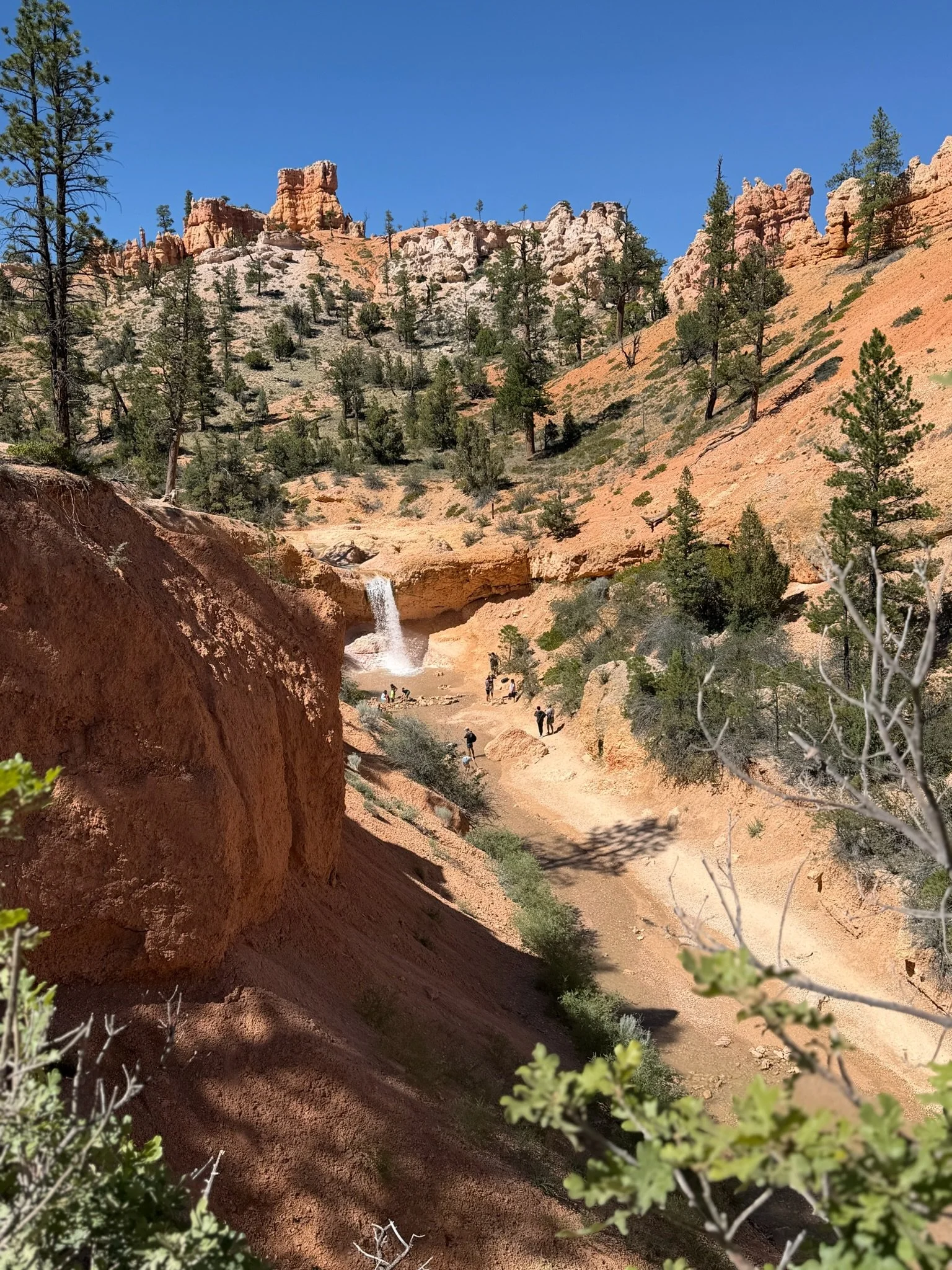
Mossy Cave Waterfall
In the afternoon, after we explored Ruby's Town we headed out for one more short hike—Mossy Cave.
This trail follows a stream into a small cave and seasonal waterfall. It felt like a completely different world compared to the rim above.
The kids loved it—walking next to the water, climbing rocks, and exploring every corner. It was simple, fun, and a perfect way to end Saturday. The kids wanted to dive right into the water and it took about everything we had to hold them out of it! After our short hike we were all exhausted and we headed back to the motorhome to relax for the evening.
Once back at camp, we made dinner, and even caught part of a Mariners game before bed. We knew Sunday morning would be here sooner than we all were ready for.
Sunday — Into the Hoodoos
Sunday was the day we had been waiting for.
We headed straight into Bryce Canyon early for the Navajo Loop and Queen’s Garden Trail, often called the “World’s Best 3-Mile Hike.”
We started at Sunrise Point, standing at the rim as the morning light lit up the amphitheater below. From above, we could already see the switchbacks carved into the canyon wall, dropping steeply into the hoodoos below.
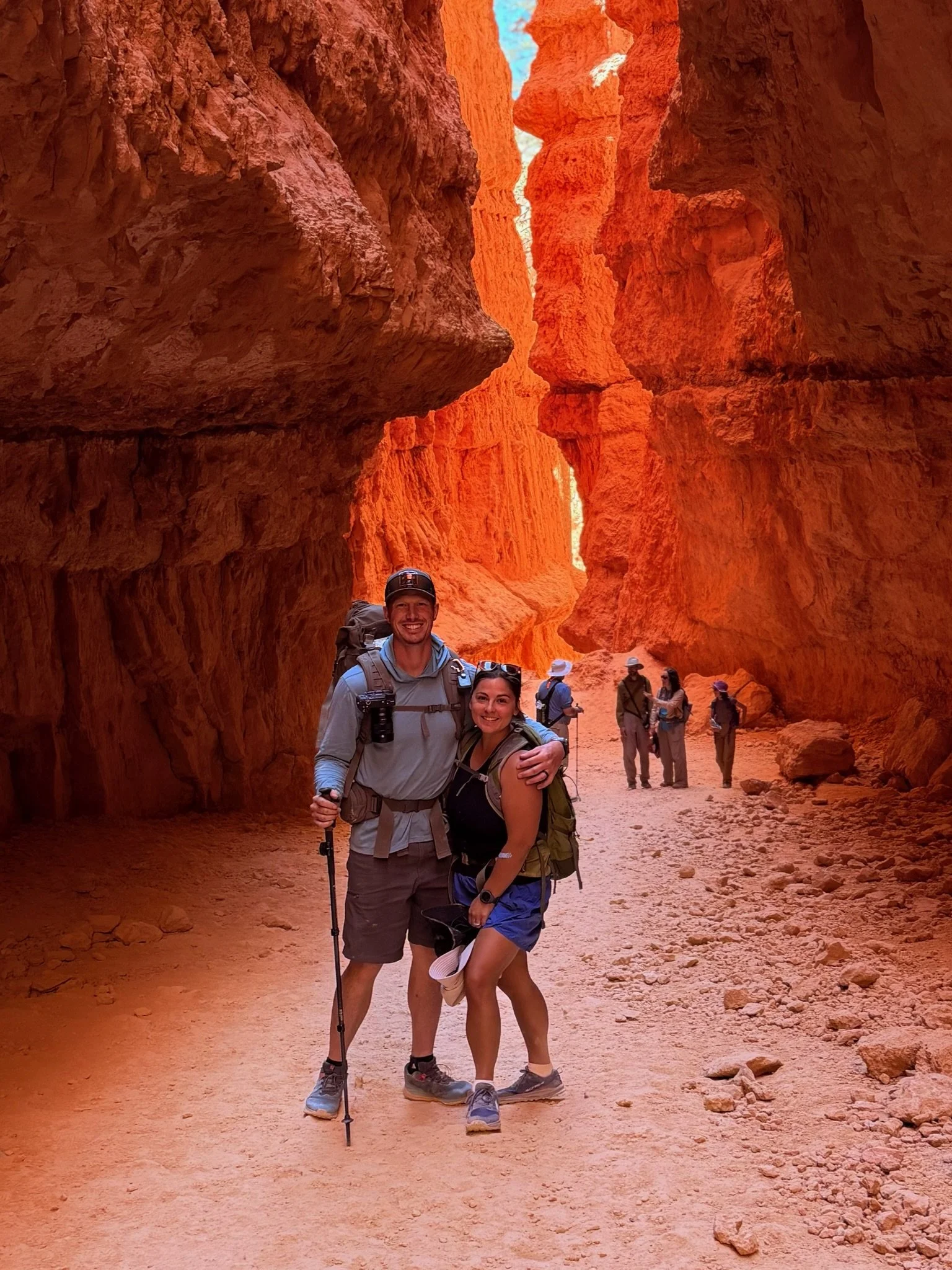
Jessie and Kayla at Wall Street
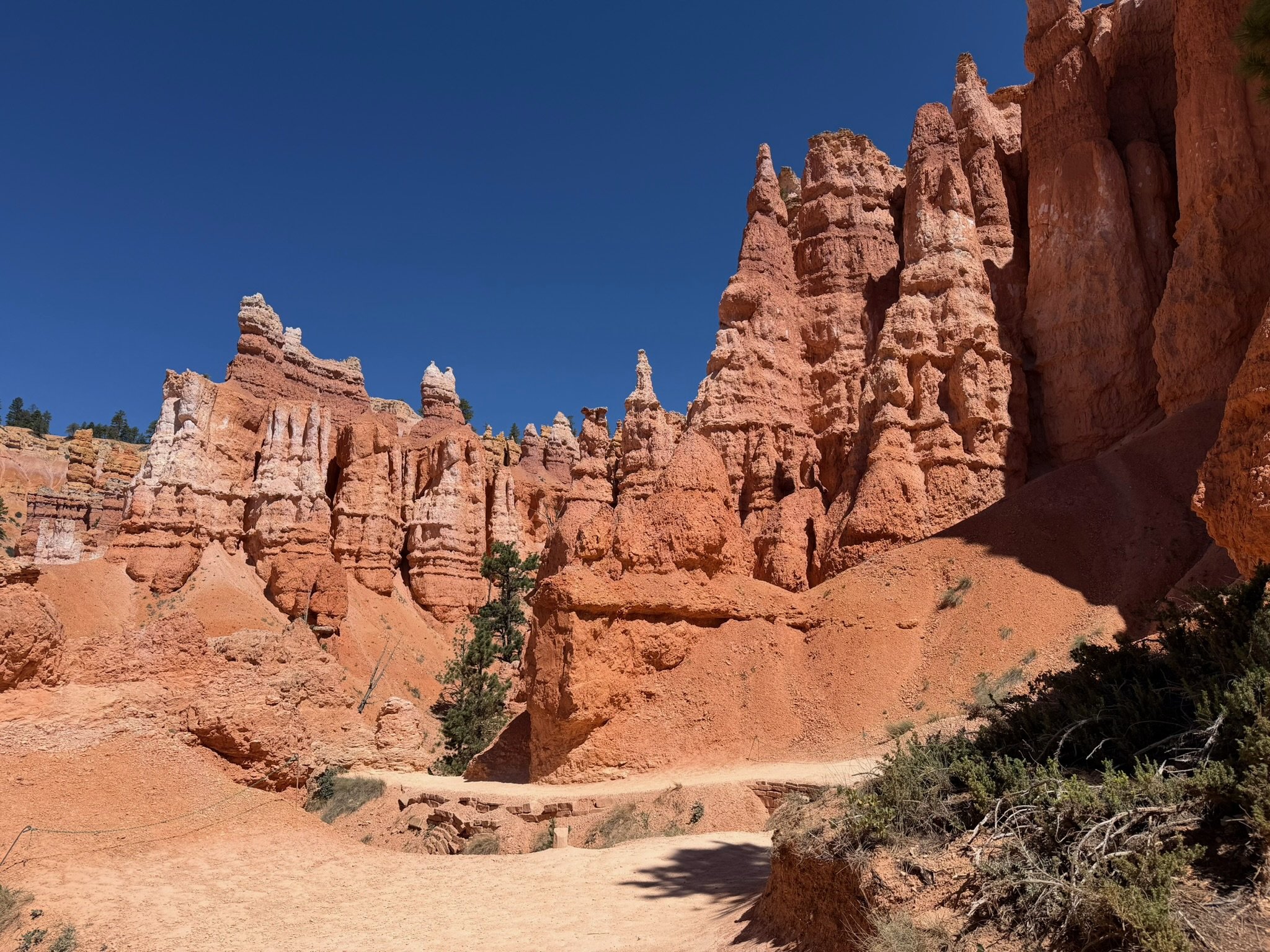
The descent begins immediately. A series of tight switchbacks quickly lowers you from the rim, and within minutes the entire world changes. The canyon rises up around you, and the hoodoos—once small shapes from above—become towering stone formations.
At the bottom, the trail opens into Queen’s Garden, where the hike slows into something almost magical. The hoodoos here feel softer—some shaped like animals, others like castles or figures carved into stone. The trail winds directly through them, putting you right inside the landscape instead of looking down at it.
The kids were constantly pointing things out, and we found ourselves stopping often just to take it all in. It’s hard to grasp the scale of Bryce Canyon until you’re standing right next to these formations.
As we continued through Queen’s Garden, the canyon begins to narrow again, and the trail gradually climbs toward the second half of the loop.
This is where everything changes again.
The walls tighten, the light shifts, and you enter Wall Street.
Wall Street is unlike anything else in Bryce Canyon. The trail funnels into a narrow slot canyon where towering vertical walls rise straight up on both sides. Sunlight filters in only in thin beams, lighting the orange rock in glowing layers. We hit Wall Street at the perfect time. The sunlight was beaming through the slot canyon and the lighting was radiant Truly like nothing I had seen before. I stood there in awe for a solid ten minutes.
The switchbacks climb sharply through the canyon, zigzagging between sheer stone walls that feel impossibly tall. Each turn reveals a new angle of light, shadow, and color.
It feels quiet, enclosed, and almost cathedral-like.
By the time we reached the top, we were back among the hoodoos again, but now from a completely different perspective.
The hike ends at Sunset Point, where the canyon opens back up and the full amphitheater stretches out in front of you once again. Standing there after walking from Sunrise Point through Queen’s Garden and up Wall Street felt like completing a full journey through another world.
We looked back down at everything we had just walked through—it’s one of those hikes that stays with you long after you finish it. After finishing this hike it was a hike I reflected back on and Praised God for the beauty all around me.
Willis Creek Slot Canyon
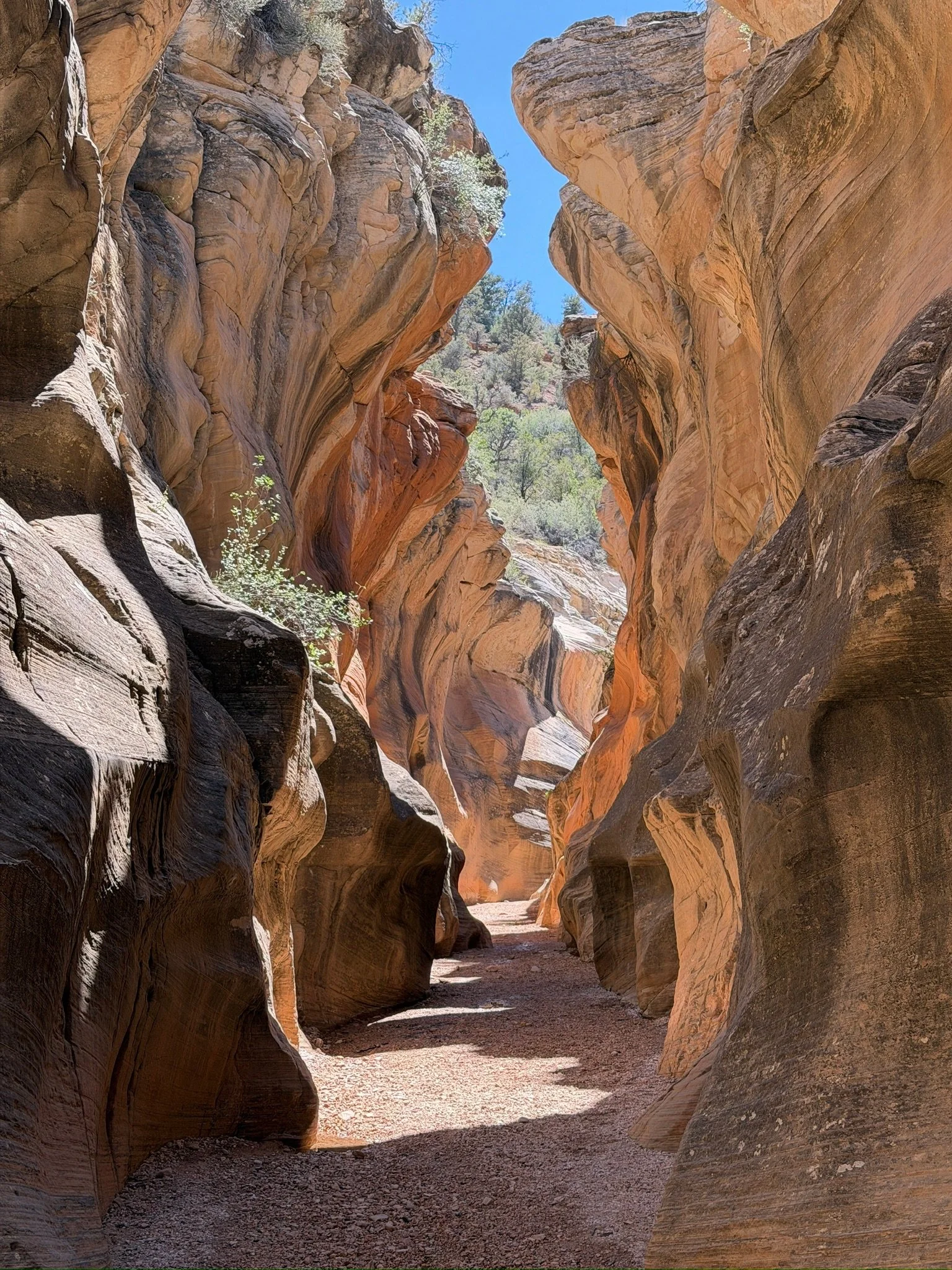
Willis Creek Slot Canyon
In the afternoon, we drove out to Willis Creek in Grand Staircase–Escalante.
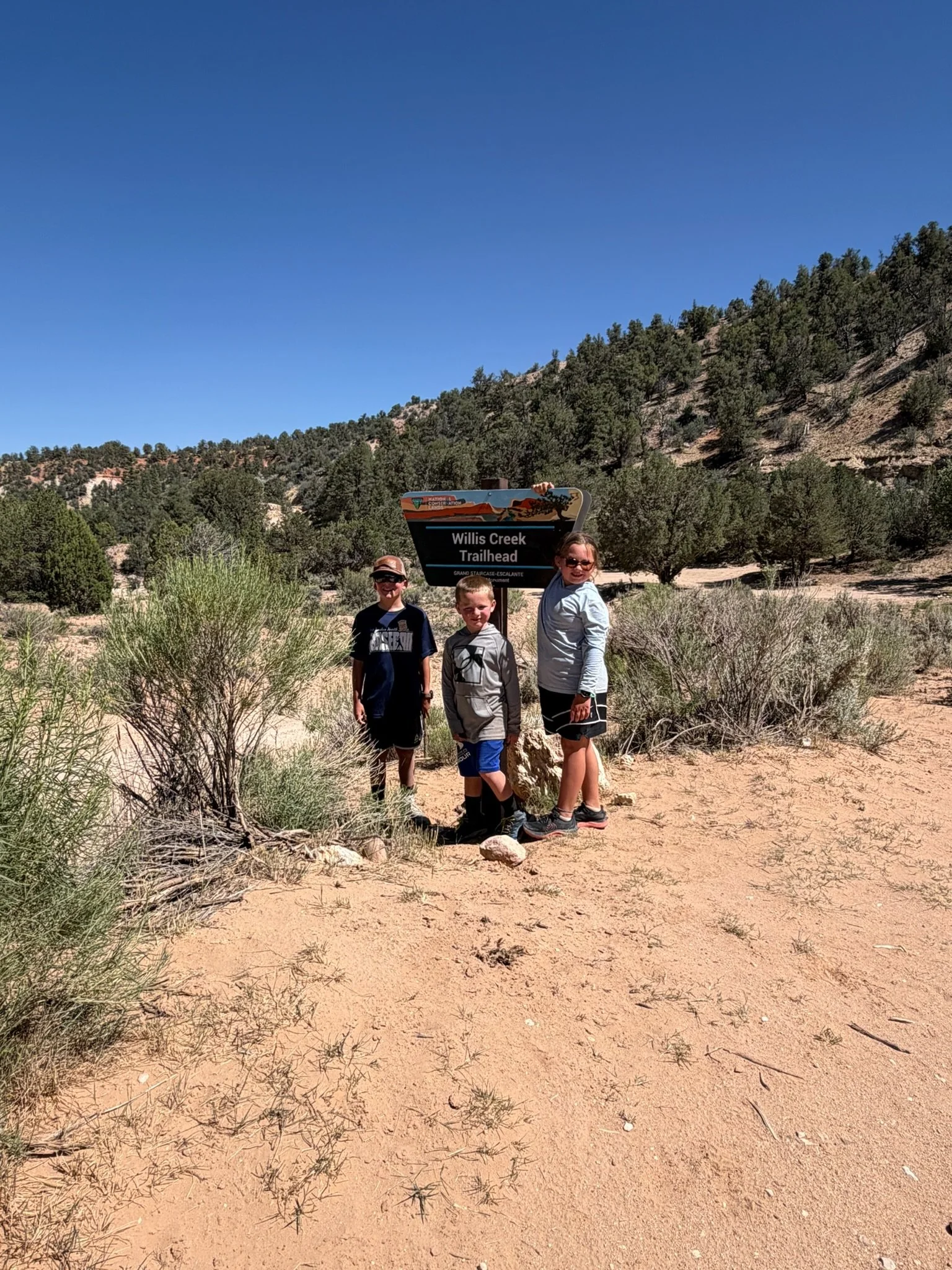
Willis Creek Sign
The trail starts as a wide sandy wash before narrowing into a soft, glowing slot canyon. The walls rise gradually, reflecting light in warm tones of orange and gold.
It was peaceful and incredibly kid-friendly. The kids splashed through water, explored every bend, and loved having space to wander.
We only hiked about a mile in, but it felt like discovering a hidden world.
We ended Sunday back at camp with tired legs and full hearts.
Kodachrome Wrap-Up Days
After our time in Bryce Canyon, we wrapped out our stay at Kodachrome State Park by slowing things down for a couple of days before heading out again.
Kodachrome had this quiet, wide-open feel that made it the perfect place to reset after so much hiking and driving. The kids loved the space there—spending time riding bikes around the campground loops, chasing bugs through the brush, and settling into a slower rhythm for a bit. We also had a lot of simple moments that end up being some of the best ones—coloring at the picnic table, wandering around the campsite, and just letting the days move at an easier pace.
The bike trails and open spaces gave us just enough adventure without needing a full plan. It felt like a pause button after the intensity of Zion and Bryce, and a chance for everyone to just be kids again for a few days.
Soon after, we’d be heading out to continue our Utah stretch—on our way toward Arches National Park and Fourth of July in Moab, which we were all starting to look forward to.
A Place That Stays With You
Bryce Canyon is one of those places that surprises you in the best way. Zion feels massive and powerful, but Bryce feels delicate and small—like nature carefully carved something intricate and intentional into the earth. Bryce Canyon you feel like you can reach out and touch every piece of it.
The hoodoos don’t just sit there, they are magical.
From the first overlook to the final hike, Bryce Canyon stayed with us in a way that’s hard to explain until you’ve stood in it yourself. Down in the canyon will be an experience I will never forget.
It’s peaceful, otherworldly, and endlessly beautiful.
And I know we’ll be thinking about those hoodoos for a long time to come.
A Heavy Reminder in the Distance
While we were traveling through Utah and near the Colorado border, we’ve been watching the forest fires in the region closely. In a few places, you could see haze hanging in the distance, and even driving to Bryce this past week we drove extremely close to the fire. It was a quiet reminder that while we’re moving through these incredible landscapes, there are also very real challenges happening not far from us.
As we continue to travel, it’s something we’ve been paying attention to daily—checking updates, watching fire maps, and staying aware of how things are shifting around us daily. Being on the road makes it feel even more real, because these aren’t distant headlines anymore. They’re part of the same places we’re driving through, the same mountains and valleys surrounding us.
It brings a different kind of weight to the experience. One moment you’re standing in a place like Bryce Canyon, completely in awe of the beauty, and the next you’re reminded of how fragile these landscapes can be when fire moves through them. It makes you pause a little longer at overlooks and appreciate what’s in front of you in a deeper way.
More than anything, we’ve found ourselves thinking about the people affected and the crews working tirelessly on the front lines. In our own quiet moments, we’ve been praying for safety for firefighters, for protection over homes and communities, and for relief for everyone carrying the stress of it right now.
We’re continuing to move through our trip, but we’re doing it with awareness and care—staying informed, staying flexible, and holding a lot of gratitude for the places we’re able to see, while also carrying hope for the areas nearby that are impacted.
-Kayla
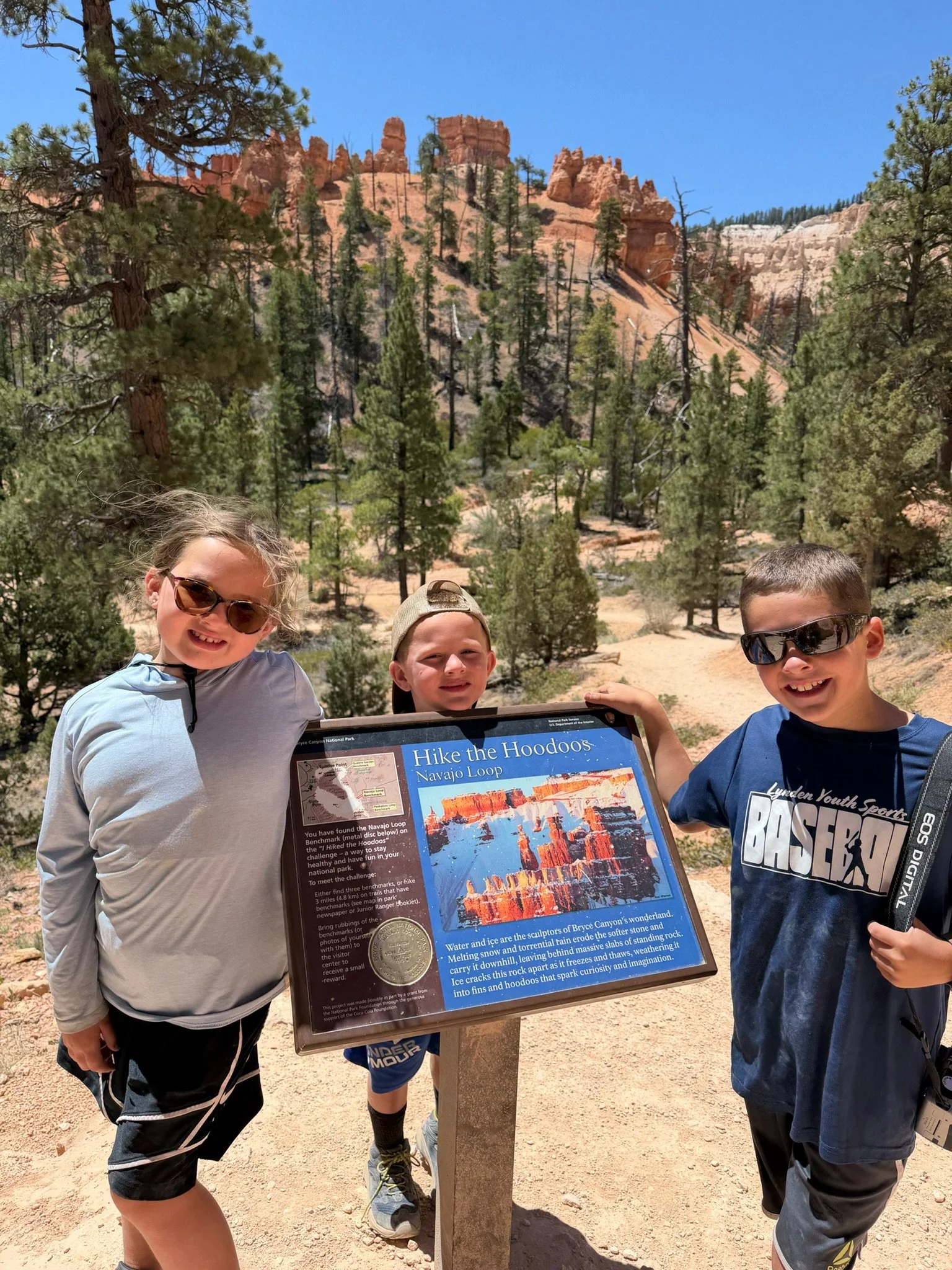
Hike the HooDoos Sign- Hudson Macie Lincoln even got a special award for hiking he Hoodoos!
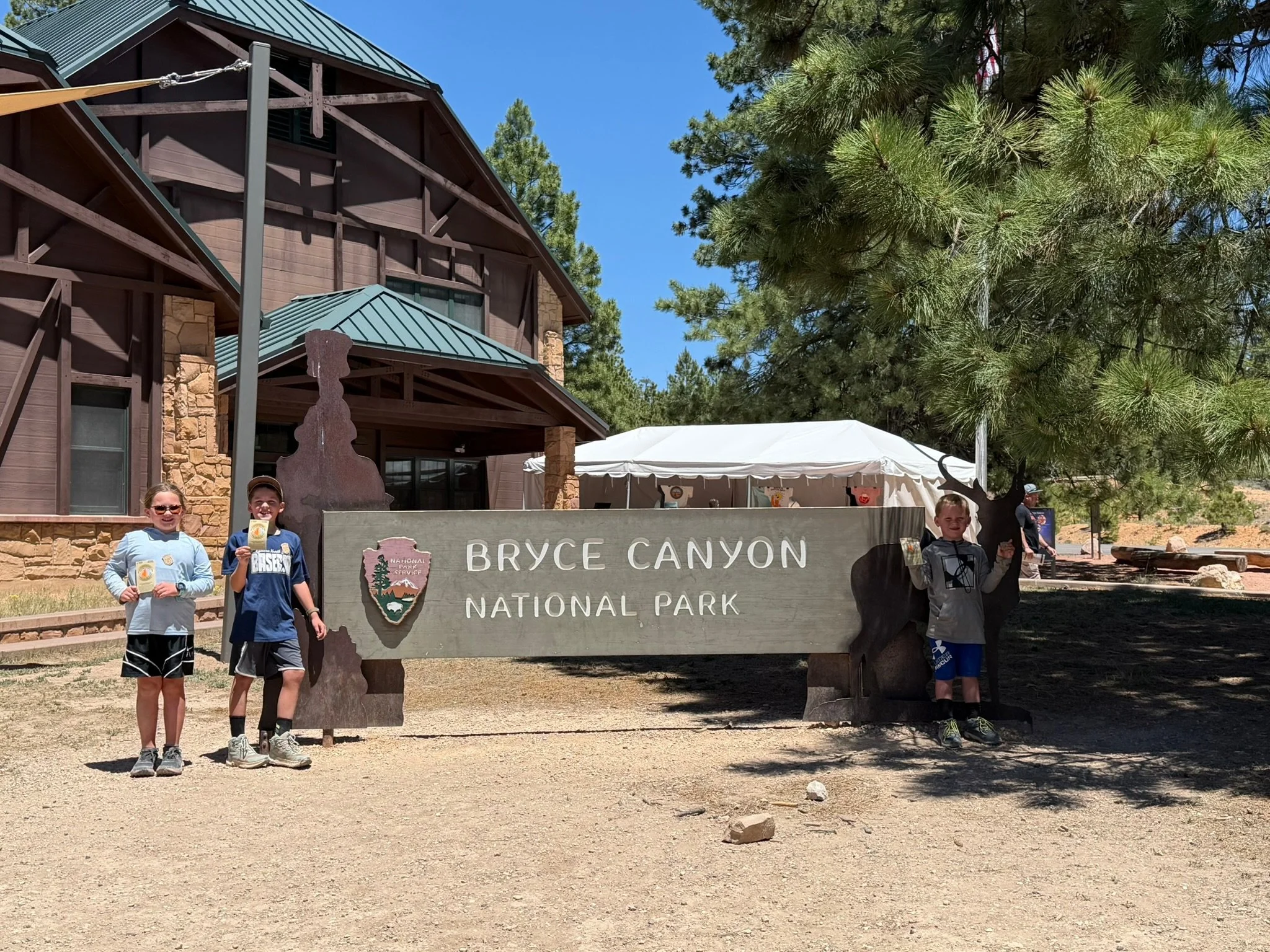
Visitor Center Sign with their award and Jr Ranger Badges
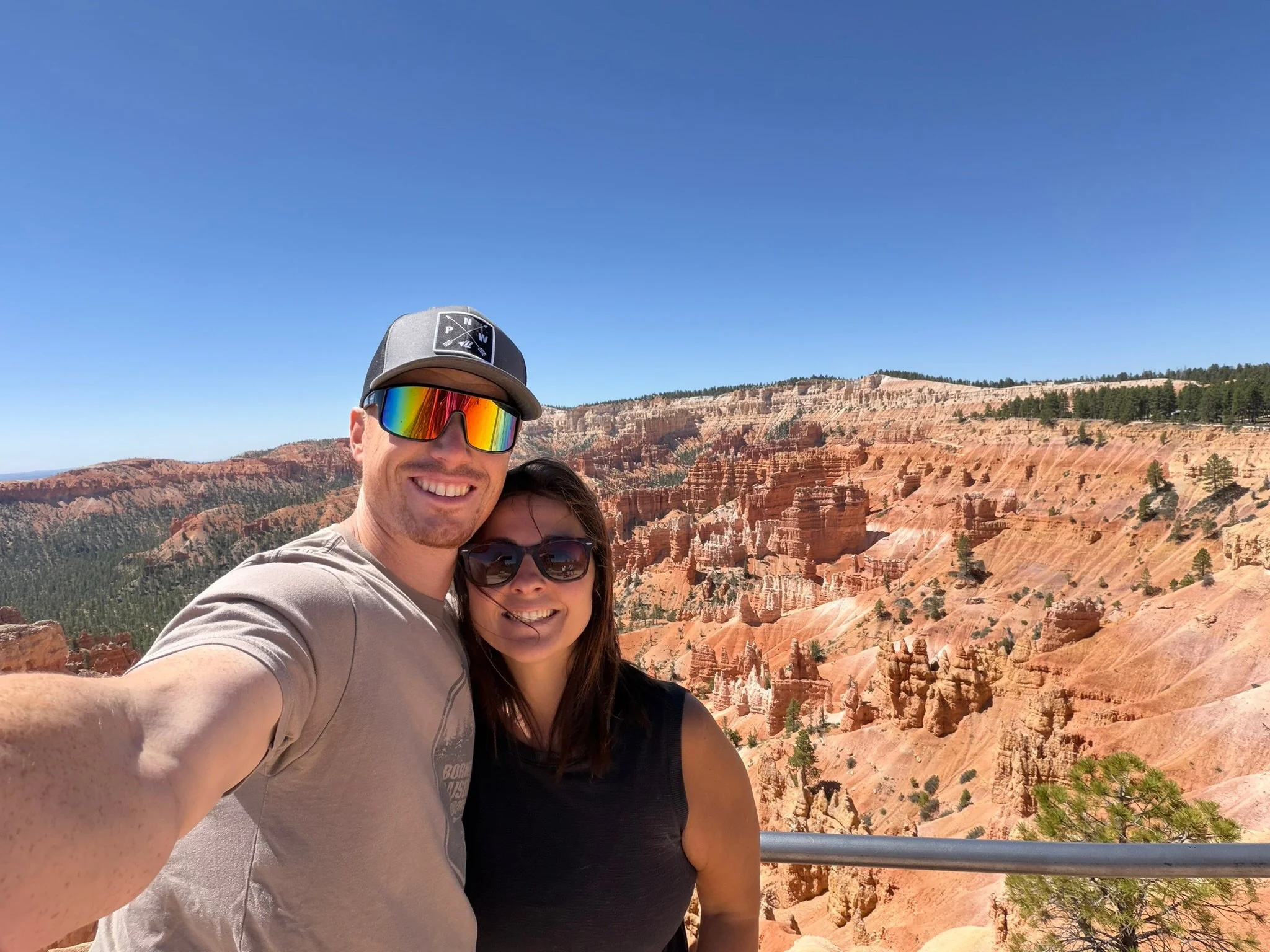
Jessie and Kayla Bryce Canyon
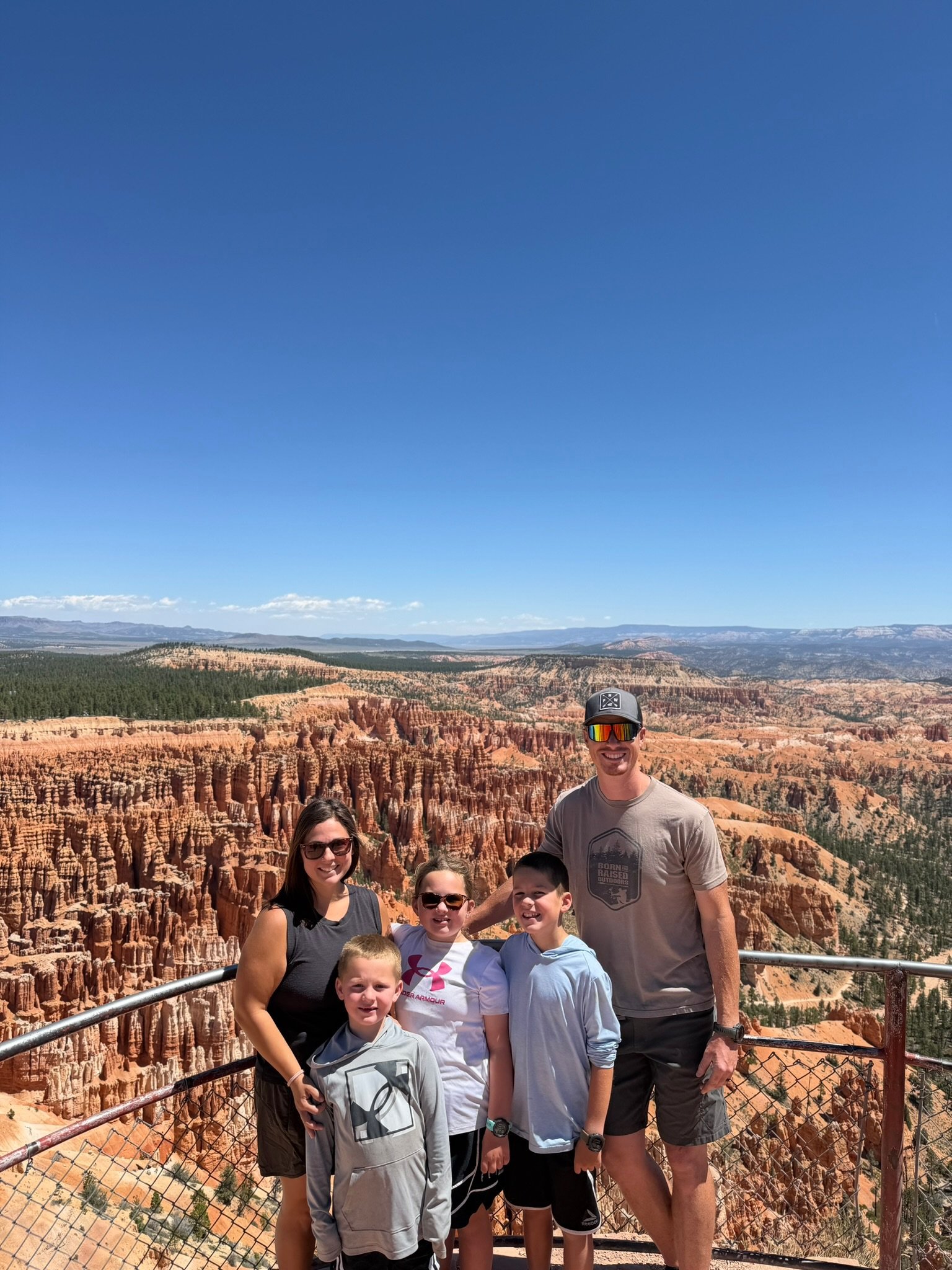
Bryce Canyon
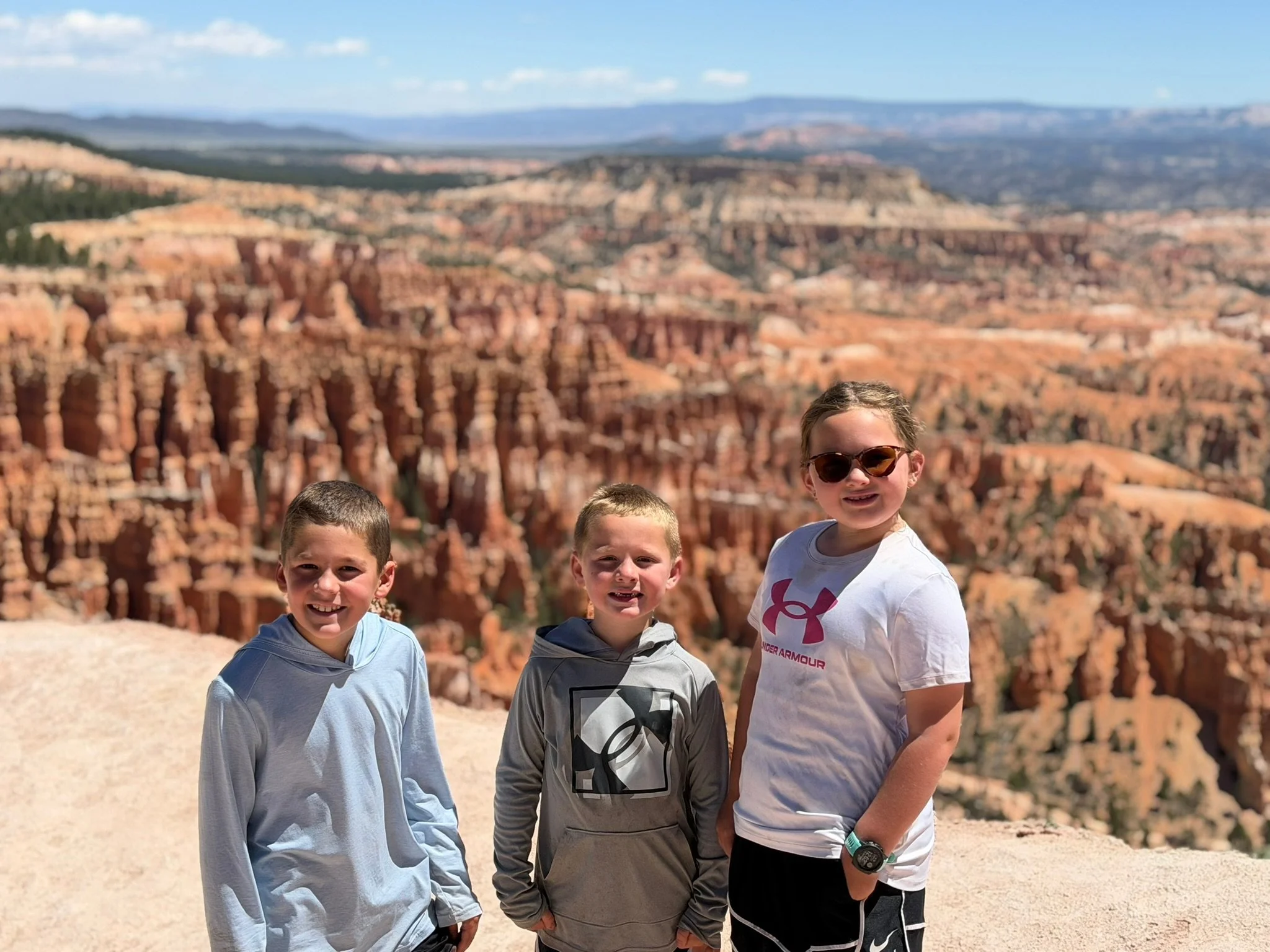
Hudson Lincoln and Macie Bryce Canyon
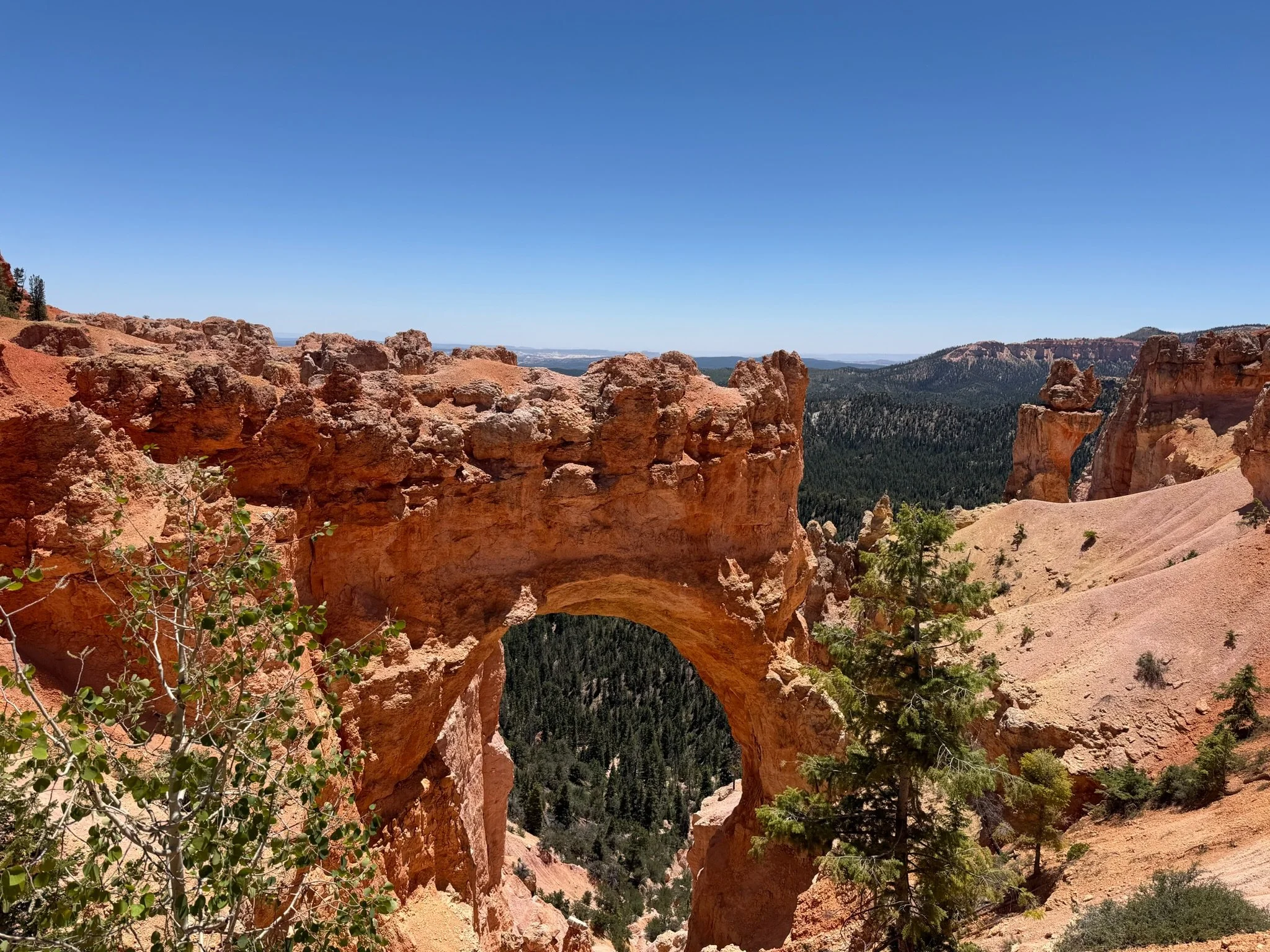
Natural Bridge
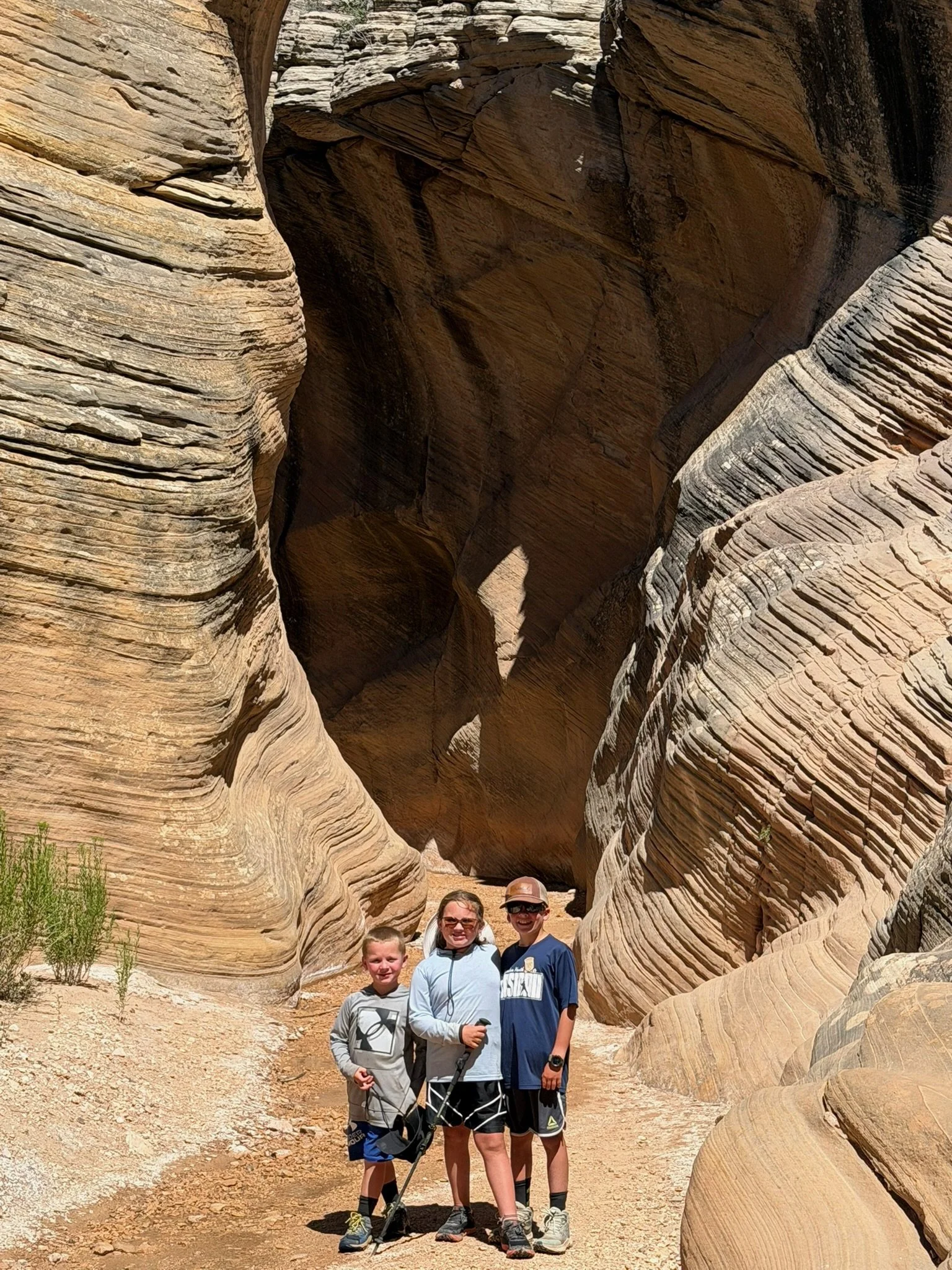
Lincoln Macie and Hudson Willis Creek
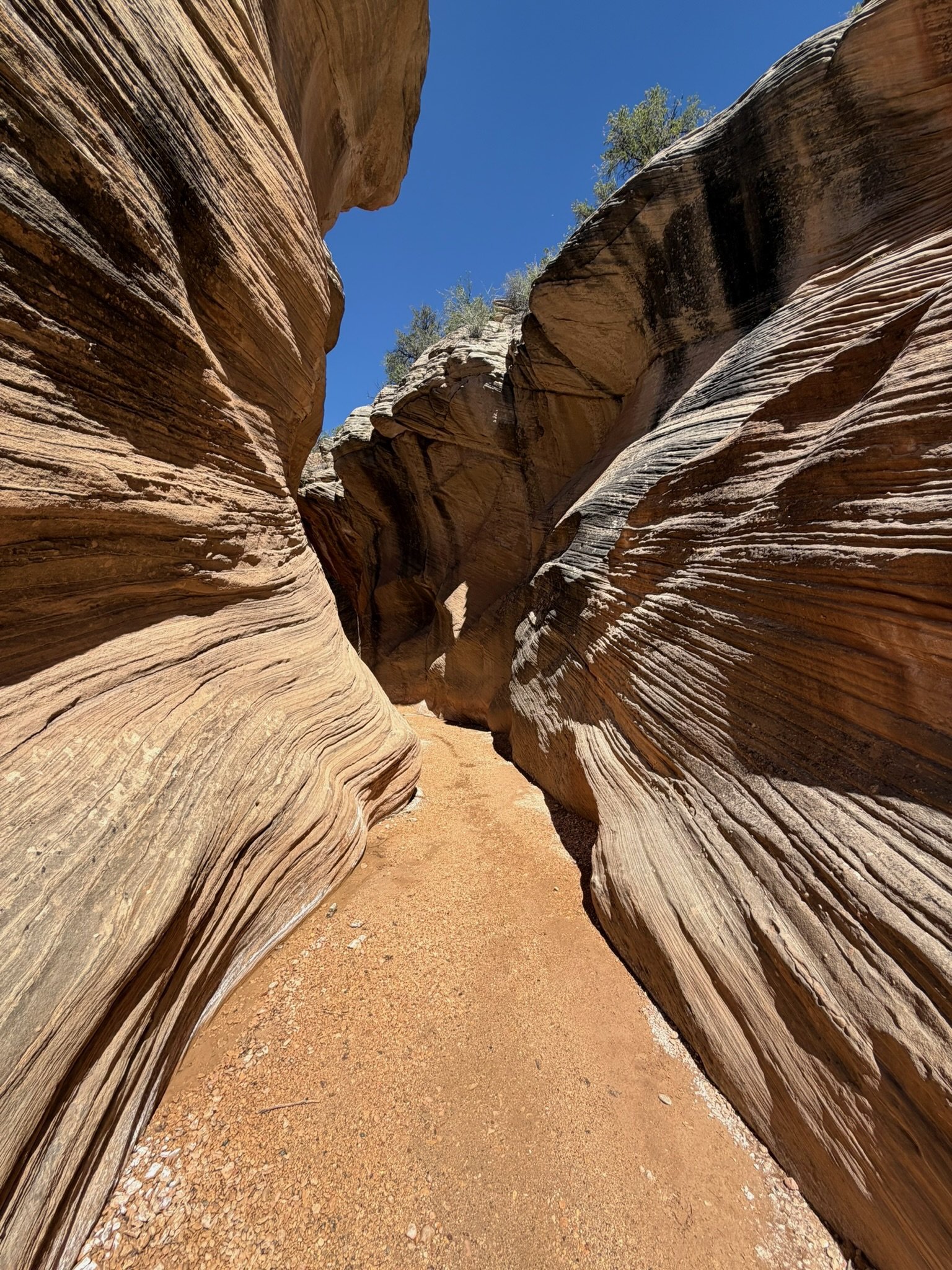
Willis Creek
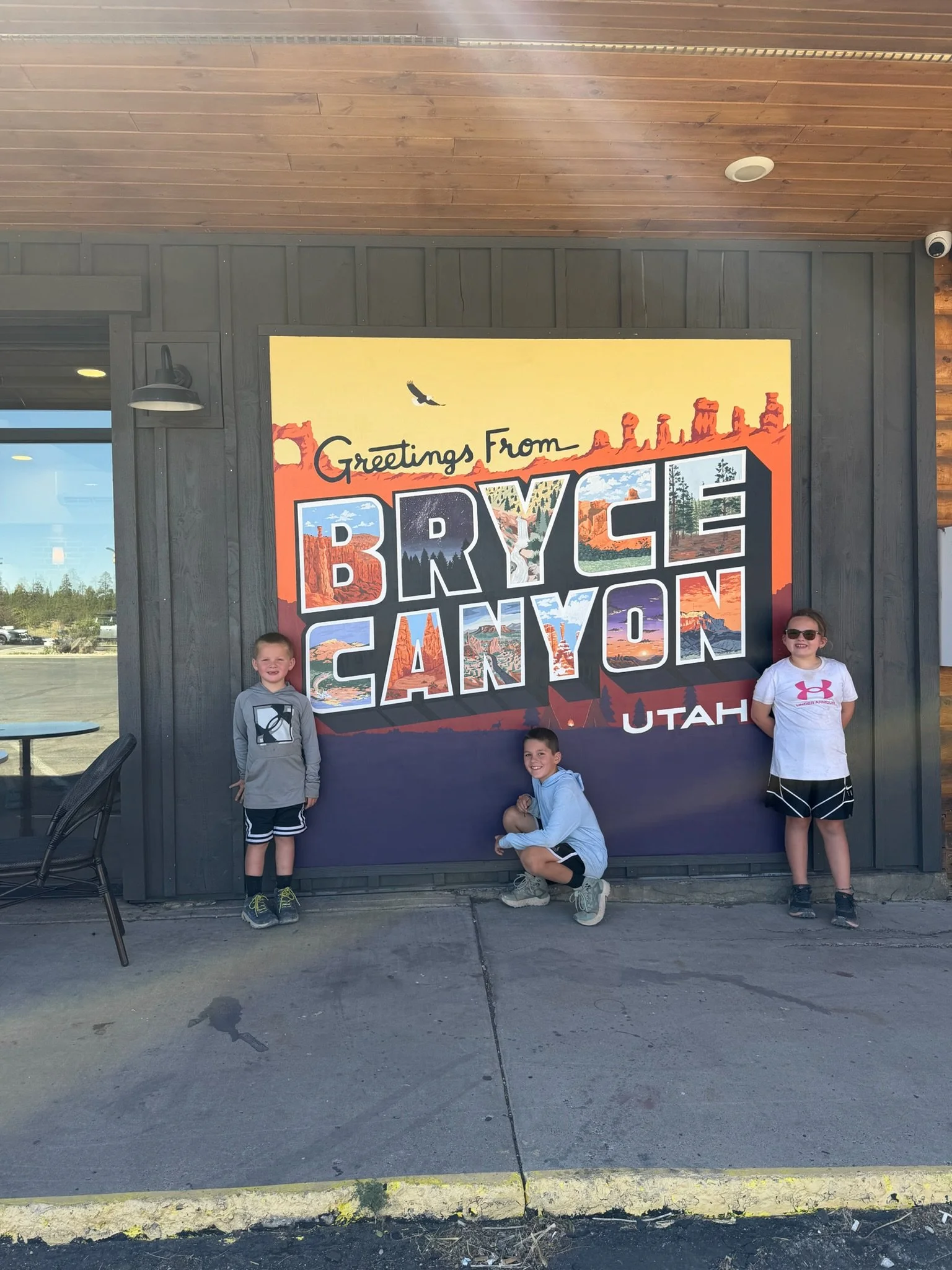
Bryce Canyon Sign in town
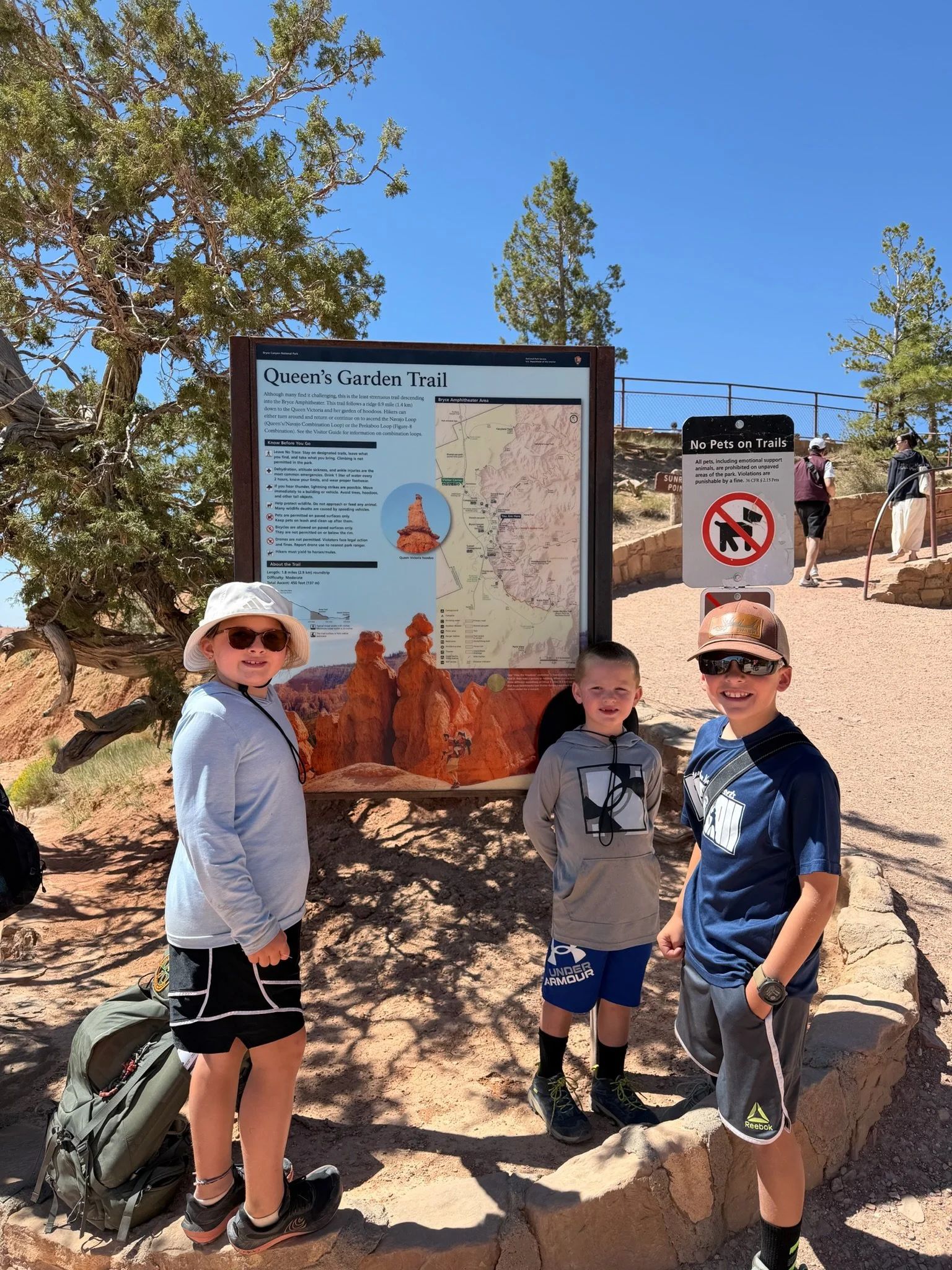
Queen Garden Trailhead